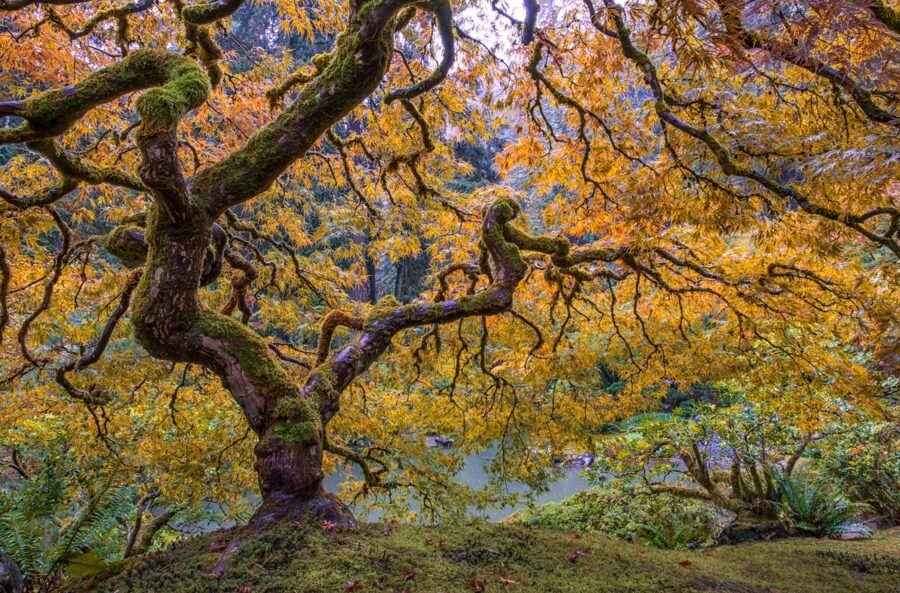
Portland’s most famous tree is a low, wide laceleaf maple at the north end of a pond, and on a sunny autumn day the light comes through it from behind between late morning and mid-afternoon. Photographers queue for it in late October. Most of them hurry past the rest of the Portland Japanese Garden to get there, which is a mistake: the waterfall, the raked gravel of the Flat Garden and the view east from the Pavilion reward the same light.
The garden sits in Washington Park, in the West Hills above downtown, directly uphill from the free International Rose Test Garden. An independent nonprofit runs it, not the city, and entry is by timed ticket. Below is what is inside, where to stand, how the seasons change it, what the photography rules allow, and how to get up the hill.
Contents10 parts
- The garden on the hill, in eight parts
- The Strolling Pond Garden
- "The" Tree, the maple everyone comes for
- The Tea Garden, Natural Garden and Sand and Stone Garden
- The Flat Garden and the Pavilion overlook
- The garden through the year
- Photography rules: tripods, member hours and portraits
- Tickets, hours and timed entry
- Getting there and parking
- Washington Park neighbors
The garden on the hill, in eight parts
Mayor Terry Schrunk and a group of Portlanders conceived the garden in the late 1950s as a gesture of healing toward Japan after the war, on the site of the city’s old zoo. The garden counts 1963 as its founding year. Professor Takuma Tono of Tokyo Agricultural University laid out five gardens in five historical styles on 5.5 acres, which was unusual: a garden in Japan normally keeps to one. It opened for the summer of 1967, admission 50 cents, and first stayed open through a winter in 1981.
Tono’s five are still the core: the Strolling Pond, Tea, Natural, Sand and Stone, and Flat gardens. The 2017 expansion added the Entry Garden, the Tsubo-Niwa courtyard and the Bonsai Terrace, and the garden now counts eight garden spaces on about 12 acres. Allow one and a half to two hours. In October I would allow three, because the light moves and you will want to go back.
The Entry Garden and the walk up
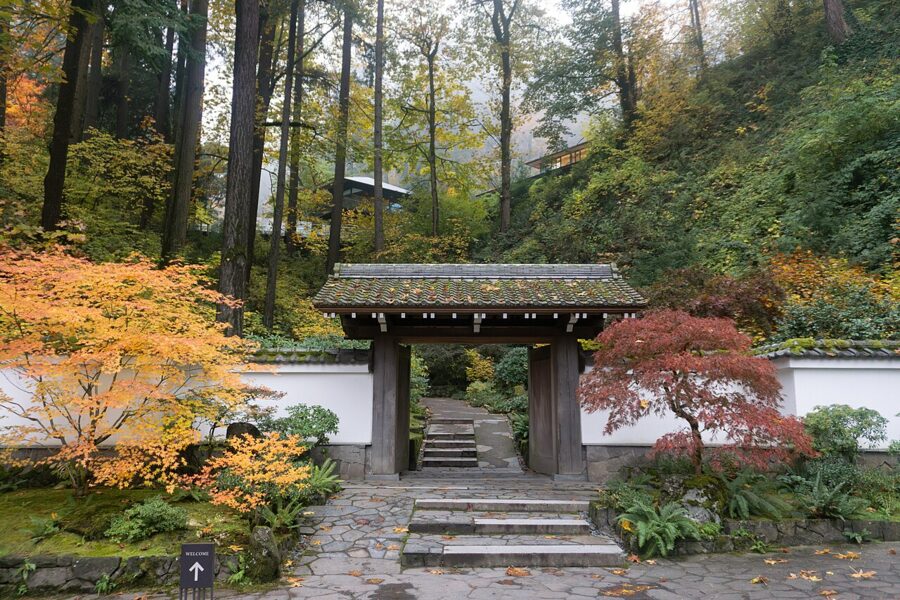
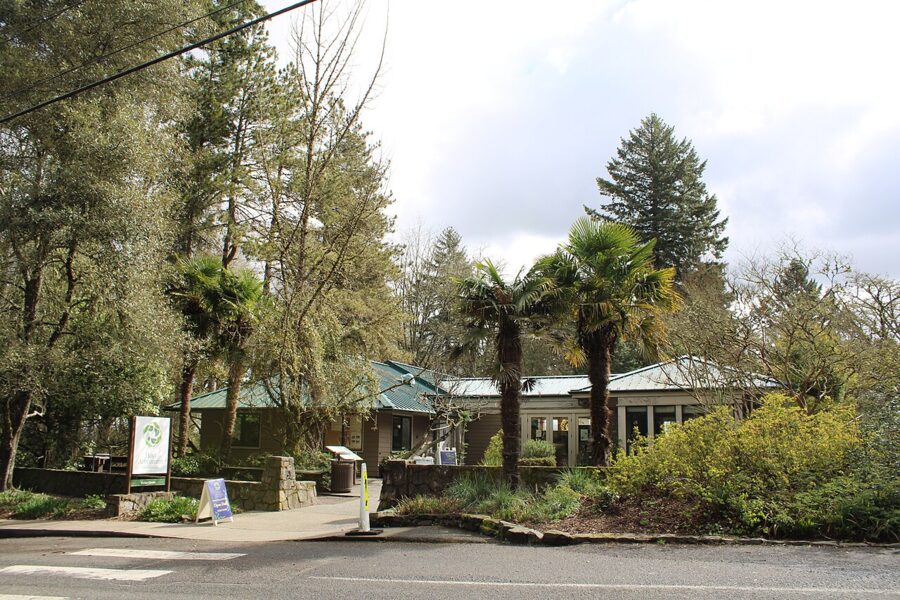
Everyone starts at the Welcome Center on SW Kingston Avenue, across from the Washington Park tennis courts. A terraced stone path climbs from there through Douglas firs and bigleaf maples to the gardens at the top. Curator Sadafumi Uchiyama designed the hillside as cascading ponds fed by channels that collect rain from the roofs, so its water only runs when it rains.
A dry August afternoon leaves a creek bed of stones; a wet November morning fills every channel. If the climb is hard going, a free shuttle runs between the Welcome Center and the Cultural Village about every 15 minutes during open hours, and one of the two buses is ADA accessible.
Kengo Kuma’s Cultural Village
At the top you come out into a stone courtyard ringed by three buildings by the Japanese architect Kengo Kuma, who later designed Tokyo’s National Stadium. The $37.5 million expansion opened on April 2, 2017. Kuma kept the buildings low, glass-walled and screened with vertical timber, with planted roofs that let them sink into the slope.
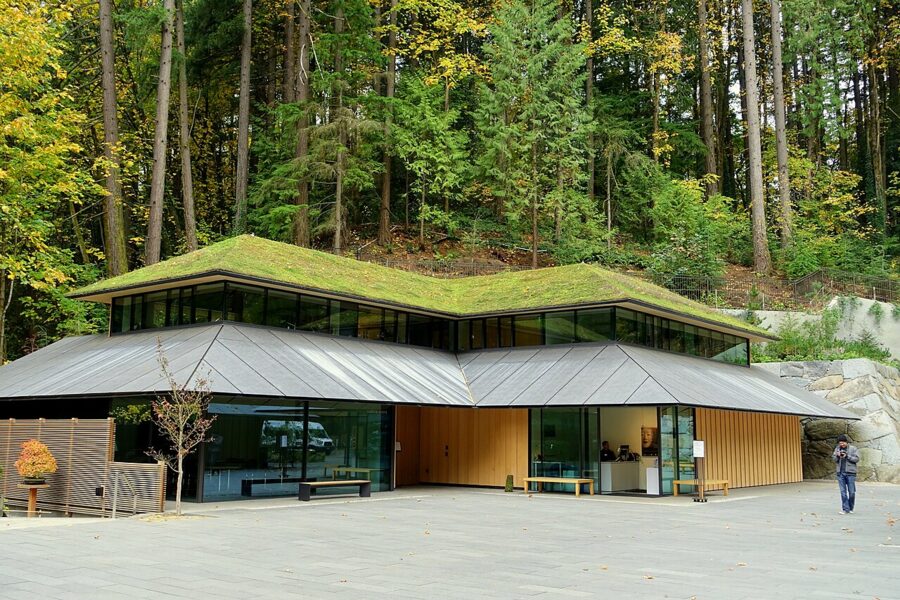
The largest building, the Jordan Schnitzer Japanese Arts Learning Center, holds a gallery, the gift shop and the Vollum Library of more than 3,000 books. The Garden House has a family studio. The Umami Café is cantilevered over the hillside in a nod to Kiyomizu-dera in Kyoto, and serves Jugetsudo tea from Tokyo at a counter, to stay or to go.
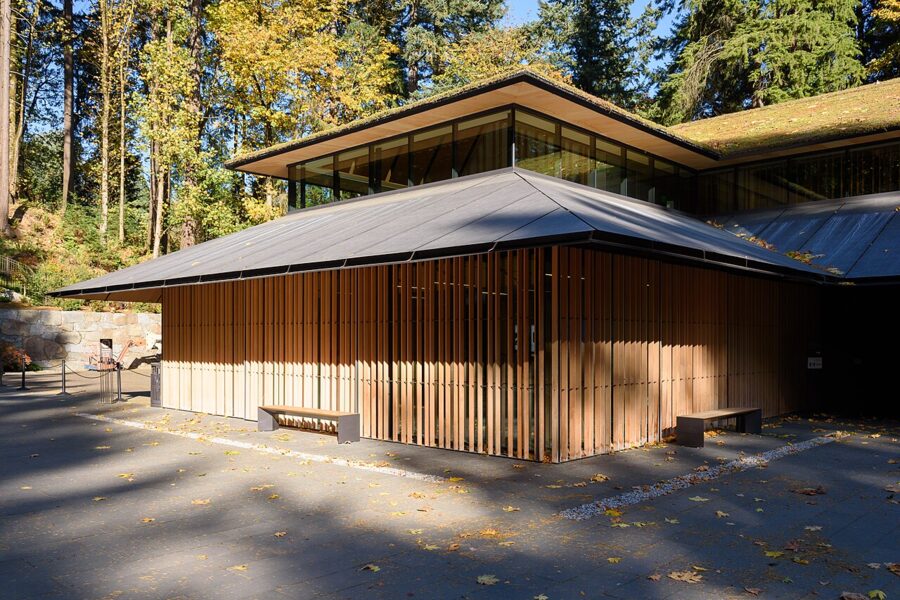
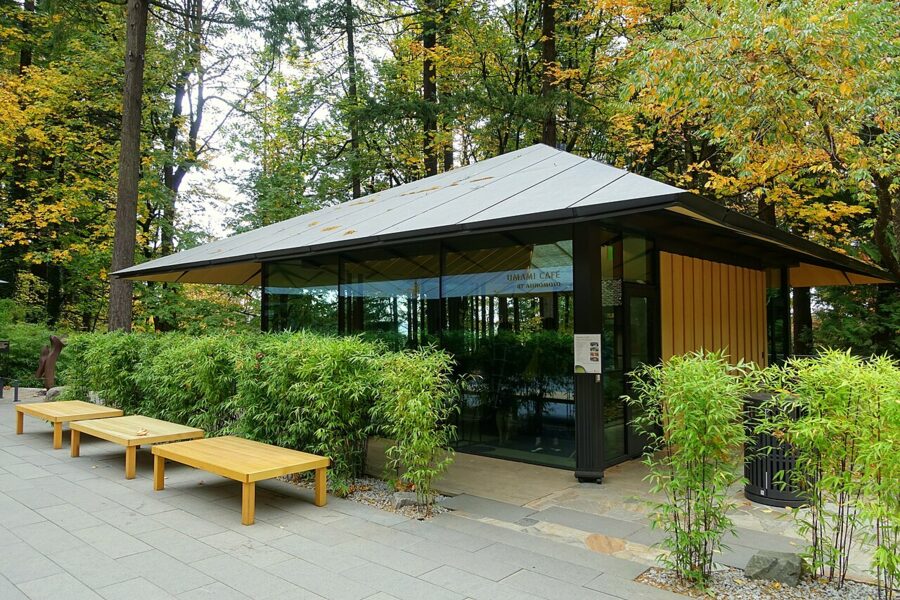
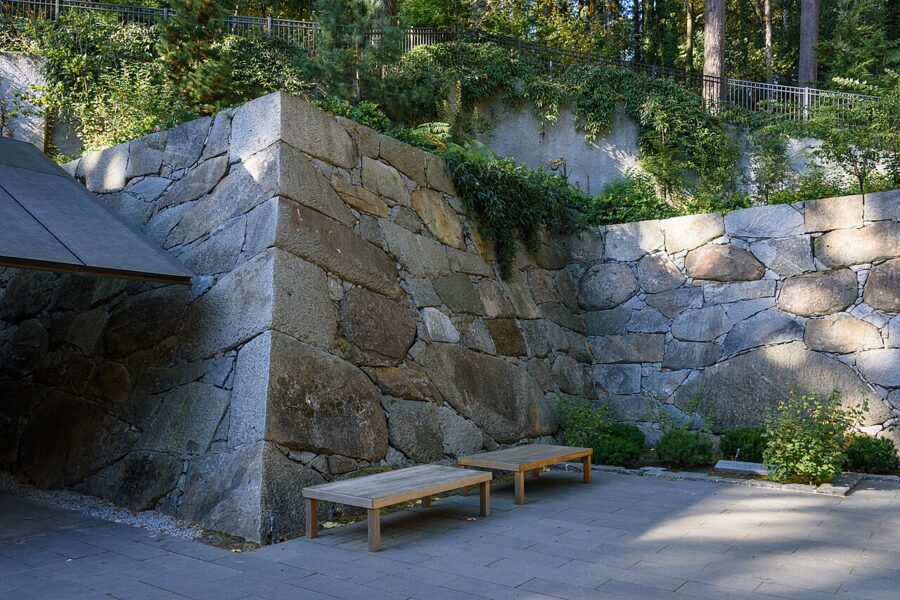
At the west end of the courtyard is the Zagunis Castle Wall. Uchiyama needed a retaining wall for the western slope and had it built the way castle walls are built in Japan, in granite, with traditional hand tools. Suminori Awata, a 15th-generation master stonemason, led the work, and the garden calls it the first wall of its kind outside Japan, about 185 feet long and 18.5 feet high.
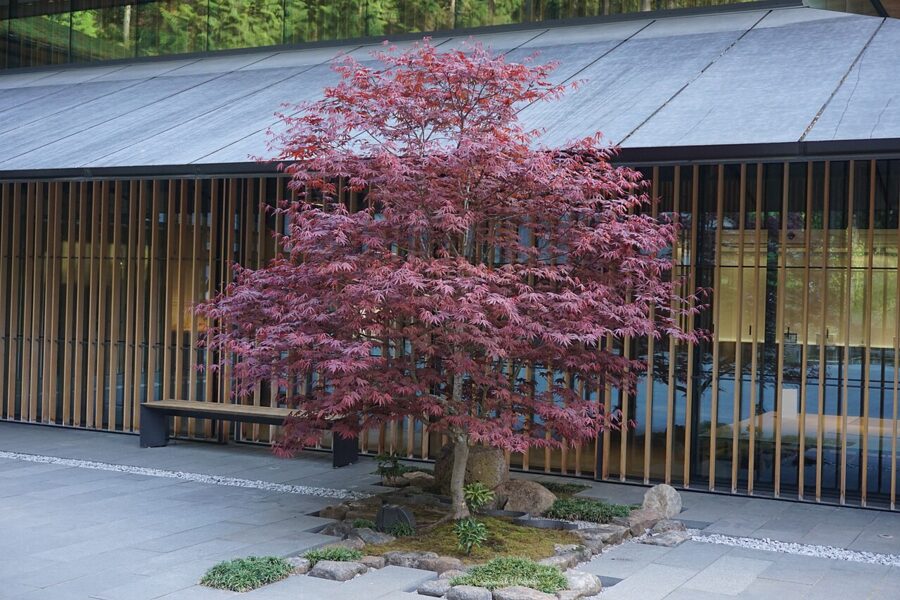
Two small spaces are easy to miss. The Tsubo-Niwa is a courtyard garden of stone, water and plants tucked between the buildings, a style that began in the gaps between Heian-period temple halls. The Ellie M. Hill Bonsai Terrace shows trees lent by local growers in the warmer months; as of November 2026 the bonsai are away until spring.
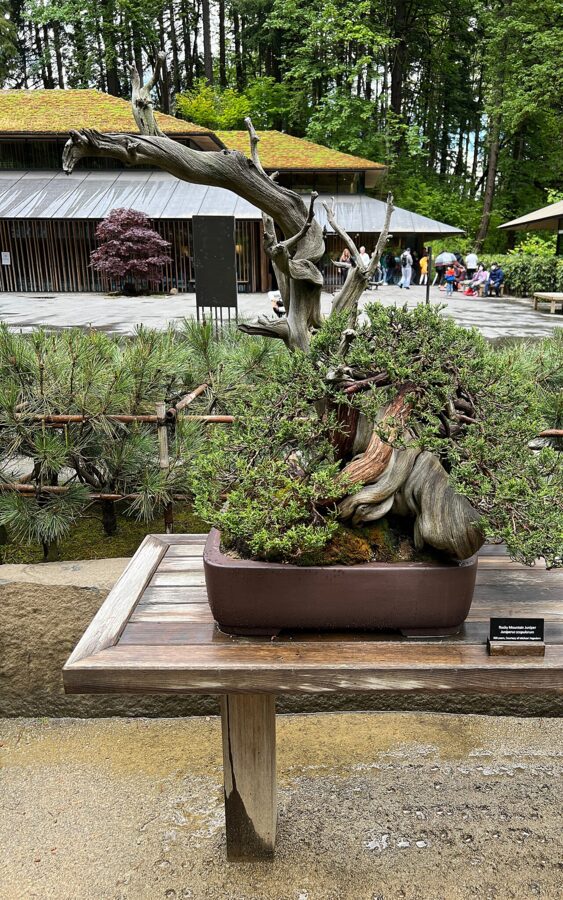
The Strolling Pond Garden
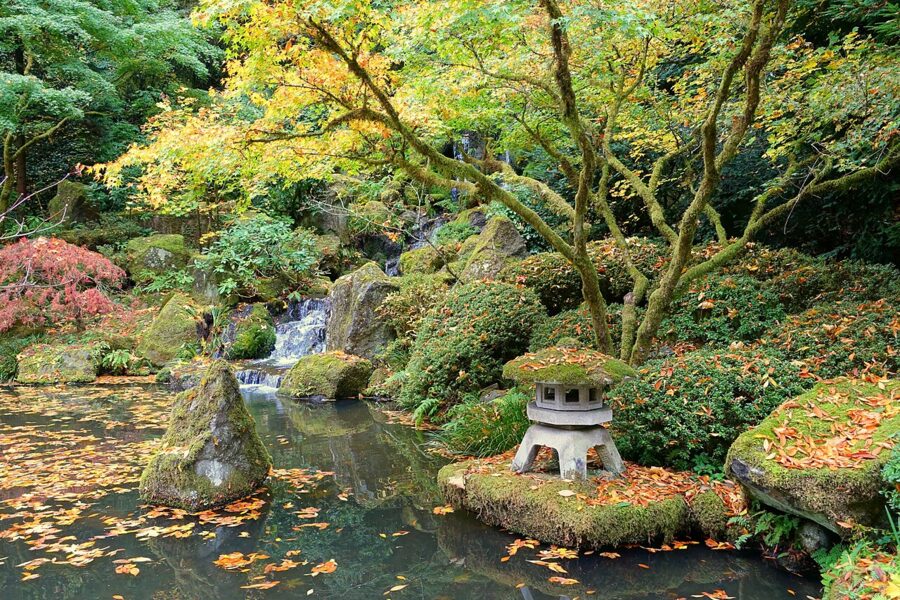
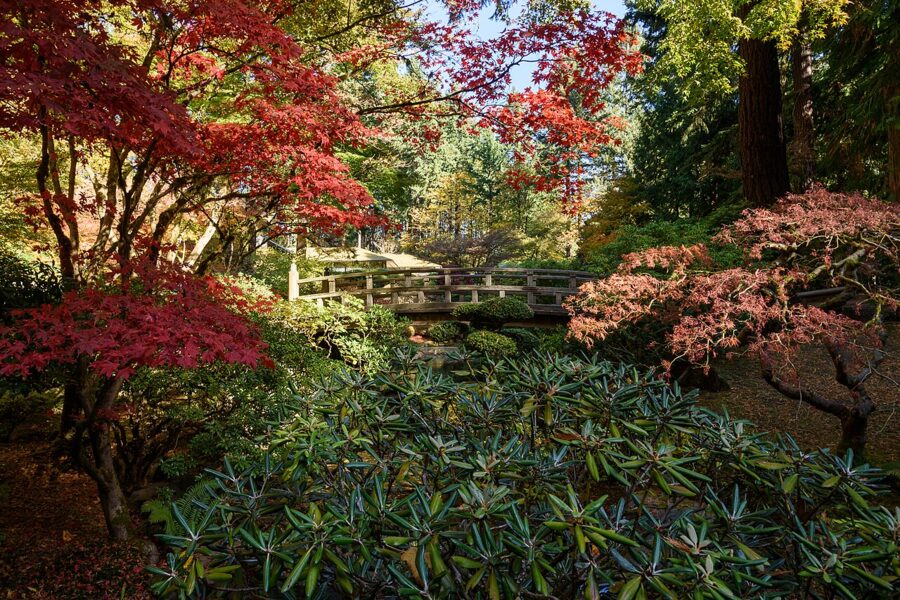
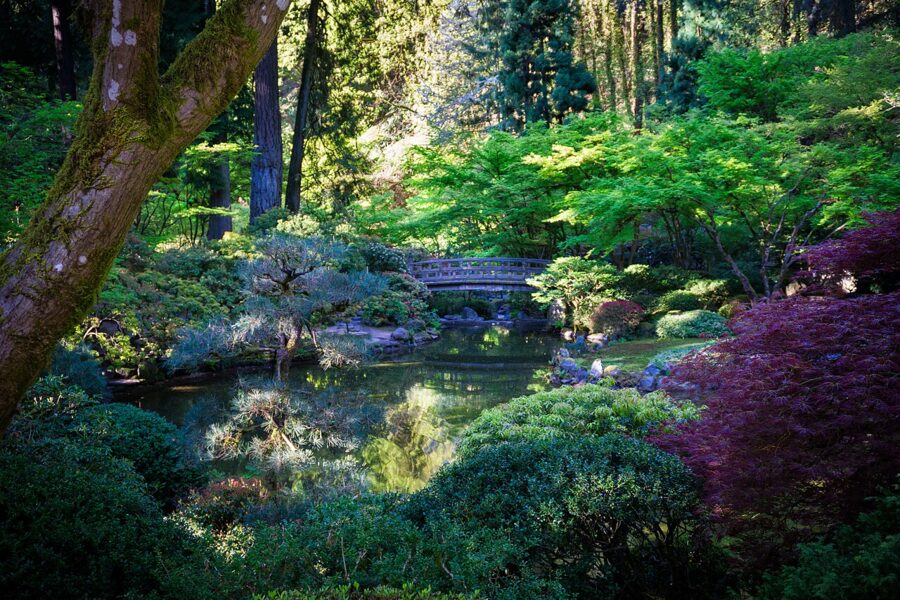
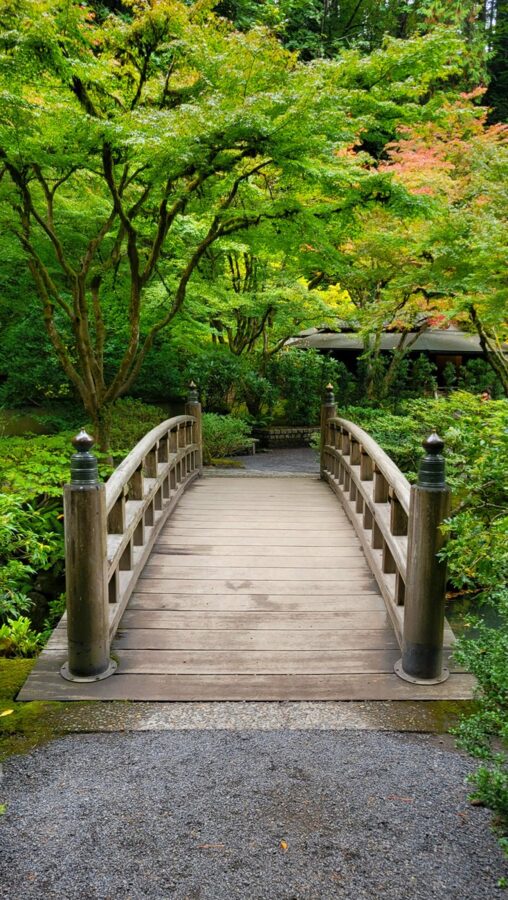
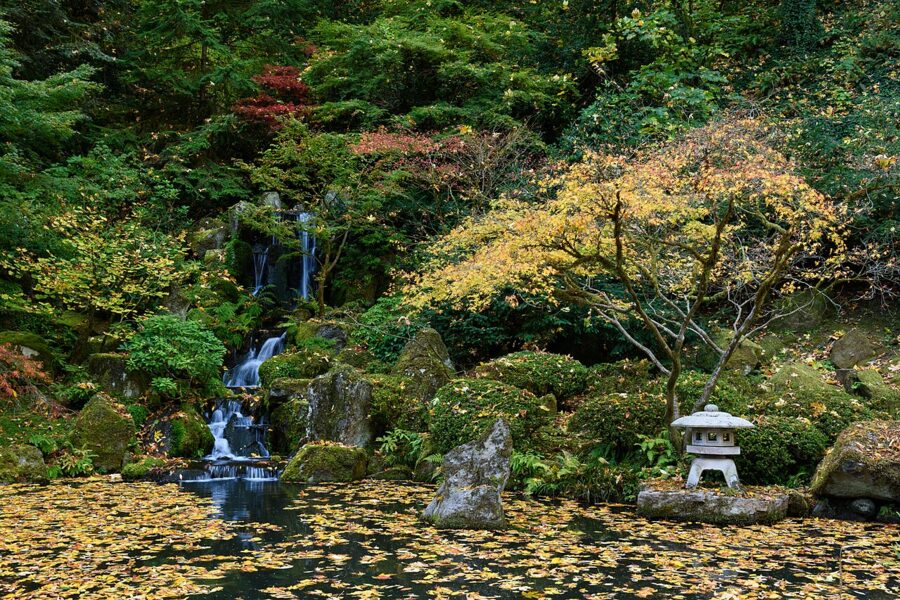
The largest of the five is a stroll garden in the Edo-period manner, built around an Upper and a Lower Pond joined by a stream. The Moon Bridge arches over the Upper Pond. At the Lower Pond a wooden zig-zag bridge, a yatsuhashi, crosses beds of Japanese iris with Heavenly Falls behind.
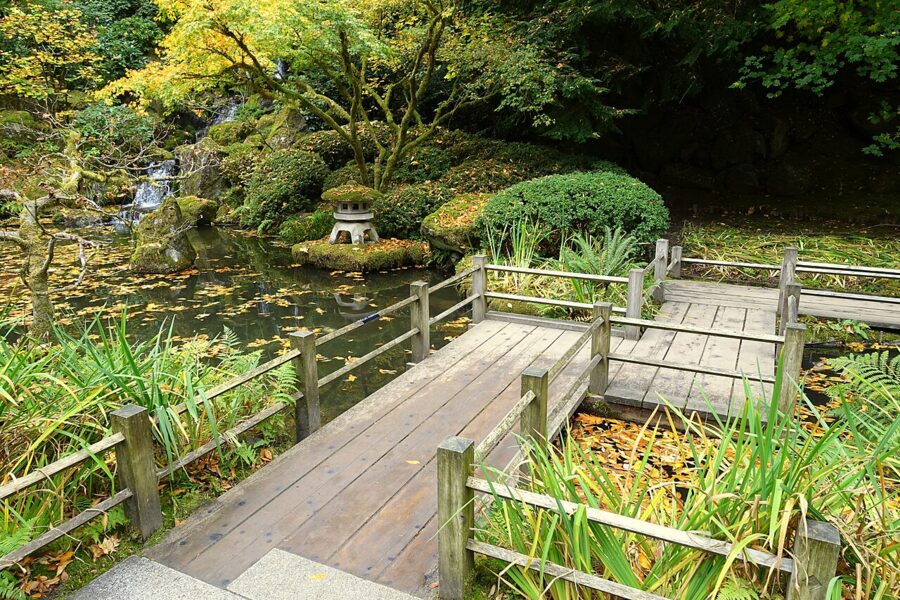
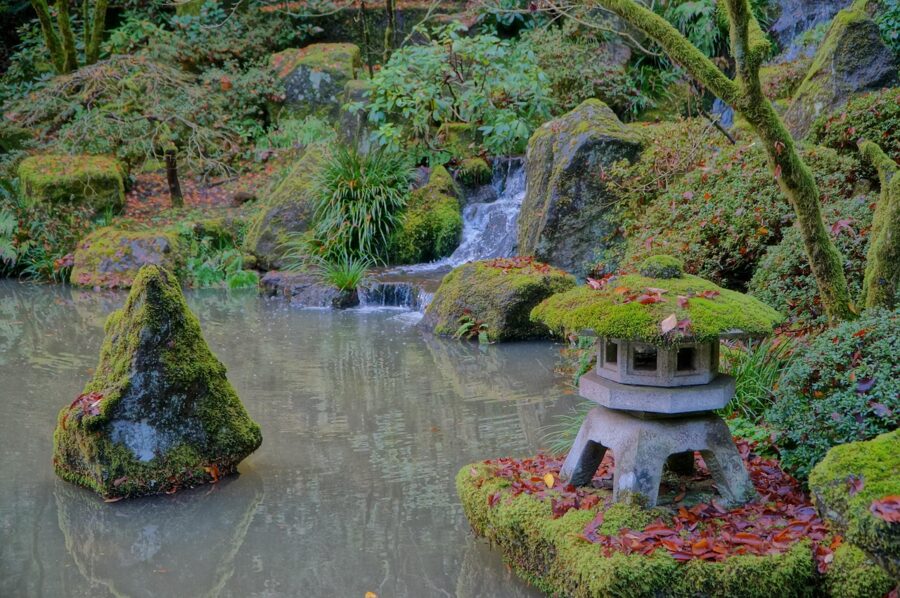
For the falls, stand at the edge of the Lower Pond with a lantern in the foreground. A shutter of half a second or longer smooths the water, but that needs a tripod, and tripods carry a fee here. In bright sun the water burns out against dark rock, so come on an overcast morning or just after rain.
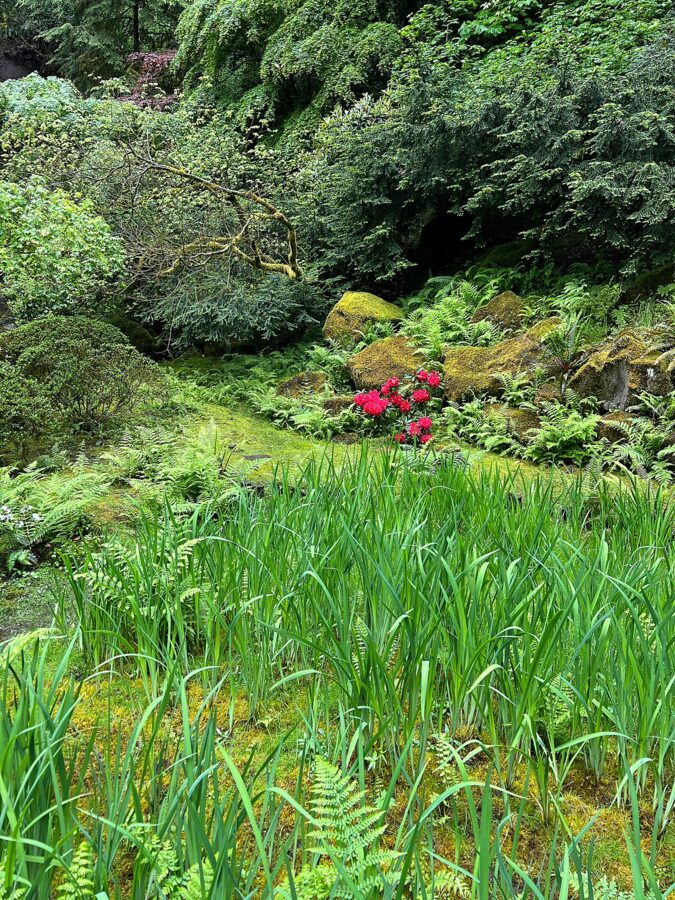
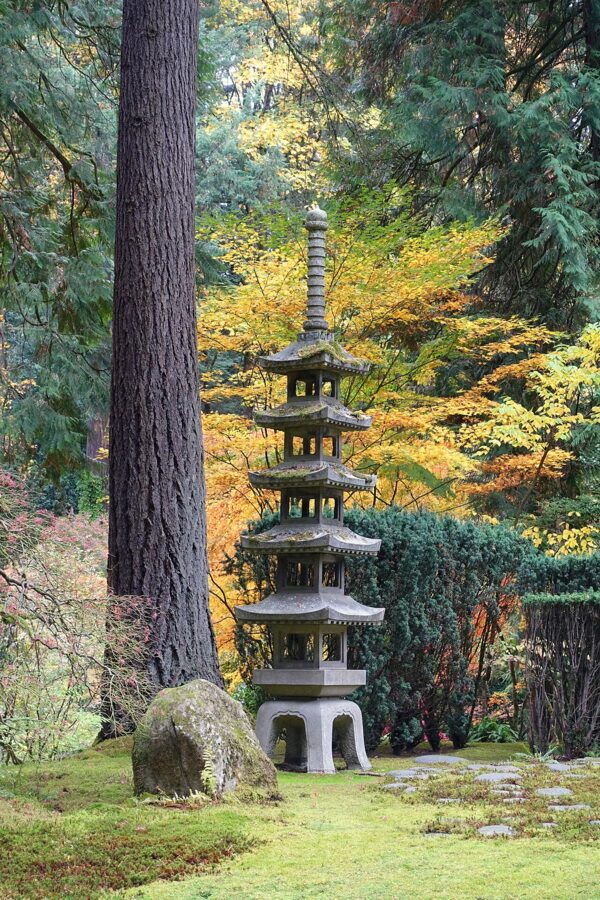
Most of the garden’s stone lanterns stand along these pond edges. The tall pagoda lantern on the moss under the conifers works best from low down, with maples behind it. Wet stone and still water give you reflections that sunshine never will.
“The” Tree, the maple everyone comes for
The garden calls it simply “The” Tree: a Japanese maple at the northern end of the Strolling Pond Garden, one of many donated over the years. Its fame began when a Portland physician, Fred An, won a merit award from National Geographic for his picture of it in full autumn color. Another photograph of it later hung in an exhibition at the Smithsonian Institution.
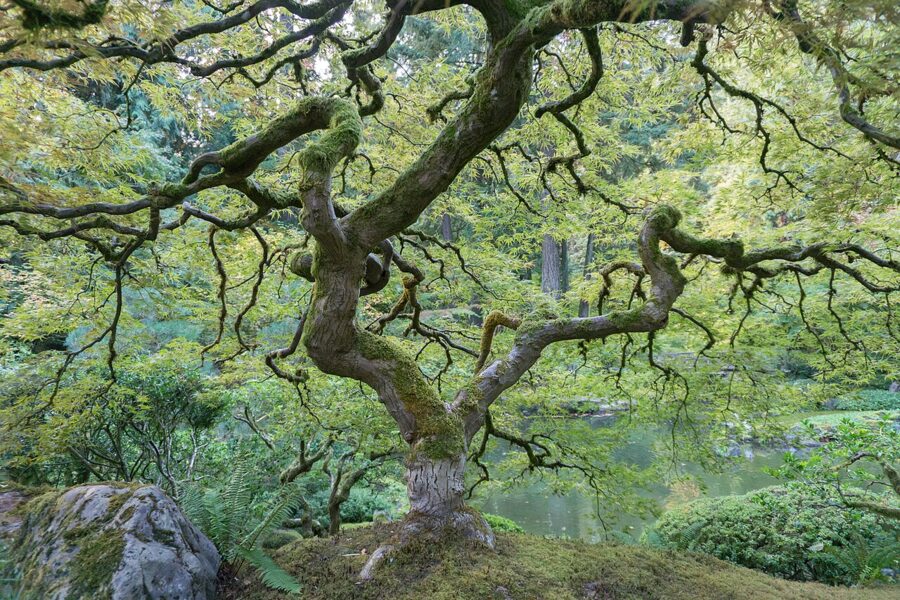
It is smaller than its pictures suggest, growing low and wide over a mossy bank behind a short bamboo fence. The classic frame comes from a crouch at the fence with a wide lens, looking up into the canopy. Put the sun behind the leaves: on a sunny autumn day the garden says the tree is backlit from late morning through mid-afternoon.
Expect company. The garden asks everyone to limit their time at the tree and not to block it or the path to it, and in late October there can be a line of tripods. Take your frames, step back, and return if the light changes.
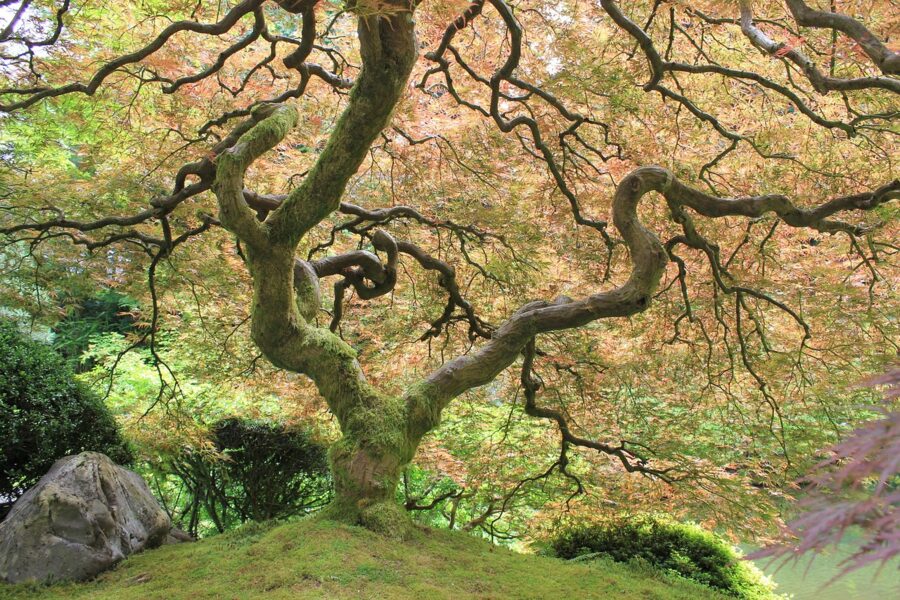
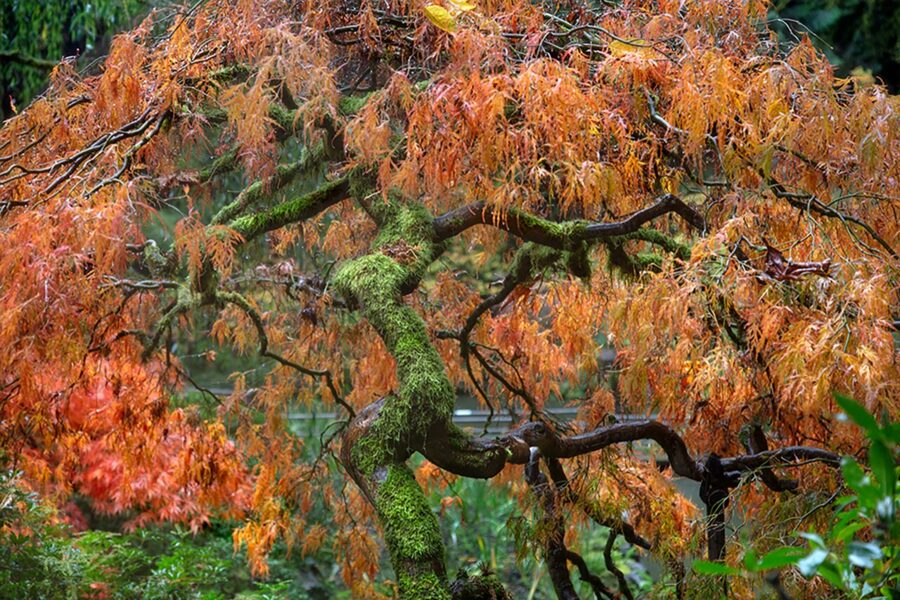
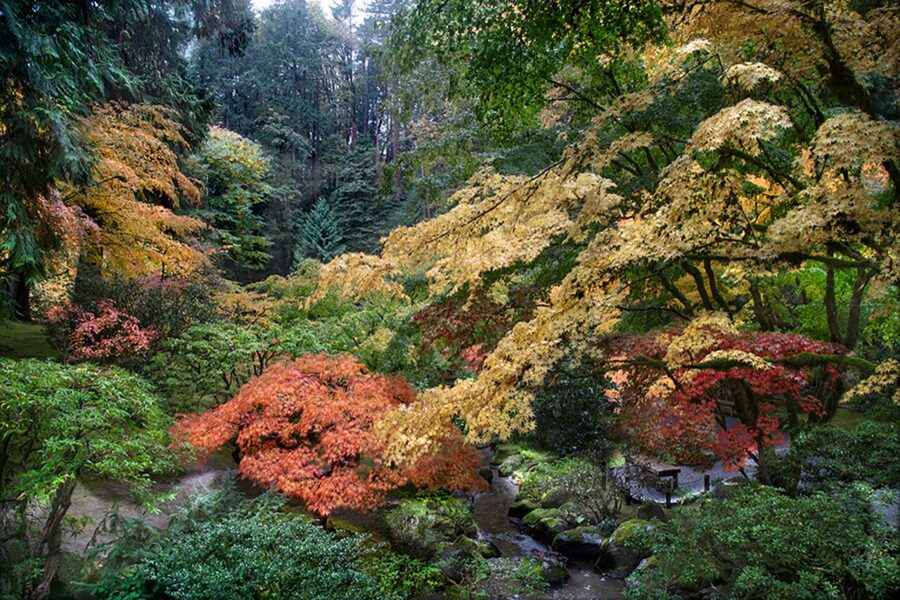
The garden’s color tracker splits autumn into stages. First color usually shows in mid to late September, color builds through early and mid October, and peak usually lands between late October and early November. Late fall, with leaf-covered paths, runs to the end of November. The garden cannot predict peak in advance, so if you are flying in, give yourself several days in that window.
The Tea Garden, Natural Garden and Sand and Stone Garden
The Tea Garden is a roji, a path of rustic stepping stones and lanterns meant to feel like a long walk from the city to a mountain hermitage. At its center is Kashintei, the “Flower-Heart Room,” a tea house built in Japan, shipped in pieces and reassembled here in 1968, with a floor of four and a half tatami mats.
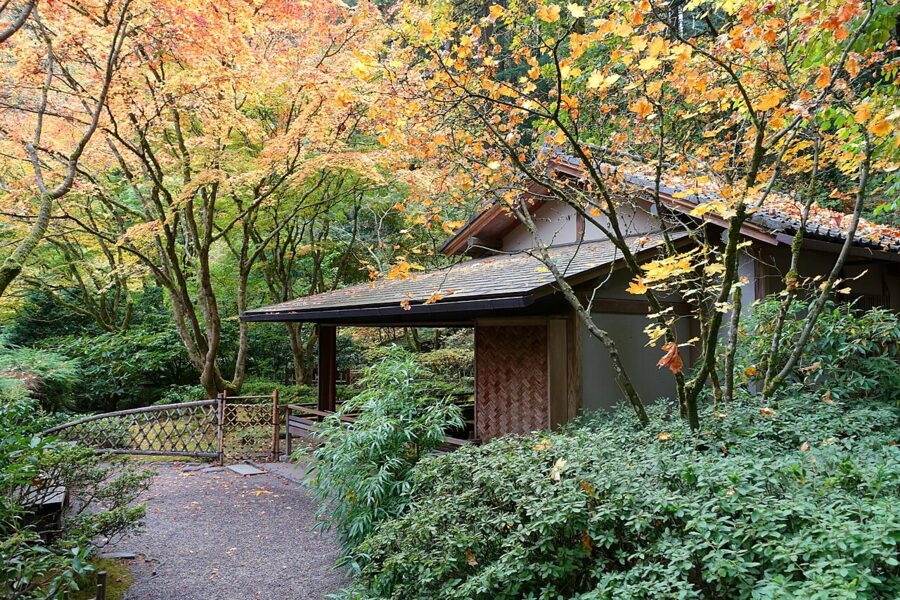
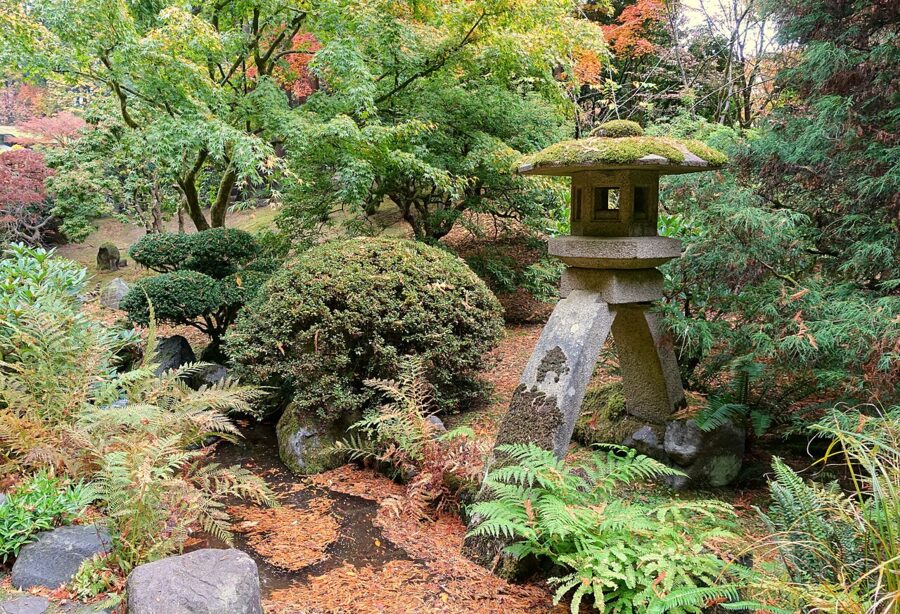
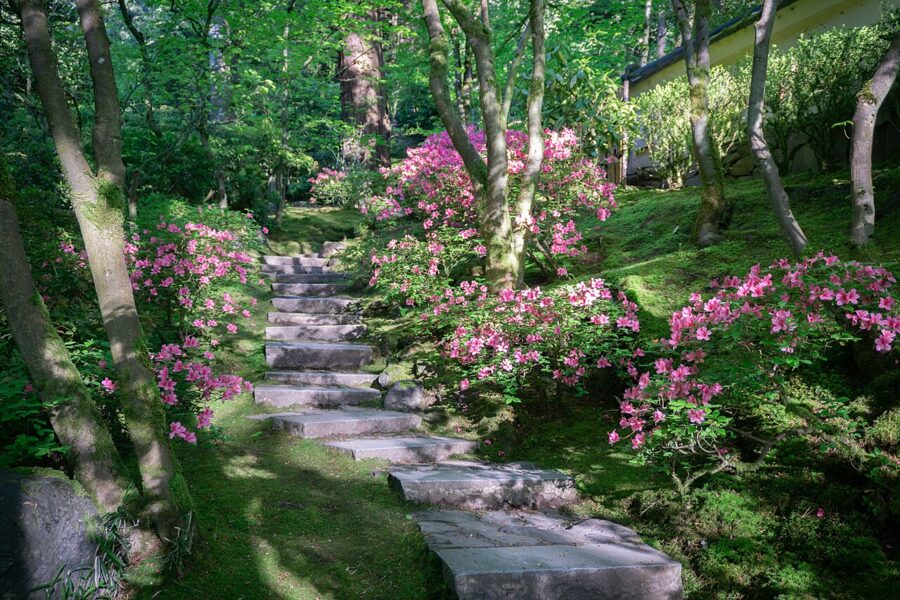
The Natural Garden is the most contemporary of Tono’s five. It was planned as a moss garden, the moss failed, and it was redesigned in the early 1970s and again in 1990 as a hillside of mostly deciduous plants, including the Northwest’s own vine maple. Its narrow, stepped paths lead down to the Sand and Stone Garden.
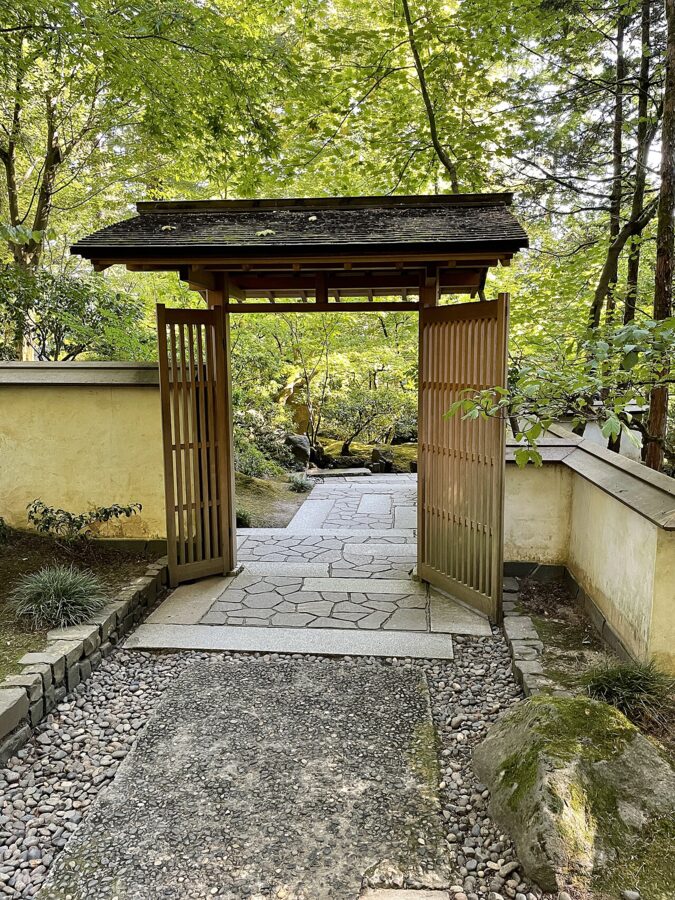
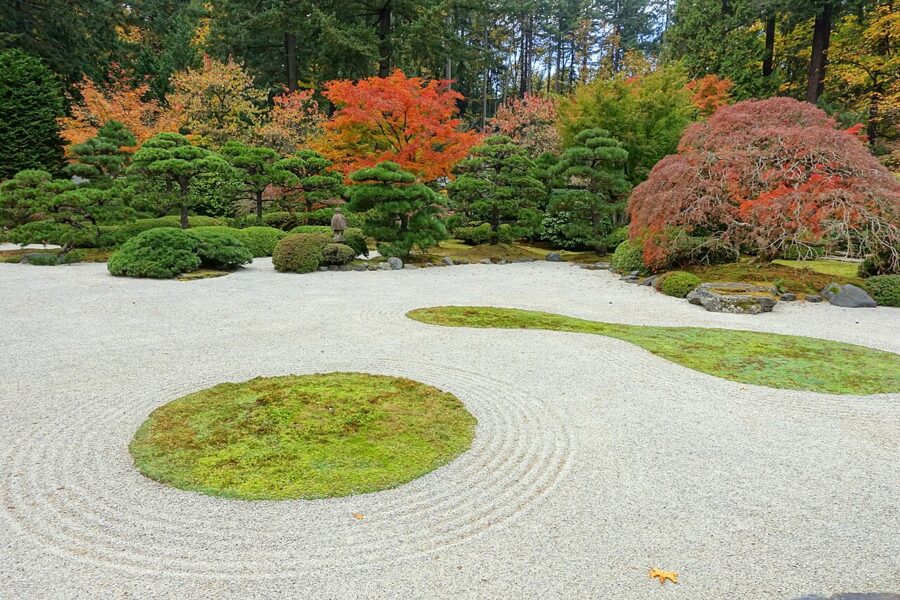
The Sand and Stone Garden is a karesansui, a dry garden of raked gravel and upright stones inside low walls. Tono drew it in the 1960s from a Buddhist tale in which the Buddha gives his life to save a starving tigress and her cubs. Shoot from a corner so the raked lines run diagonally. Neither of these two gardens can be reached by wheelchair or stroller.
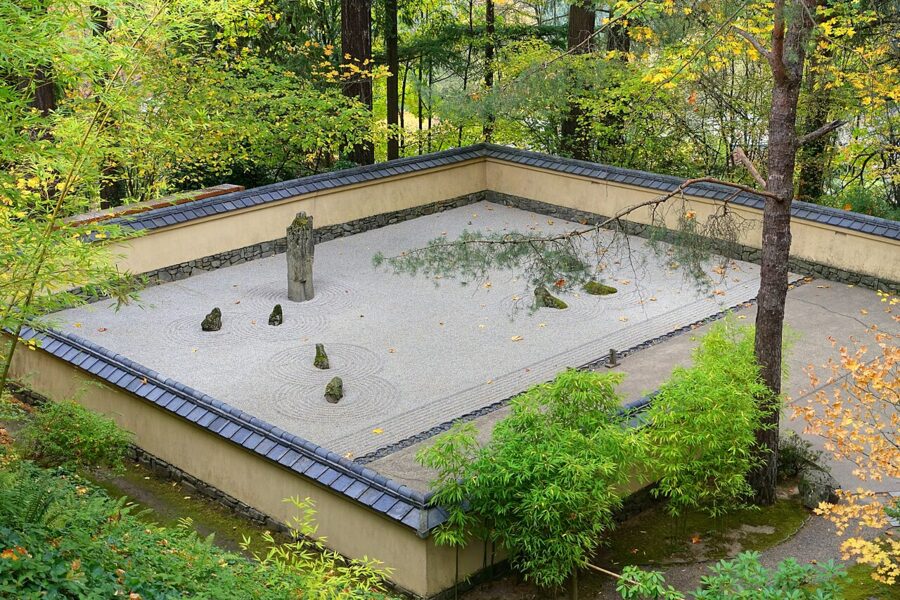
The Flat Garden and the Pavilion overlook
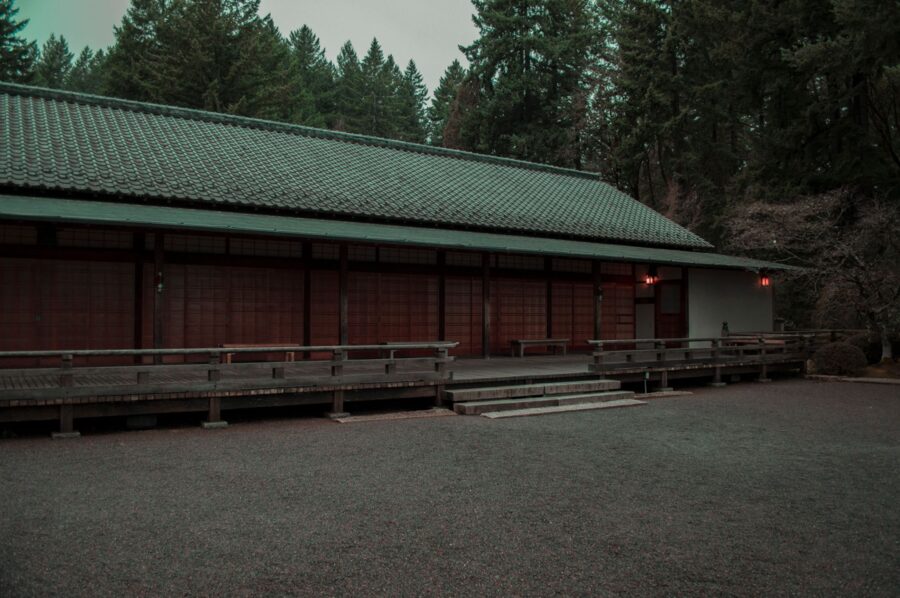
The Flat Garden is meant to be seen from one place: the Pavilion veranda, or through its shoji doors from inside. A laceleaf maple more than a century old stands for autumn, a weeping cherry for spring, black pines for winter and the raked gravel for cool summer water. The Circle and Gourd Islands stand for enlightenment and happiness.
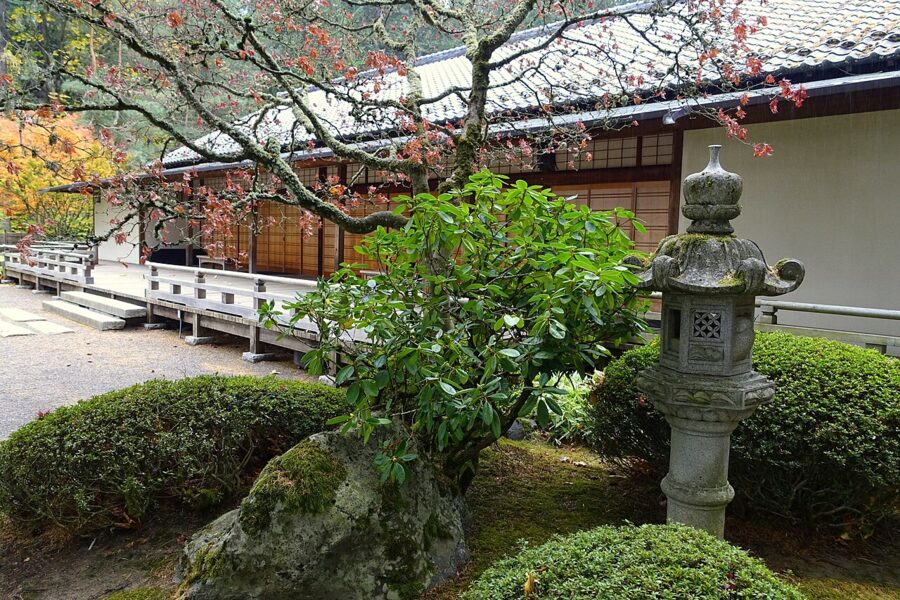
From late November the gardeners hang yukizuri around the Flat Garden, cones of straw rope running from a central pole to the branches to hold them up under snow. With frost on the gravel, they make the best winter frame on the hill.
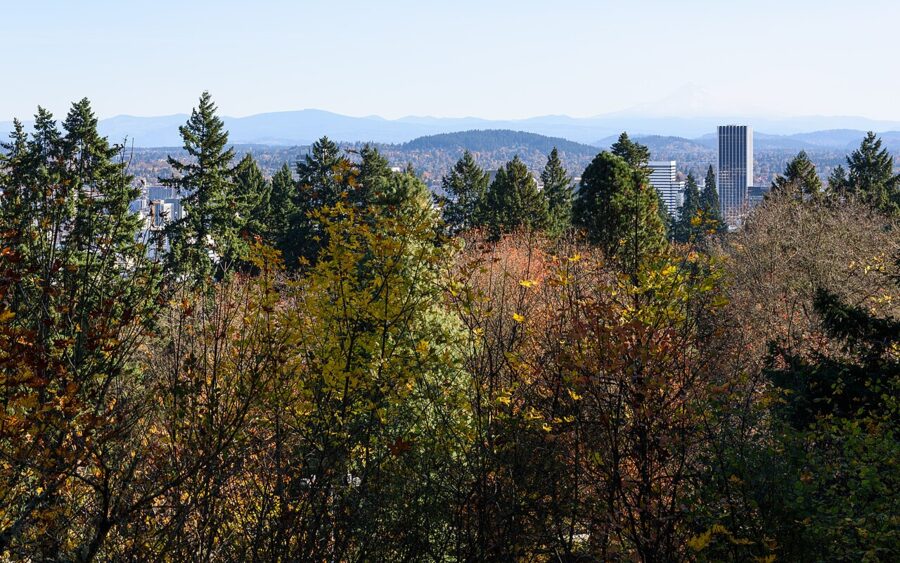
Walk around the Pavilion for the overlook. It faces east over downtown toward Mount Hood, so mornings put you into the sun and afternoons light the view from behind you. Between autumn and spring the mountain is often lost in haze or cloud, so treat a clear view as a bonus.
The garden through the year
October brings the crowds, but the garden was designed for all four seasons, and its flowers are deliberately few. Bloom times shift with the weather; this is the garden’s own rough calendar.
| Season | What to look for | When |
|---|---|---|
| Winter | Camellias, dawn viburnum, pieris; yukizuri in the Flat Garden | Camellias winter into spring; viburnum mid to late winter; yukizuri from late November |
| Spring | Cherries, magnolias, azaleas, rhododendrons, wisteria, new maple leaves | Cherries March to mid-April; magnolias April; azaleas April and May; rhododendrons late April and May; wisteria mid-May |
| Summer | Japanese irises at the zig-zag bridge; deep green shade | Irises late June to early July |
| Autumn | Maple color, The Tree, leaf-covered paths | First color mid-September; peak usually late October to early November |
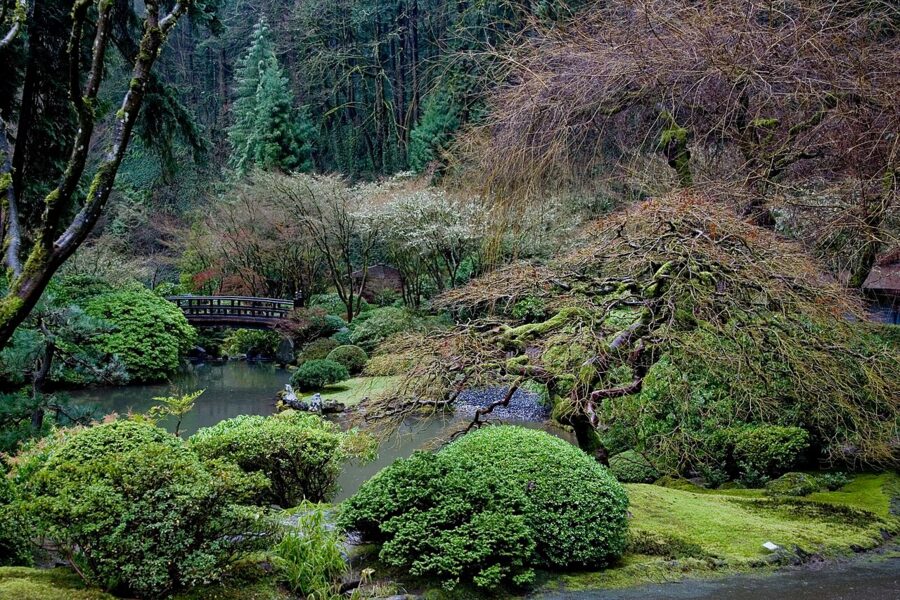
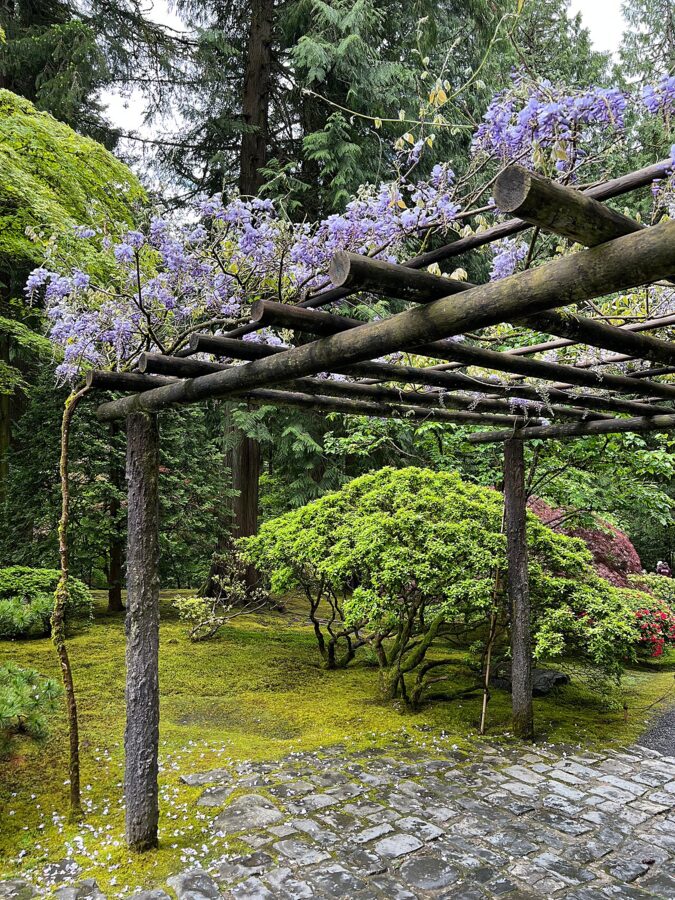
For a first, unhurried visit I would pick spring. New maple leaves come out red and lime green, the ponds are full, and the paths are quieter than in October. Summer is all green and best in the shade of the Natural Garden, and it is the season when parking runs short.
Photography rules: tripods, member hours and portraits
Photography for personal use is allowed throughout. The rules are about space, because many paths are narrow. As of November 2026:
- Tripods: $10 per person for a day tag from the Welcome Center, unless your membership includes photographer benefits.
- No portrait sessions: no engagement, wedding, graduation or headshot photography.
- Don’t block views, paths or features for long, and don’t interrupt the gardeners.
- Commercial work needs a shoot application, and anyone selling images of the garden is asked to buy a Photographer Membership.
- Sketching: graphite, charcoal and sketchpads only; no paint or ink.
The Photographer Membership is $195 for 12 months as of November 2026. It covers two adults and their children, and includes an annual tripod tag, photographer member hours and the right to sell your photographs of the garden. All members get the 8 to 10 a.m. member hours on open days, two quiet hours before the public.
Is it worth it? For two adults with tripods, three visits cost $195 in tickets and tags, the same as the membership, which also gets you in at 8 a.m. One more thing: in autumn the gardeners clear wet leaves with blowers, so an early start can mean freshly swept paths, or a gardener in your frame.
Tickets, hours and timed entry
Timed tickets go on sale online up to 10 days ahead; book early for an October weekend. They are non-refundable, but you can exchange one up to 24 hours before its time. Prices as of November 2026:
| Ticket | Price |
|---|---|
| Adult | $22.50 |
| Senior (65+) | $19.50 |
| Student (with ID) | $18.50 |
| Youth (6 to 17) | $16.50 |
| Child (5 and under) | Free |
| Members | Free |
Admission covers the gardens, art exhibitions, gift shop and café, and a free volunteer-led public tour you can book with your ticket. Visitors with mobility limits get $5 off, active military get in free during Rose Festival Fleet Week (June 4 to 7 in 2027), and Veterans Day is free for veterans, active military and their families. The garden also takes part in Arts for All, a discount for people on SNAP food benefits.
Hours change with the season, so check the garden’s hours page for your dates. In late November 2026 the public hours were 10 a.m. to 3:30 p.m., with an hour after closing to finish your walk, and the garden was closed that Tuesday and on Thanksgiving. It also closes on December 25 and January 1, and summer days run later.
Getting there and parking
The address is 611 SW Kingston Avenue, Portland, OR 97205. From downtown, drive west on West Burnside Street for about 2.5 miles, turn left on Tichner Drive and right on Kingston Avenue. From U.S. 26, take Exit 72 for the Zoo and Forestry Center and follow the park signs.
Parking is in a public, metered Washington Park lot, paid by license plate at the pay stations or in the city’s Parking Kitty app (the garden’s zone is 409). The posted rate in November 2026 was $2.52 an hour, with a daily maximum. The lot fills early in summer and on autumn weekends; keep valuables out of sight.
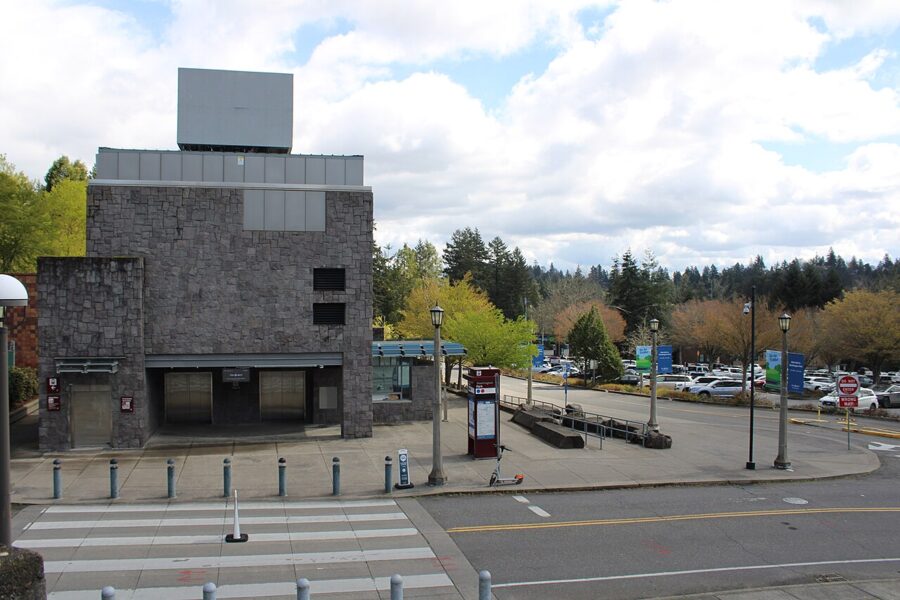
Transit skips the parking hunt. TriMet bus 63 links Pioneer Courthouse Square downtown with the Rose Garden and Japanese Garden stop, leaving the park on the hour between 10 and 6. Buses 15 and 20 stop at NW 23rd Avenue and Burnside, about a mile’s walk uphill through the park. The MAX Red and Blue lines stop at Washington Park station by the Oregon Zoo, where the free Explore Washington Park shuttle loops through the park, on shorter hours in winter.
Washington Park neighbors
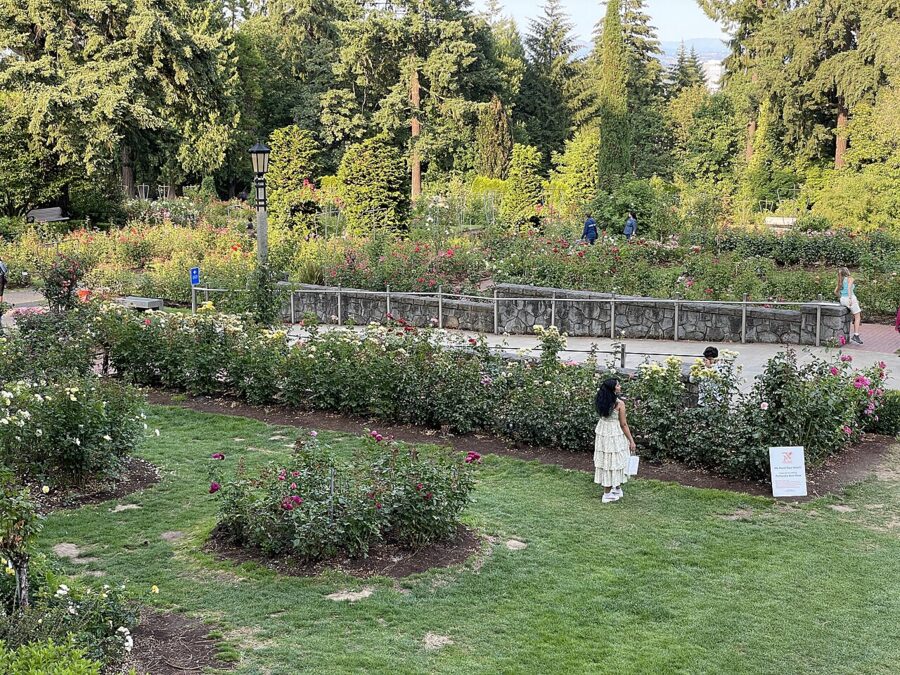
The International Rose Test Garden lies directly below, a short walk downhill. It is a separate city park run by Portland Parks & Recreation, with free entry, and its rose terraces also look east over the city. The roses run from late spring into autumn, so pair it with a summer visit.
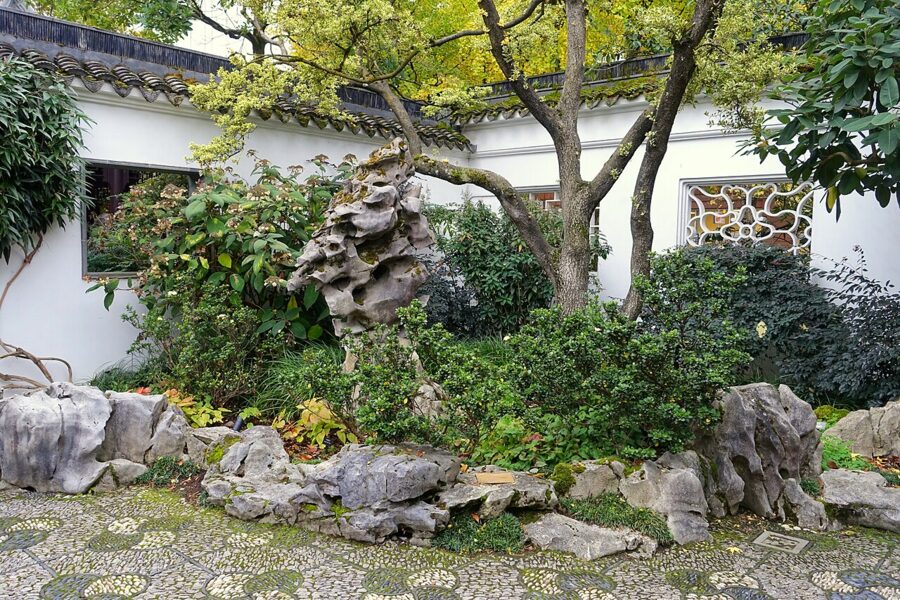
The rest of Washington Park strings along the shuttle route: Hoyt Arboretum, the Oregon Zoo, the World Forestry Center, the Vietnam Veterans of Oregon Memorial and the Oregon Holocaust Memorial. Downtown, the Lan Su Chinese Garden makes a good contrast, and Japanese Garden members get reciprocal entry there in November.
With a second day, the Columbia River Gorge is about 30 miles east, and the gray weather that suits the garden’s ponds suits its waterfalls too. Multnomah Falls faces north into open shade most of the year, and a few miles further east is Oneonta Gorge. Heading north instead, Seattle is about three hours up Interstate 5, with Kerry Park for the skyline and the Fremont Troll under its bridge.
For The Tree itself, book the first public slot of the day in the last week of October, walk up through the Entry Garden rather than riding the shuttle, and save the Strolling Pond Garden for around noon, when the sun has come round behind the leaves.