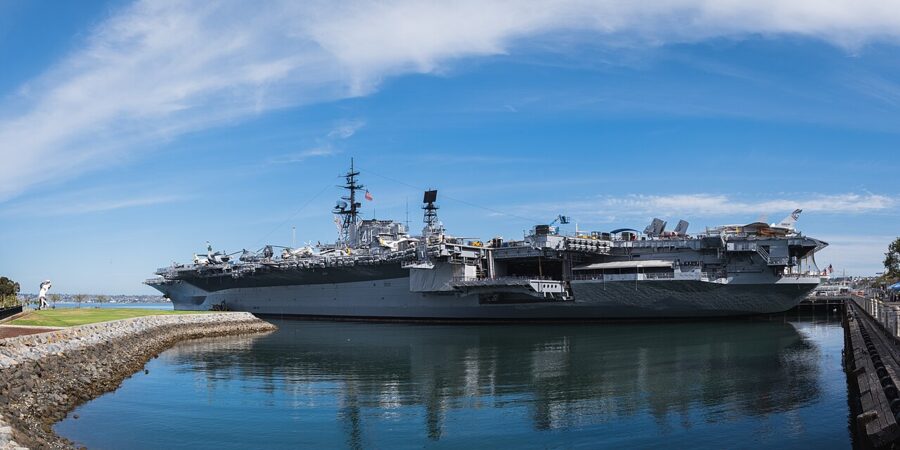
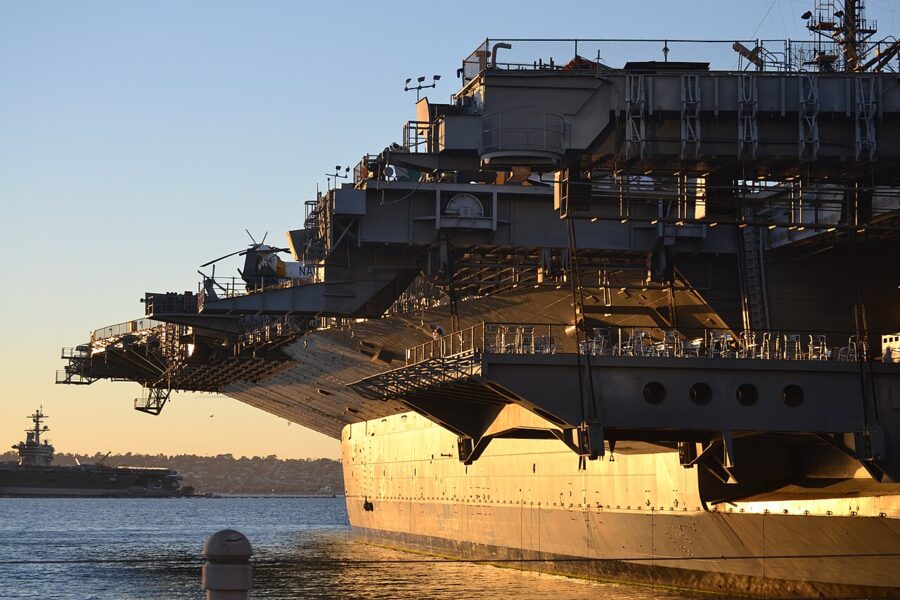
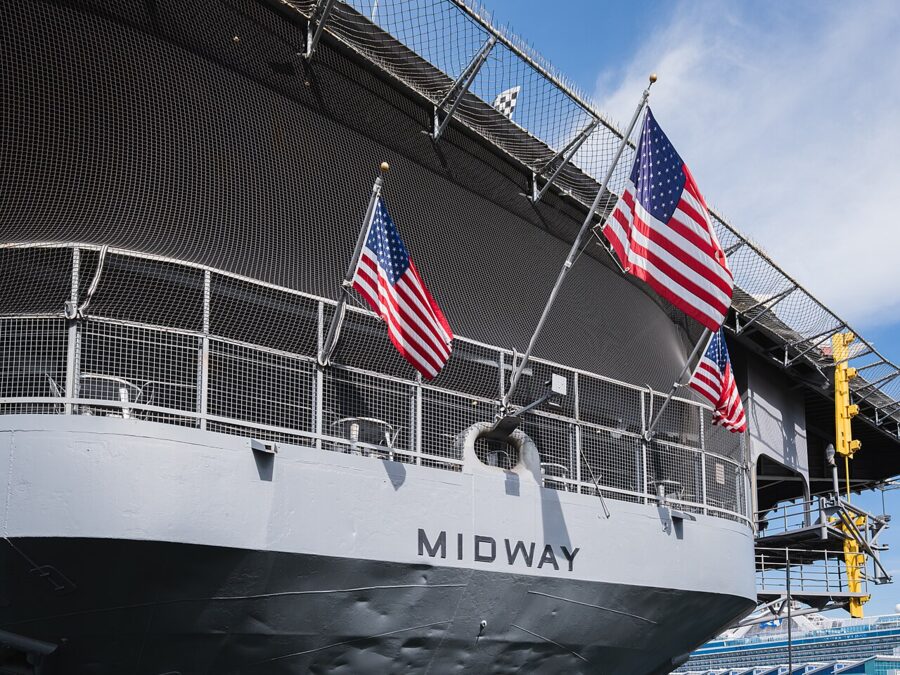
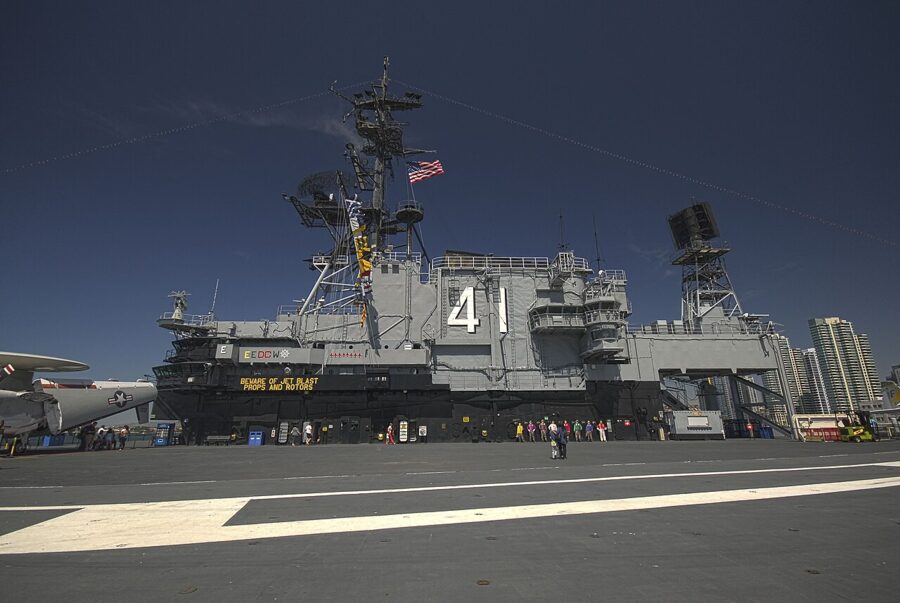
The USS Midway lies along the south side of Navy Pier with her bow pointed out into San Diego Bay. That puts her port side, the long gray wall you see from the waterfront, facing south over Tuna Harbor, and it means the hull is in sun for most of the day and turns warm in the last hour before sunset. Her island, the tower with the big 41 on it, sits on the far side of the deck, against the pier.
The ship has been a museum since 2004, and in 2012 it became the first Navy ship museum to pass a million visitors in a year. You can spend a full day inside, among more than 30 restored aircraft and three levels of exhibits, or photograph it for free from the park beside it, a ferry or Coronado. I’d do both: inside in the morning, outside in the late light.
Contents6 parts
What the Midway was
The ship is named for the Battle of Midway in June 1942, but she never fought in it. She was built in 17 months and commissioned on September 10, 1945, a week after World War II ended, the first of a three-ship class of big carriers with armored flight decks. She then served 47 years, which makes her the longest-serving American aircraft carrier of the 20th century.
Those years run through most of the Cold War. Her pilots shot down the first and the last MiGs of the Vietnam War, in 1965 and 1973, and that same year she moved to Yokosuka, Japan, the first American carrier homeported in a foreign country. During the fall of Saigon in April 1975 she took on 3,073 refugees in two days in Operation Frequent Wind.
Her last war was Desert Storm in 1991, as flagship for the naval air forces in the Persian Gulf. She was decommissioned in San Diego on April 11, 1992, sat in the reserve fleet at Bremerton, Washington, until 2003, and opened at Navy Pier as the USS Midway Museum in June 2004.
Tickets, hours and how long to allow
The museum is open every day from 10 a.m. to 5 p.m., with last admission at 4 p.m., and closes only on Thanksgiving and Christmas Day. These were the prices as of November 2026:
| Ticket | Online | At the door |
|---|---|---|
| Adults, 13 and up | $39 | $41 |
| Youth, 4 to 12 | $29 | $31 |
| US veterans, with proof of service | $26 | |
| Children 3 and under, active-duty military and reservists | Free, at the ticket booth on the day | |
Admission includes the self-guided audio tour, in English, Spanish, Japanese, Chinese, German and French, plus the film and the docent talks. During November the museum lets US veterans and one guest in free at the booth, and a SNAP EBT card with matching photo ID gets up to four $5 tickets through Museums for All. A Midway ticket also takes $5 off adult admission at the Maritime Museum of San Diego and $4 off at the Navy SEAL Museum San Diego.
How long? The museum suggests four to five hours, and its own audio tour runs three to five. I think three is the real minimum if you want the flight deck, the island and one pass below decks. Same-day re-entry is allowed through the Visitor Information Center at the exit, so lunch on the waterfront doesn’t cost you the afternoon.
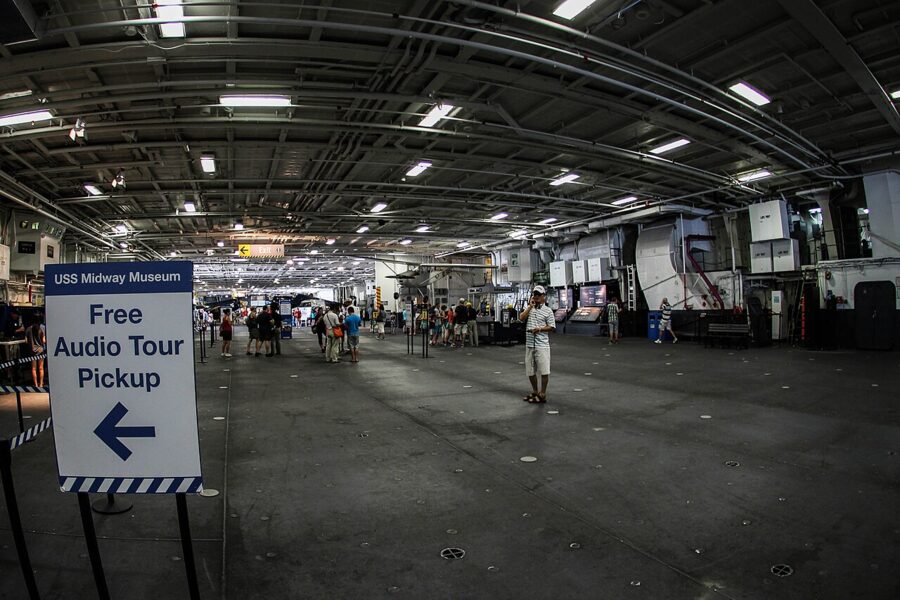
Everyone gets a bag check: no outside food or drink, glass, pets, bikes or scooters, though clear plastic water bottles, strollers and umbrellas are fine. There are restaurants on board, and the museum asks for closed-toe shoes because you will be climbing steel ladders.
One detail most people miss: under the California Coastal Act the Midway keeps a free public viewing area on the flight deck, reached from the promenade beside the ship during museum hours. Follow the signs on the pier; it’s a designated area rather than the run of the deck, but it gets you the bay.
What’s on each deck
The flight deck
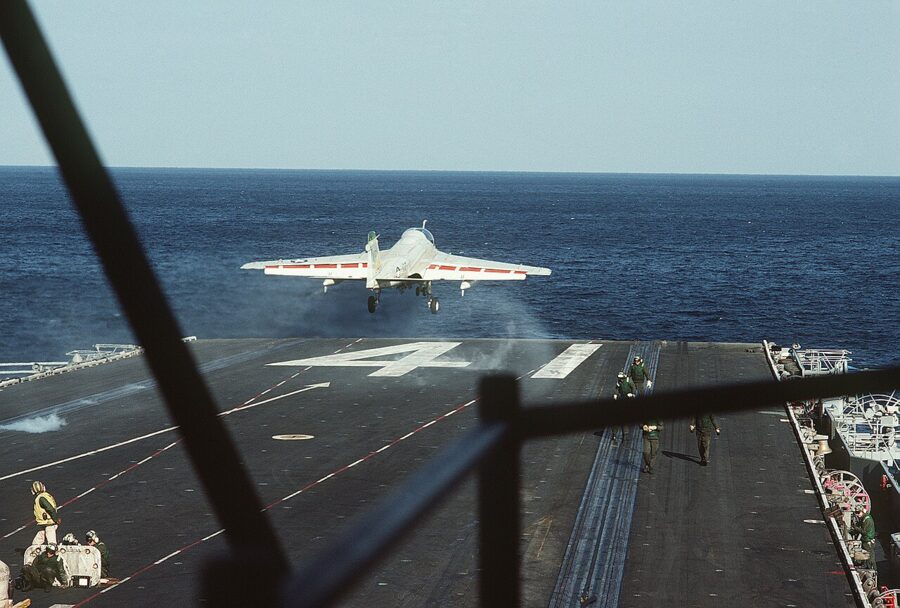
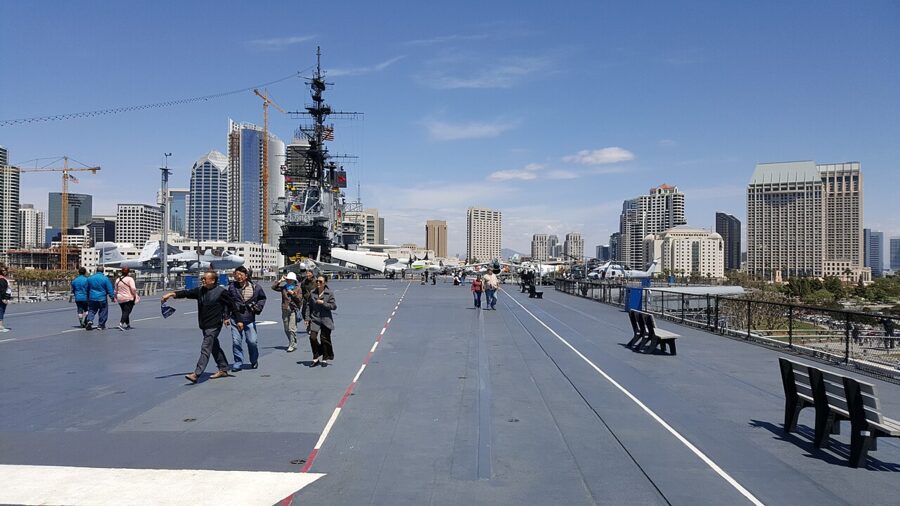
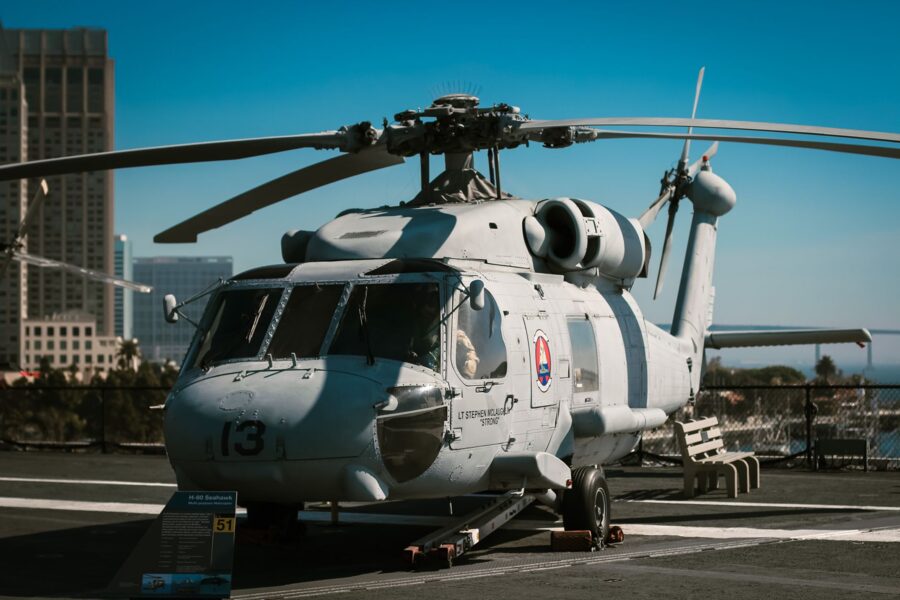
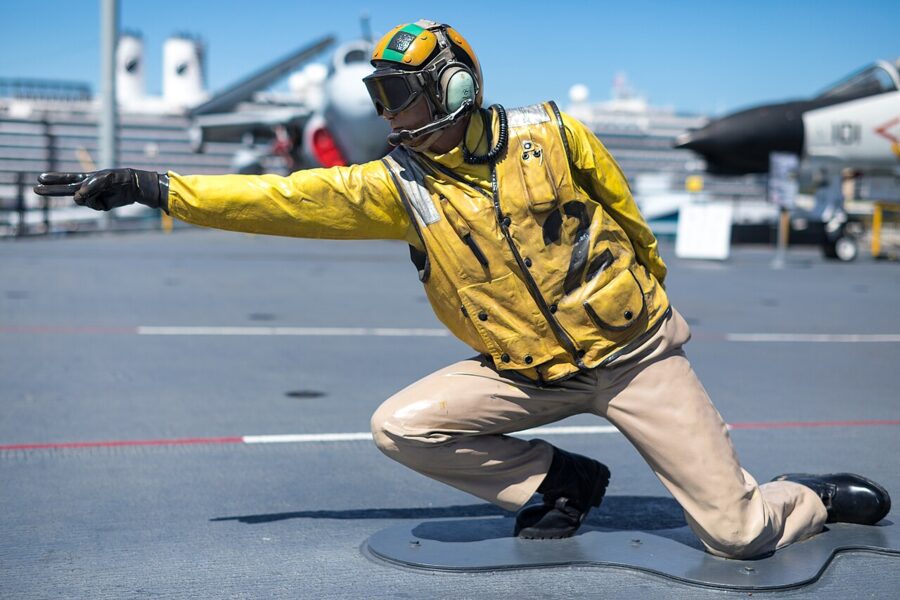
Up top are more than 20 restored aircraft, from piston-engined propeller planes to the F-14 Tomcat and the F/A-18 Hornet, and a row of helicopters that runs from the early HO3S Dragonfly to the SH-60 Seahawk. Docents, many of them former Navy pilots, give Catapult and Trap Talks here every day on how jets launched and landed on a deck this short. Look for the yellow hats.
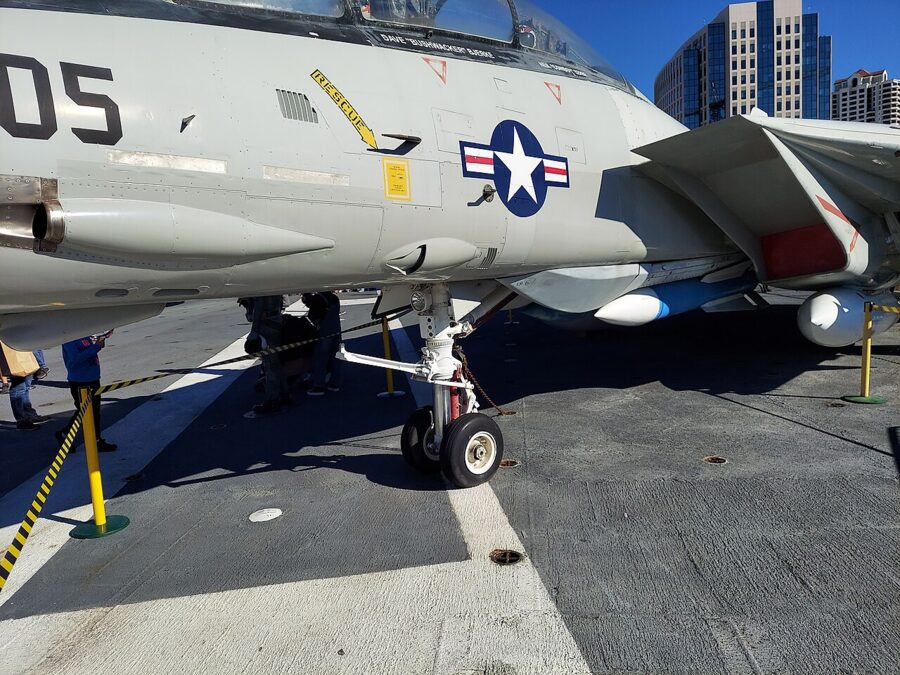
On and just below the flight deck are the Pilot Ready Rooms, the admiral’s and captain’s quarters, and two newer exhibits. Captive Warriors: The Midway 11 follows eleven Midway aviators held as prisoners in North Vietnam until 1973, and Top Secret, opened June 27, 2025, fills the restored Carrier Intelligence Center where Desert Storm strikes were planned.
The island
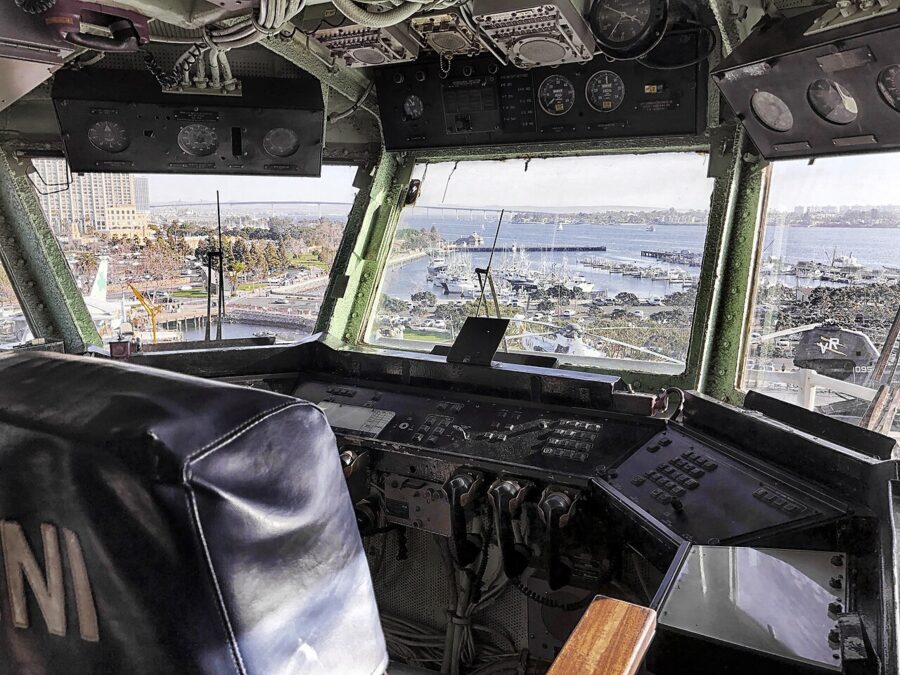
The island reopened in 2025 after months of renovation, and you see it on a docent-led tour that climbs serpentine ladders through Primary Flight Control, the chart room, the captain’s bridge and the captain’s sea cabin. Capacity is small. The museum says to do it early, because the line can close as early as 3:30 p.m. on busy days, and I’d make it the first thing you do.
The hangar deck
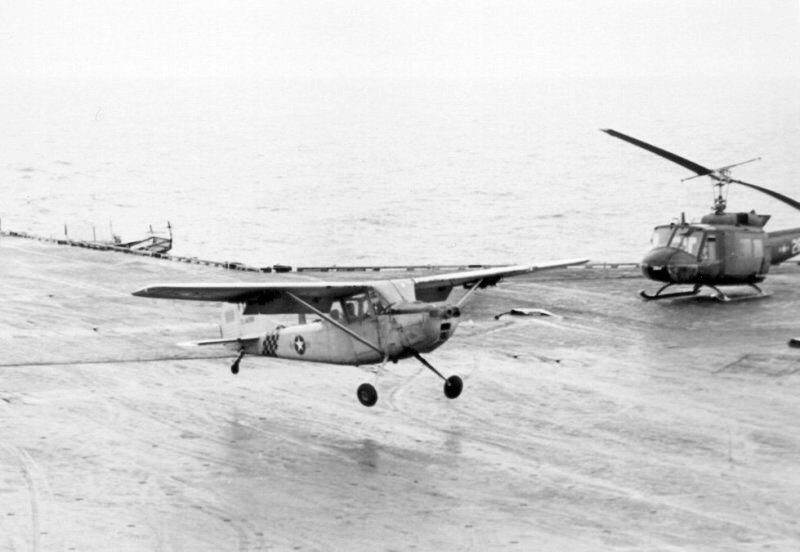
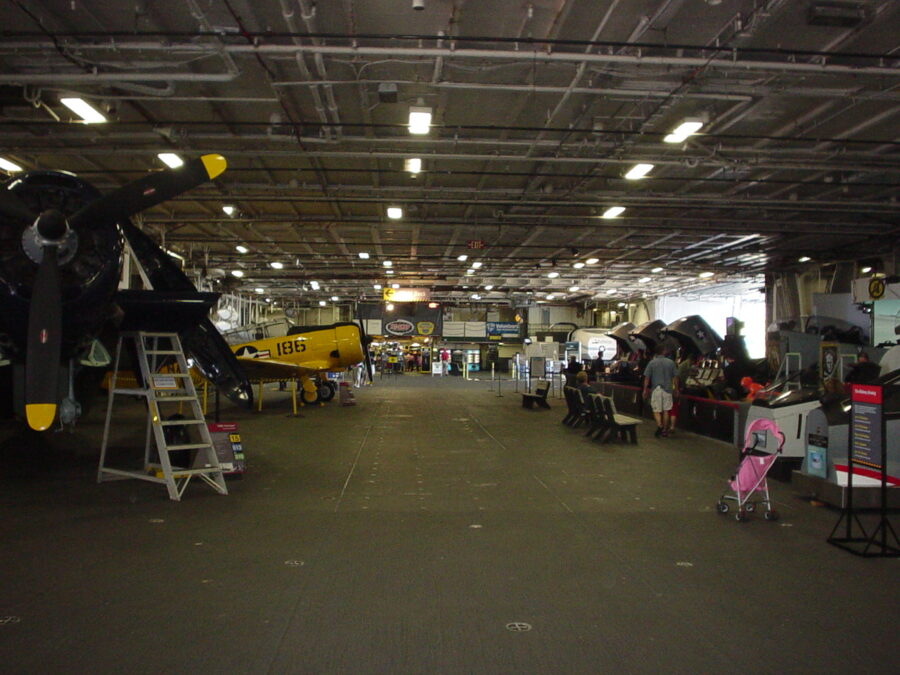
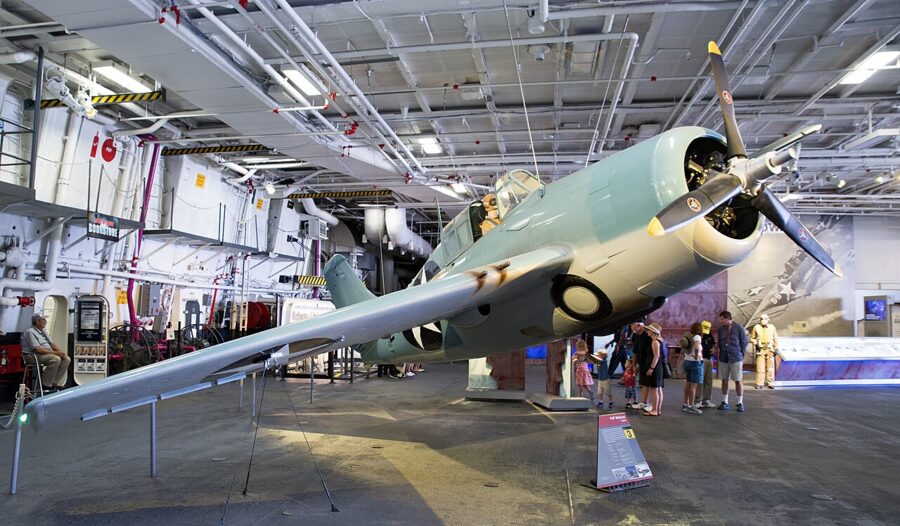
The hangar deck is where you board, and it holds the World War II aircraft: the F4F Wildcat and SBD Dauntless beside the Battle of Midway exhibit, plus a Corsair, an Avenger and an SNJ Texan. Above the Operation Frequent Wind display hangs the little Bird Dog plane in which a South Vietnamese pilot landed his family on the Midway’s deck in 1975. The 90-seat theater shows Voices of Midway, a 15-minute film on the 1942 battle, included with admission.
The paid extras are here too: the Air Combat 360 simulators, $10 a person with two riders per pod, and the Screaming Eagles virtual reality flight, $10 a rider. Skip them if the line is long; the docents are the better use of the time.
Below decks
Below the hangar the ship turns into a town: the enlisted berthing with bunks you can lie in, the chow line and galley that served more than 13,000 meals a day, the chapel, the officers’ wardroom, sick bay and dental, and, several decks down, the engine room and main engine control. The newest exhibit there, Midway’s Engineers, puts you through a staged shipboard fire. It’s loud, cramped and the best thing on the ship for understanding how people actually lived aboard.
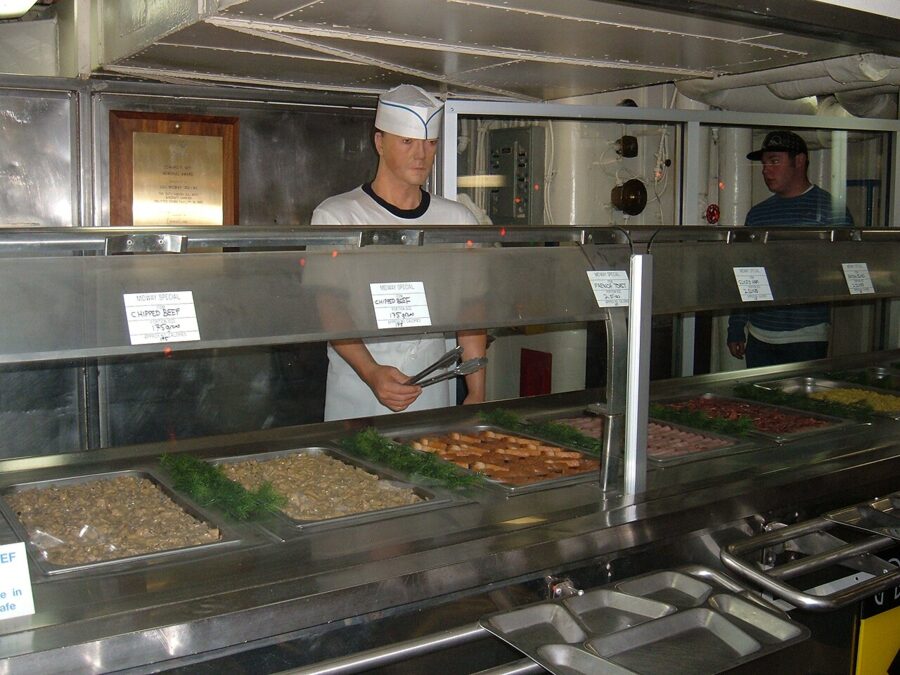
Elevators link Navy Pier, the hangar deck, the flight deck and the second deck, and wheelchairs are lent free, first come, first served. Video kiosks cover spaces that are hard to reach, but the island tour and the engine room mean ladders.
Photographing the Midway
The aircraft on the flight deck
The deck runs east to west and has no shade at all, so midday light is flat from above and harsh on gray paint. I’d come up at 10 a.m. while it’s quiet, or save the deck for the last hour before closing. In late fall and winter the sun sets around closing time (check a sun calculator for your date), and the last hour on deck is the golden one.
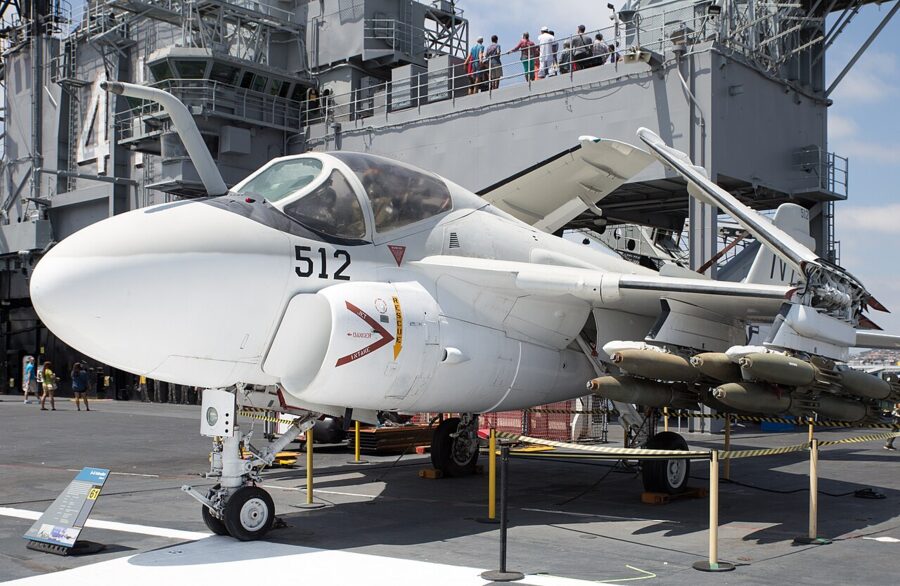
The aircraft are parked tight among rope lines and people. Work close with a wide lens and kneel at the nose to drop the crowd out of the frame. Put downtown behind the helicopters along the deck edge, and the Seahawk and Sea Knight look parked in the city.
The island
From the flight deck you look at the island’s inboard face, which points south and stays lit for most of the day. The flags, antennas and radar on top read best against blue sky, so shoot up from close to the base with a wide lens. For the whole tower with its 41, walk toward the bow and turn around.
The light in the hangar
The hangar is the hard part: overhead tubes on a dark steel ceiling, a blown-out patch of daylight at the open end, mixed color everywhere. Raise the ISO rather than use flash, which flattens the planes and lights up the people in front of them. Fix the white balance, and keep the bright opening out of frame unless you want a silhouette.
Views across the bay
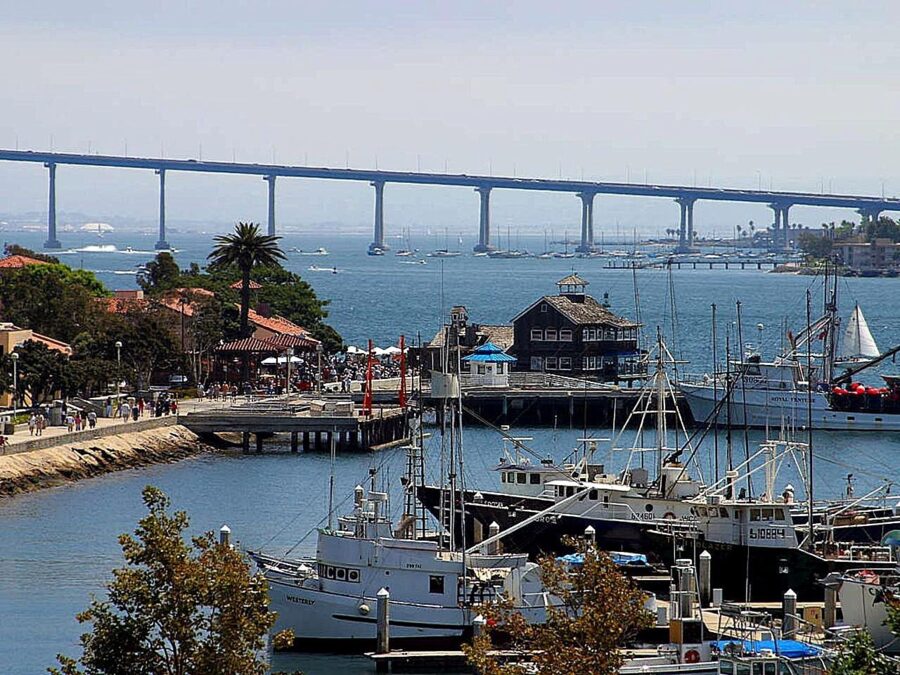
From the flight deck and the free viewing area the bay opens on three sides. West is North Island, where active carriers berth when they’re in port, with Point Loma beyond it to the northwest. The winter sun sets over North Island, the summer sun farther right toward Point Loma. Southeast is the San Diego-Coronado Bridge over Seaport Village and the Tuna Harbor marina, and north are Broadway Pier and the cruise ship terminal.
The waterfront statues
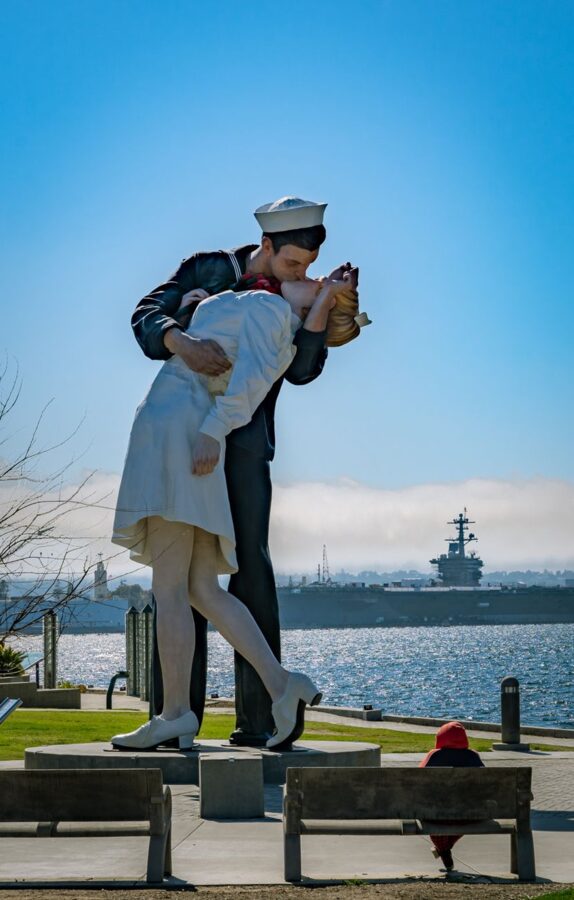
Unconditional Surrender, Seward Johnson’s 25-foot sailor kissing a nurse, stands in Tuna Harbor Park just south of the ship. It’s based on the Times Square kiss of August 14, 1945, and the permanent bronze, formally titled Embracing Peace, was dedicated on February 16, 2013, after years of a painted foam version on loan. Plenty of people think it’s kitsch, and some of the Port’s public art committee resigned over it. Everybody photographs it anyway.
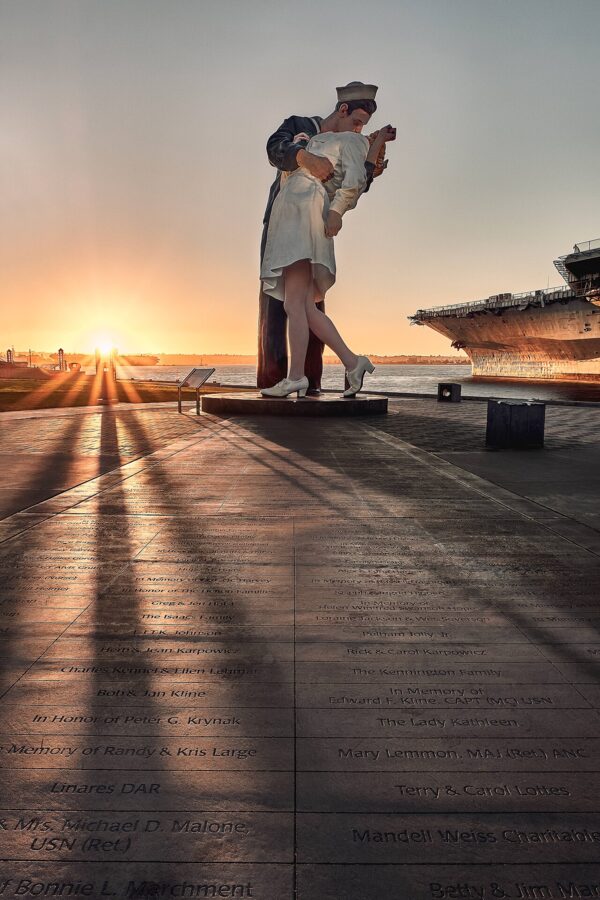
The plaza is crowded from late morning on, with people posing between the feet. Come early, before the museum opens, or step back with a longer lens so the couple stands over the ship’s flight deck instead of the crowd.
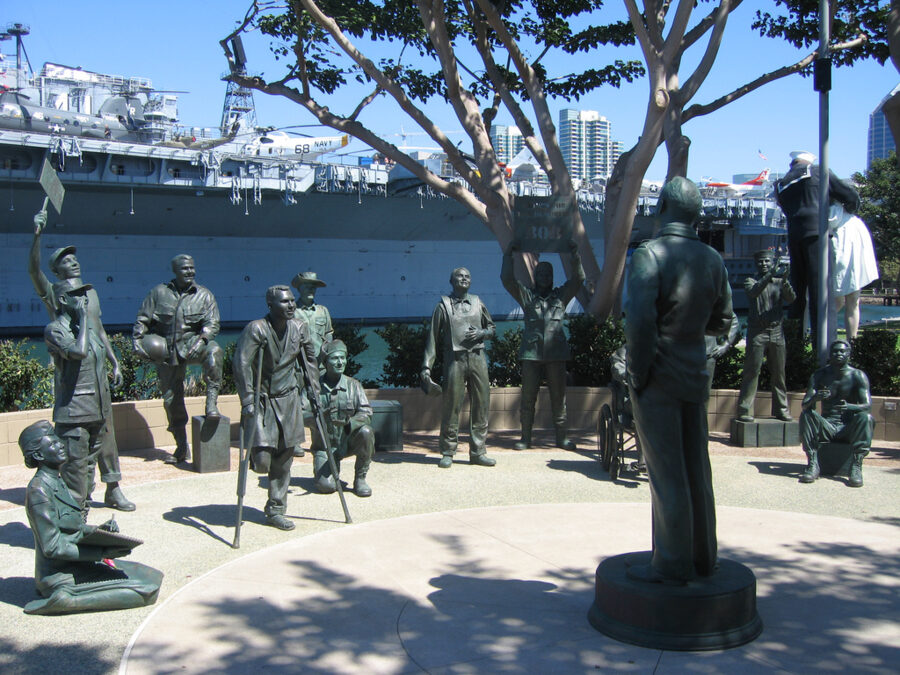
A short walk along the park is A National Salute to Bob Hope and the Military by Eugene Daub and Steven Whyte: 16 bronzes, Hope in 1940s Army fatigues at the center and an audience of servicemen and women from World War II to the Gulf War, as if at one of his USO shows. He stands so his famous nose is in profile from the sidewalk and from the water. The figures sit in tree shade, a good midday subject when everything else is too bright.
The same park holds the Aircraft Carrier Memorial, a nine-foot black granite obelisk engraved with the names of US carriers, the seven-foot bronze Homecoming of a sailor greeting his wife and child, and a memorial to the Battle of Leyte Gulf, all small and easy to walk past.
From the water, and after dark
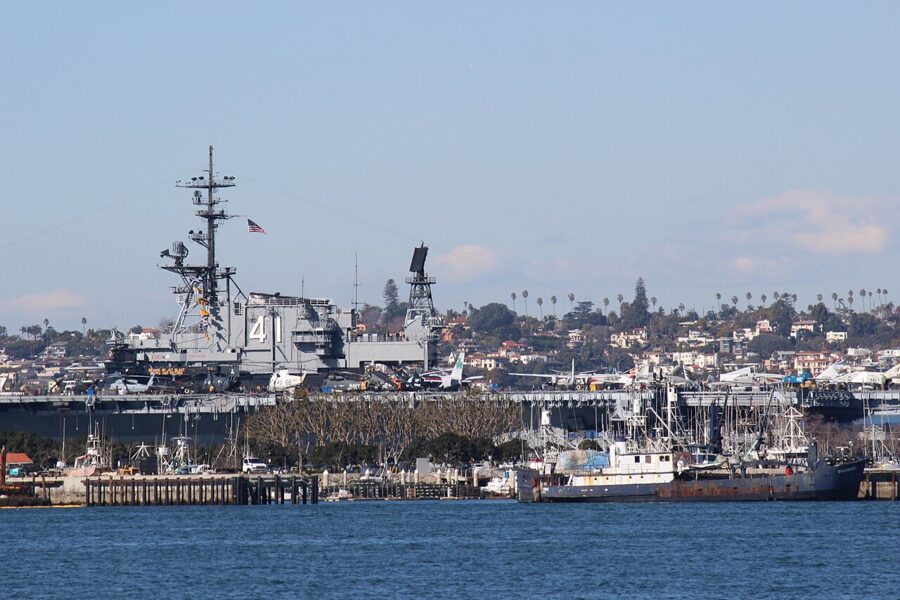
The classic full-length view is from the water. The Coronado ferry leaves Broadway Pier, just north of the Midway, every hour on the hour for most of the day, costs $9 each way and takes 15 minutes (as of November 2026). It passes the ship’s starboard side and the island on the way out, and from the Coronado Ferry Landing, about a mile across the bay, a long lens picks the island out over the harbor.
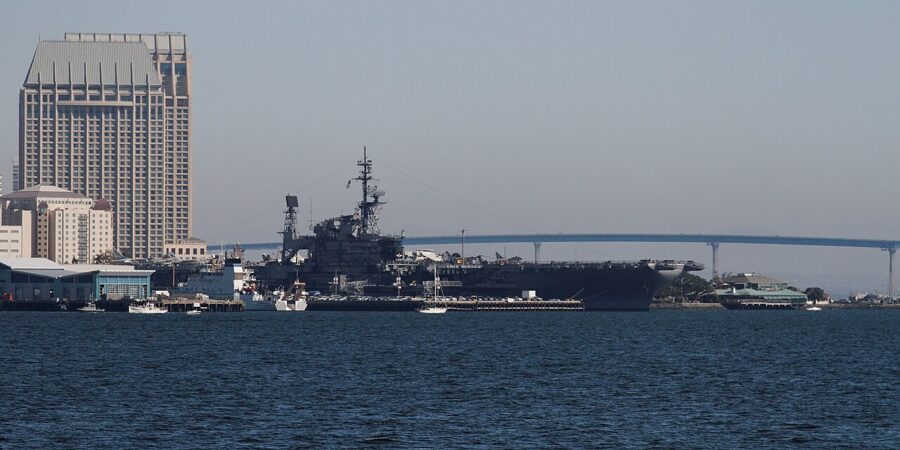
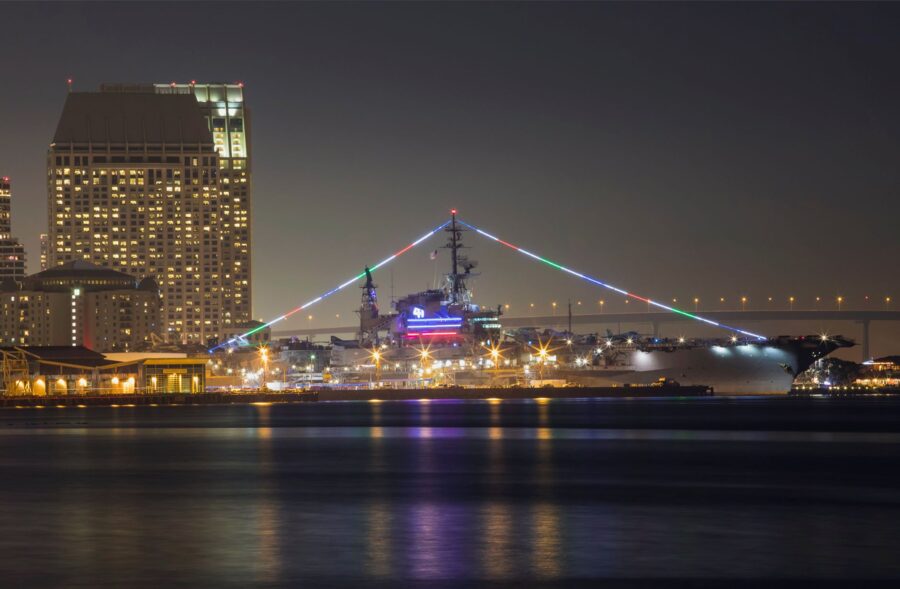
After dark the museum is closed but the ship is still there. From the Tuna Harbor walkway the hull and island reflect in the water with downtown towers behind, and the blue hour, twenty minutes or so after sunset, balances the lights against the sky. Bring a small tripod.
Leave the drone at home. The whole downtown waterfront sits in the controlled airspace of San Diego International Airport, a short way up Harbor Drive; check the FAA’s B4UFLY app before you even think about it.
The Embarcadero around the ship
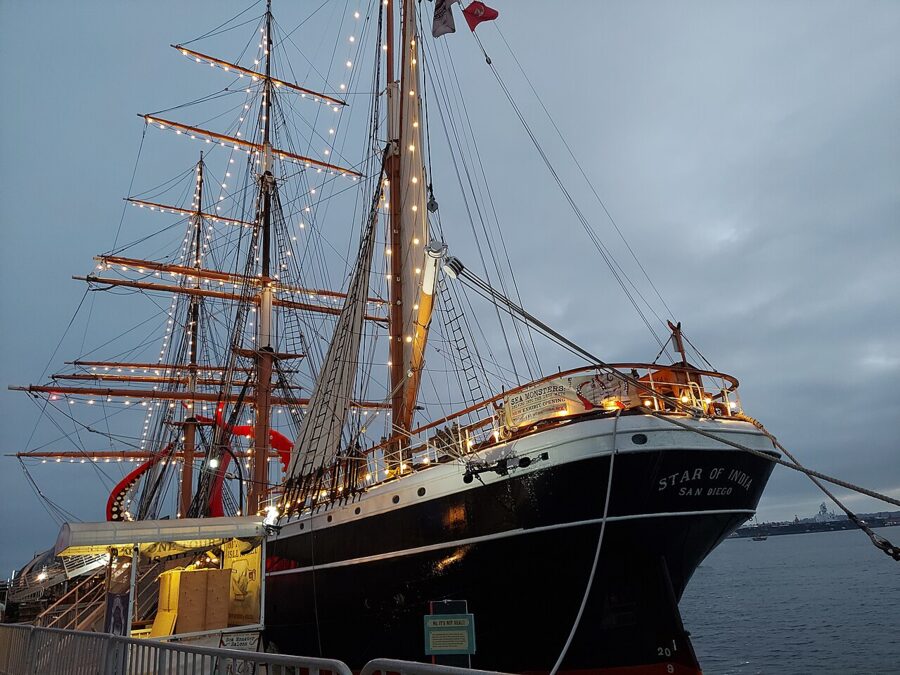
The Midway sits in the middle of the Embarcadero, the bayfront promenade along Harbor Drive. North of Navy Pier come Broadway Pier, with the ferry and harbor cruise boats, the cruise ship terminal and the Maritime Museum of San Diego, whose iron-hulled Star of India is the other great subject on this waterfront. The Midway puts the walk to the Maritime Museum or the Navy SEAL Museum at 10 to 15 minutes.
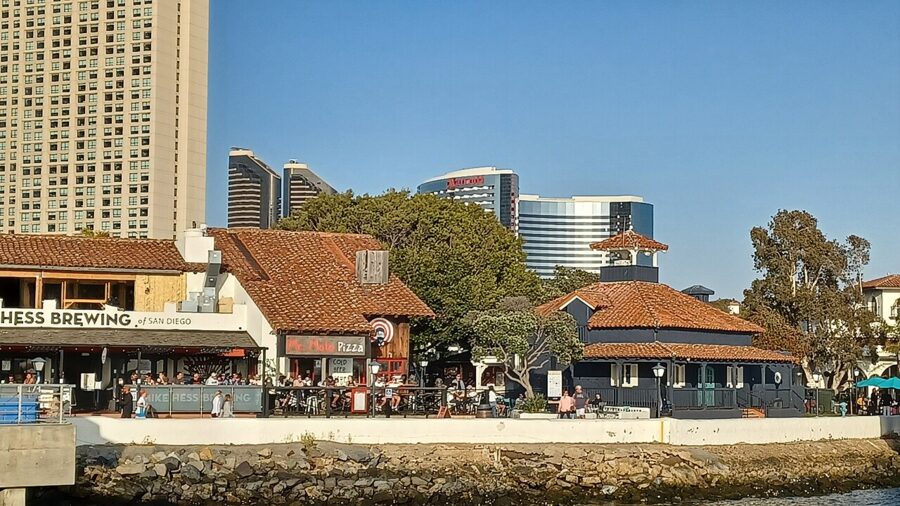
South of the ship are Tuna Harbor and its statues, then Seaport Village, a cluster of low shops and restaurants on the water with the Coronado Bridge beyond. Online Midway tickets also carry $5 off a one- or two-hour harbor tour with Flagship or City Cruises.
Navy Pier itself is changing. The Port of San Diego and the museum are building McGrath Freedom Park, a veterans park of nearly 10 acres that will run from the west end of the pier around the ship to the Bob Hope memorial, due to open in 2028. The museum says the ship and the pier parking stay open while the work goes on.
Getting there and parking
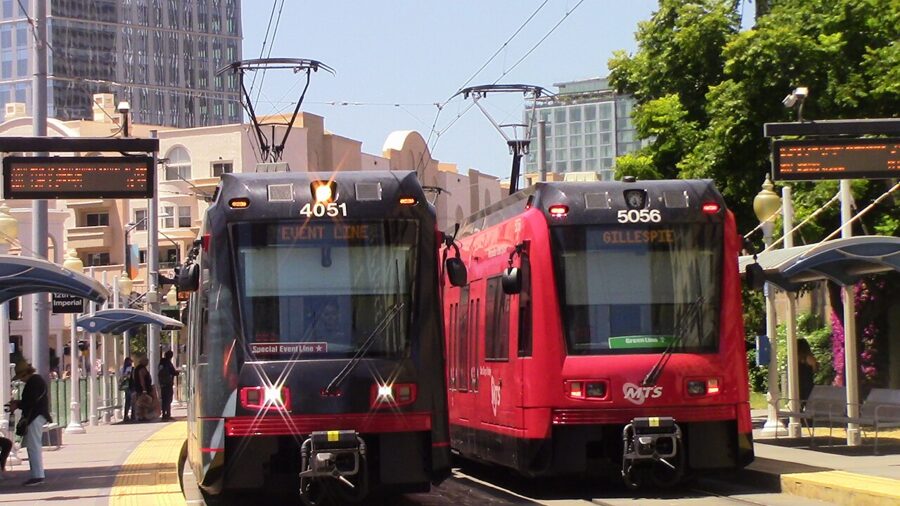
The address is 910 North Harbor Drive, San Diego, CA 92101. By rail, the Santa Fe Depot and America Plaza trolley stations are about a five-minute walk away, and Santa Fe Depot also takes Amtrak and Coaster trains; check the MTS trolley map for which lines stop where. From most downtown hotels you can simply walk the Embarcadero.
Driving, the closest parking is the lot on Navy Pier right beside the ship, owned by the Port and run by Ace Parking. As of November 2026 the museum lists rates of generally $10 to $20, higher on holidays and event days. It’s for passenger cars only: no RVs and nothing over 18 feet long, and in summer it fills early.
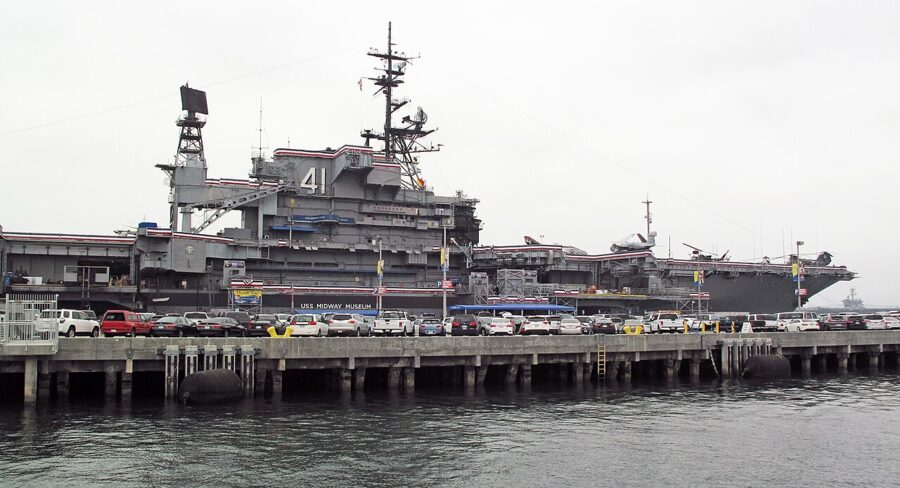
Meters and pay stations along Harbor Drive mostly cap you at two or three hours, too short for the museum, and the limits apply even on Sundays and holidays when the meters are free. The underground garage at the IQHQ RaDD complex across the street is open 5 a.m. to 11 p.m. daily, entered from Midway Place, Manchester Place or Waterfront Place. B Street Pier allows all-day parking only on days without a cruise ship.
So the plan I’d make: park or arrive at 10, go straight up to the island tour, do the flight deck while it’s quiet, and spend the middle of the day below decks and in the hangar out of the sun. Take your lunch break off the ship, come back for the last hour on deck, and when they close at five, walk out to the statue as the sun goes down over the bay.