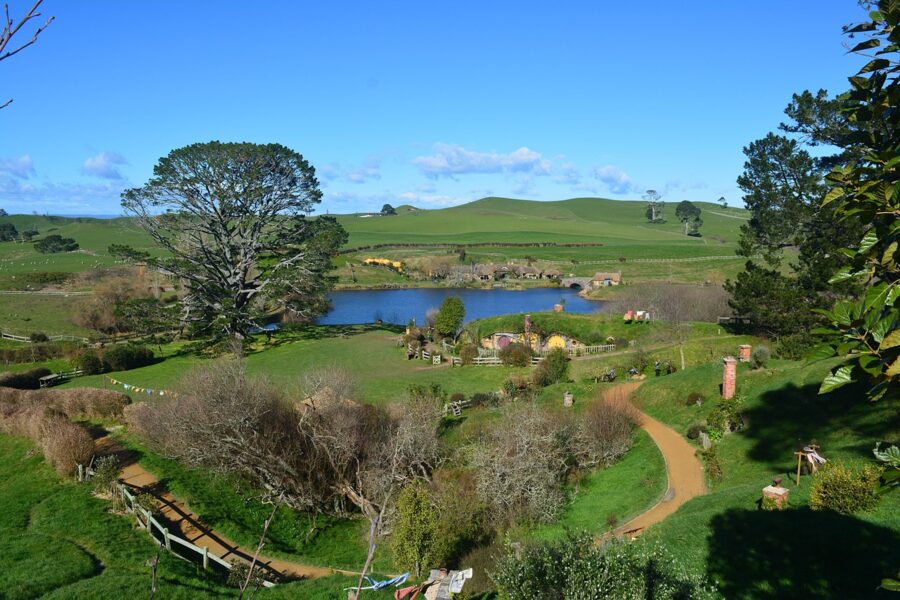
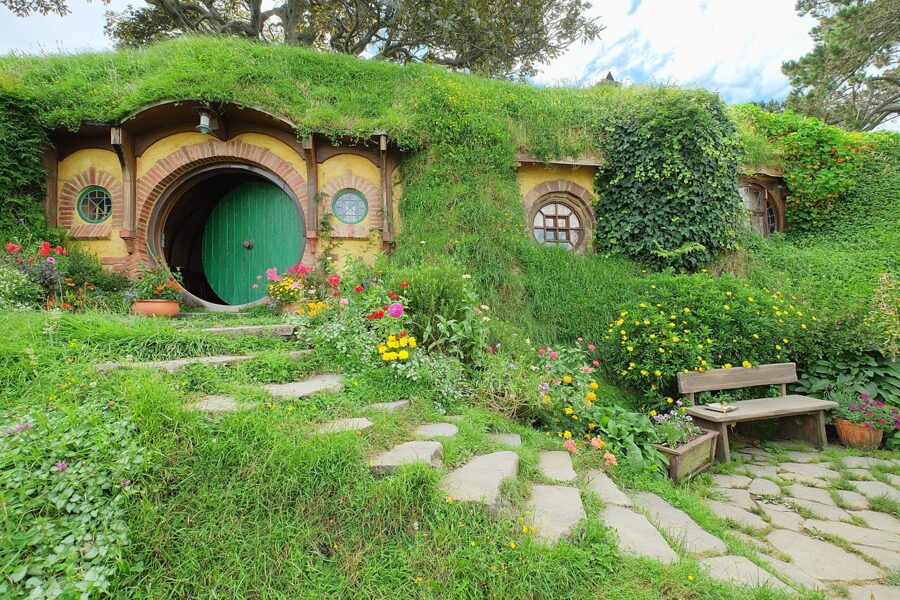
Bag End sits near the top of the hill on the west side of Hobbiton and looks south-southeast, down over the Party Tree and Bywater Pool to the Green Dragon Inn. With the sun to the north for most of the day, that whole view is lit toward you when you stand at its gate. It is the best frame on the set, and you get it for a few minutes, on a guide’s timetable, with up to 40 other people.
Hobbiton Movie Set is a film set in the middle of a working sheep and beef farm near Matamata, in the Waikato, and the only way onto it is a guided tour. So planning a visit here is less about lenses than about which tour you book and what time it leaves. Since December 2023 every tour also goes inside a furnished hobbit hole on Bagshot Row.
Tickets for the standard tour cost NZ$130 (about US$73) for an adult as of November 2026, and summer dates sell out early. Which departure you pick will decide your light more than anything you pack.
Contents6 parts
How a sheep farm became the Shire
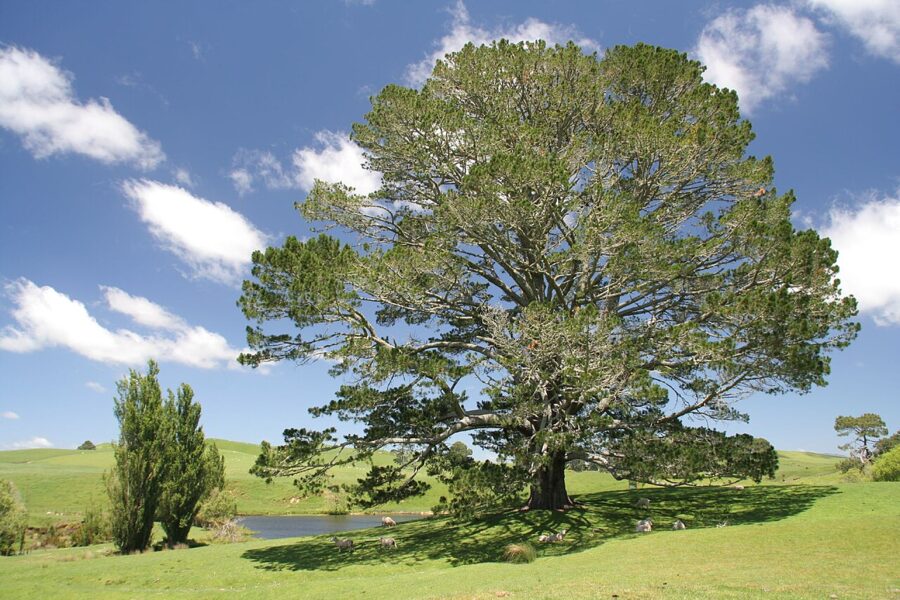
In 1998 Peter Jackson’s location scouts, searching from the air, found the Alexander family’s 1,250-acre (506 ha) farm outside Matamata. A big pine stood beside a small lake at the foot of a hill: Bag End went on top of the hill, and the pine became the Party Tree. There were no power lines, roads or buildings in sight, so the films could leave the 20th century out of frame.
Building started in March 1999 with help from the New Zealand Army, and 39 temporary hobbit holes went into the hillsides of the 5-hectare (12-acre) set. Filming began that December and the Shire scenes took about three months. When the crew tried to take the set down afterward, 17 bare plywood facades were left standing. Those shells were what the first tour groups saw in 2002.
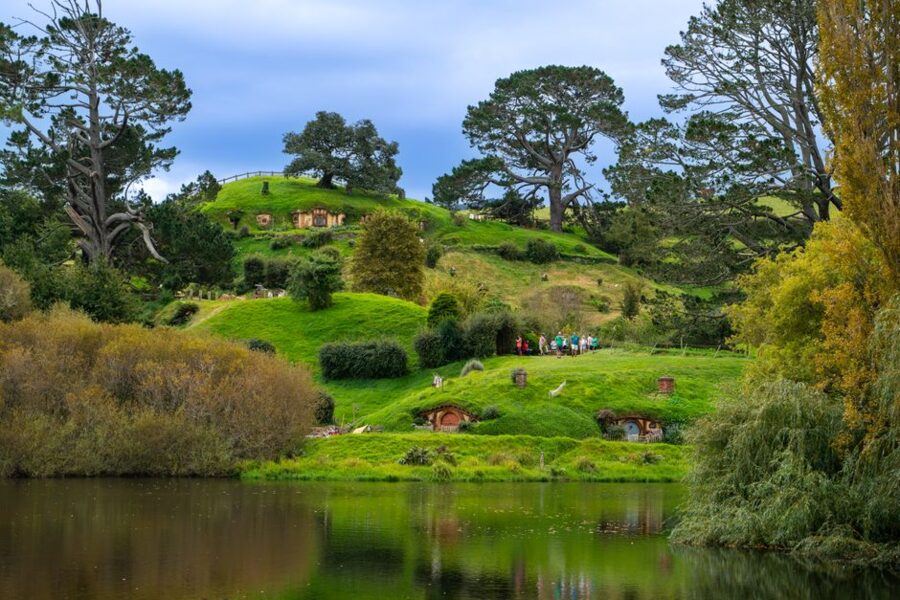
Jackson came back to make The Hobbit films and had the village rebuilt to last, which is why the 44 hobbit holes you see today have real brick, timber and planted gardens. The Green Dragon Inn opened to visitors in 2012. Bagshot Row, with two fully dressed hobbit-hole interiors, opened in December 2023, and the newest residents are three Stone Trolls in the trees at the edge of the village.
How the tours work
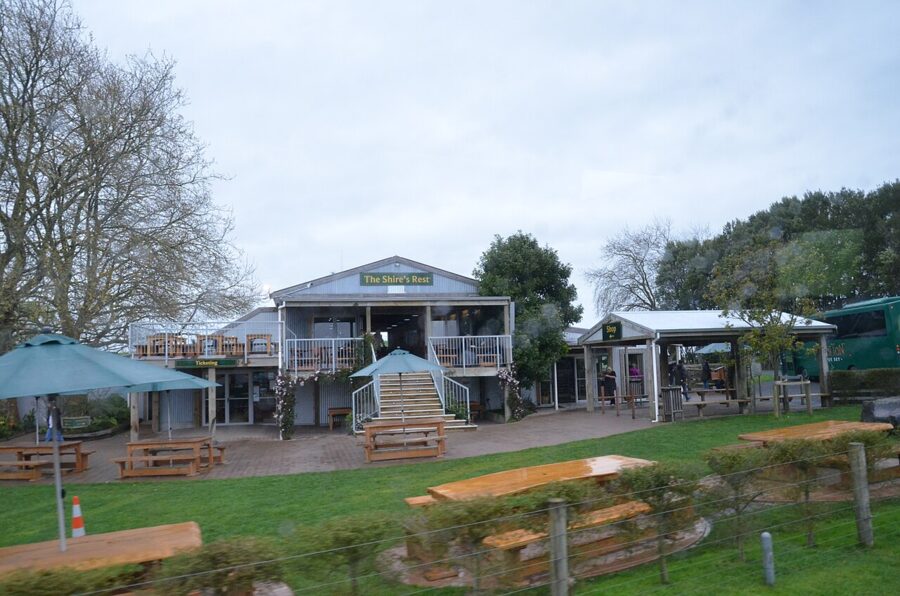
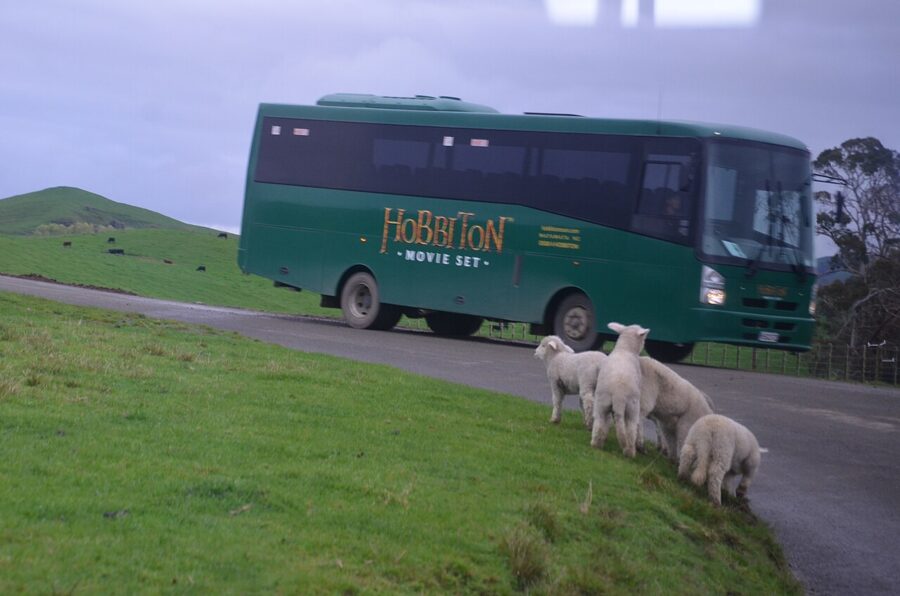
Most tours start at The Shire’s Rest, a converted woolshed at 501 Buckland Road, Hinuera, about 15 km from Matamata town. You check in at the ticket office at least 20 minutes before your departure (30 minutes for the meal tours), and a bus takes you about 10 minutes across the farm to the set. Parking is free, but overnight parking isn’t allowed.
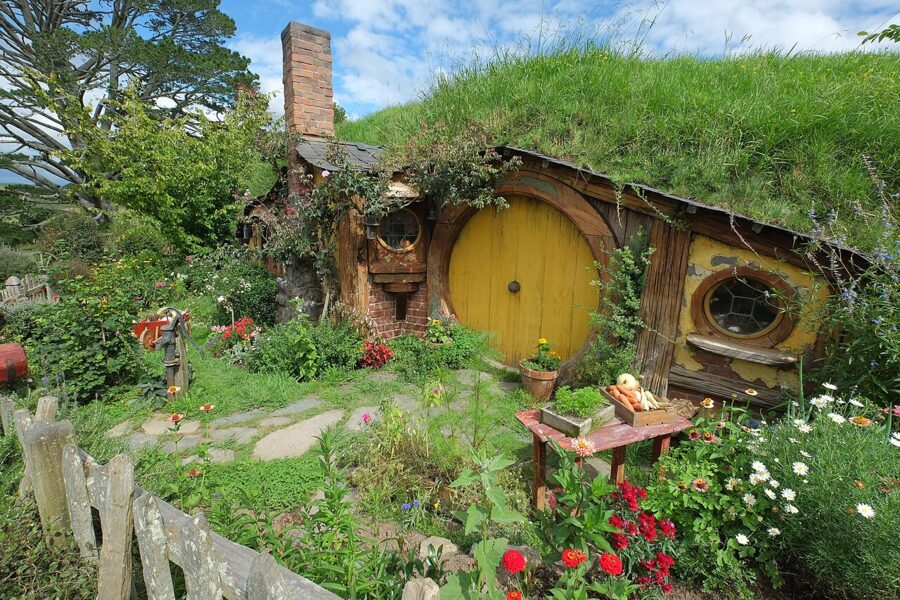
The standard tour is now called the Hobbiton Movie Set Signature Tour. Its guided walk takes about an hour and a half and covers roughly 2 km of packed clay paths and cobbles, with benches along the way. The one real climb is the hill to Bag End, a steep slope with about ten steps; if that’s too much, the guide can show you Bag End from below. A golf cart on a separate route can be booked ahead for visitors who can’t do the walk.
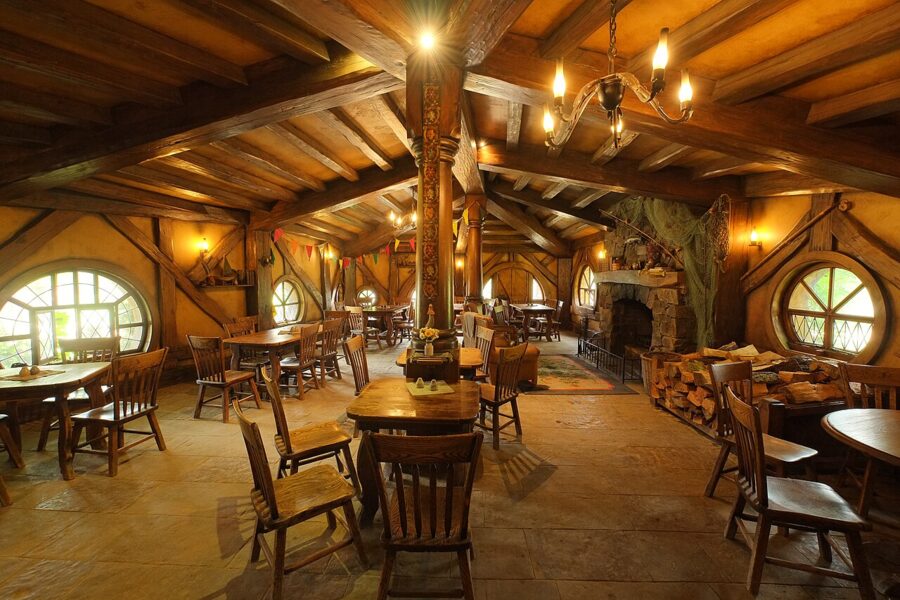
At Bagshot Row the group splits in two, and each half spends about 16 minutes in one of two furnished hobbit holes. They’re built at 83 percent scale, so tall visitors need to mind the low ceilings and archways, and you’re welcome to handle the props. Past the trolls and the Mill, the walk crosses the double-arch bridge to the Green Dragon Inn. You get about 20 minutes there and one drink from the Southfarthing range (ale, stout, cider or ginger beer), and then the bus takes you back.
Is it worth NZ$130? If you know the films, I’d say yes, and the Bagshot Row interiors made it a better tour than it was. If you’ve never seen them, it’s still a beautifully kept garden village, but you’re paying theme-park money for two and a half hours at someone else’s pace.
Tour types and prices
Prices below are in New Zealand dollars from the operator’s booking pages, as of November 2026, with rough US dollar figures. Children 10 and under go free on the standard tours but still need a ticket on the booking.
| Tour | Length | Adult | Youth (11-17) | Child |
|---|---|---|---|---|
| Signature Tour from The Shire’s Rest | 2.5 hours | NZ$130 (about US$73) | NZ$65 (about US$36) | Free |
| Signature Tour from Matamata Information Centre | 4 hours | NZ$130 | NZ$65 | Free |
| Tour and Lunch Combo | 3 hours 20 minutes | NZ$170 (about US$95) | NZ$105 (about US$59) | Free |
| Second Breakfast Tour | 3.5 hours | NZ$200 (about US$112) | NZ$125 (about US$70) | NZ$75 (about US$42) |
| Evening Banquet Tour | 4.5 hours | NZ$240 (about US$134) | NZ$182 (about US$102) | NZ$124 (about US$69) |
| Behind The Scenes Tour | 4.5 hours | NZ$290 (about US$162) | NZ$232 (about US$130) | NZ$174 (about US$97) |
A Family Pass for two adults and two youths costs NZ$332 (about US$186) on the Signature Tour, and a Mandarin-guided version runs at the same prices. On the breakfast, banquet and behind-the-scenes tours, children pay the child fare and infants go free. Private group tours start at a NZ$4,200 (about US$2,350) minimum spend.
The Second Breakfast Tour is usually the first departure of the day and ends with a hot breakfast in the Millhouse. The Tour and Lunch Combo leaves at 9:30am and sits down to a buffet in the Party Marquee at 11:30am. The Behind The Scenes Tour keeps groups to 28 and adds a banquet lunch, a look inside the Art Department’s workshop and a cheese platter at a lookout the other tours don’t use. The Evening Banquet Tour is the last of the day, with two guides, a two-course dinner in the Green Dragon and a lantern walk back through the village.
Special events go on sale about a year ahead. As of November 2026 the calendar shows A Hobbiton Christmas on 18 and 19 December 2026, a 25th-anniversary evening for The Lord of the Rings, the Summer Harvest Festival on 5 and 6 February 2027 (adults NZ$310, about US$174) and International Hobbit Day on 22 September 2027. Special-event tickets are refunded only if you cancel at least seven days out.
Booking, light and crowds
Book as early as your plans allow. Departures open at least 10 months ahead, December to February is peak season, and the operator says it often can’t take walk-ins at The Shire’s Rest. If your date is full, the free Live Availability Alerts on the official site email you when places open up. Note that the Evening Banquet Tour takes a break from 24 December 2026 to 12 January 2027.
Be careful with resellers. The operator warns that third-party sites may show availability that isn’t in its live calendar, and that some only pass your request on. Book direct, or with one of the coach companies on its transfers page.
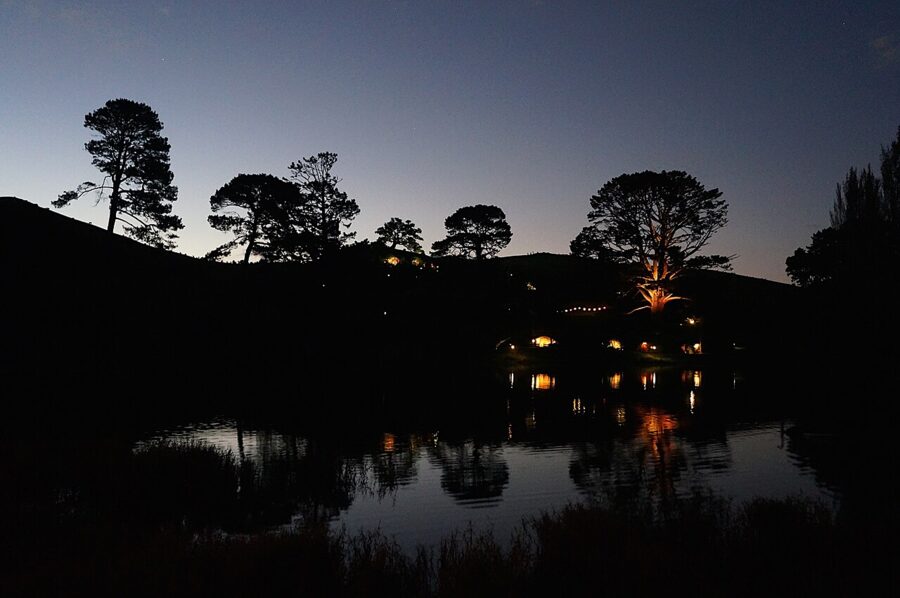
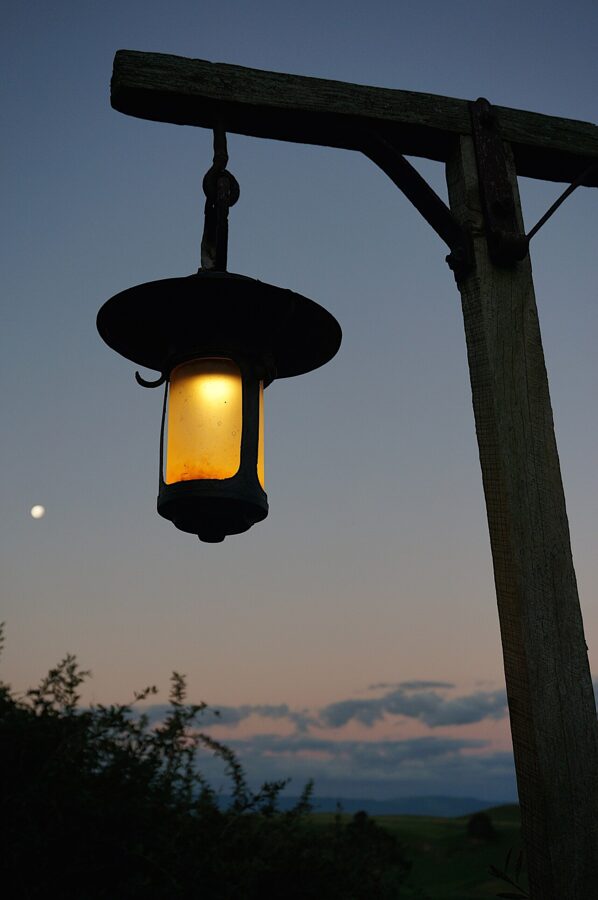
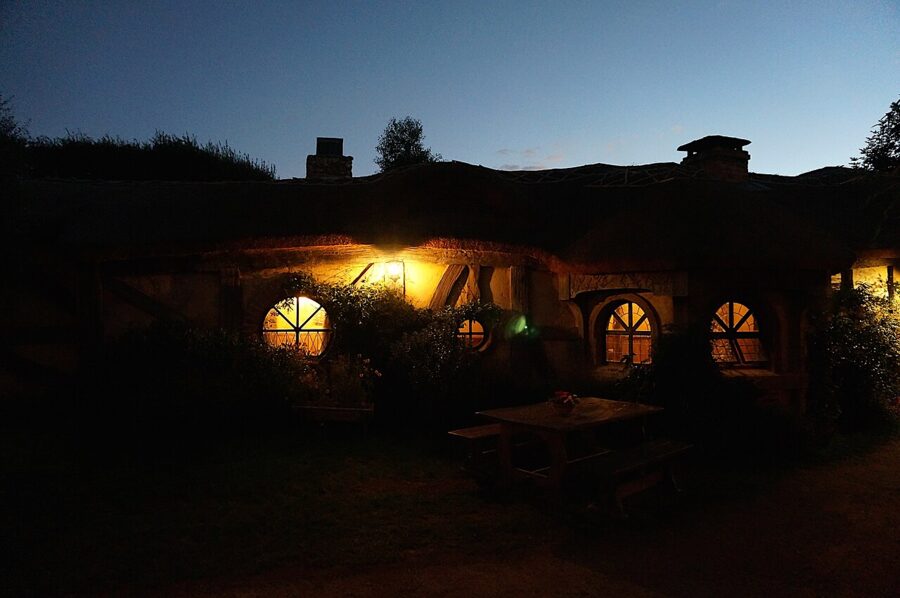
For pictures, take a tour at either end of the day. The Second Breakfast Tour walks the set in the morning dew before the day fills up, and on a winter morning that can mean frost on the grass and fog on the hills. The Evening Banquet Tour sets out in the last of the daylight and comes back after dark, with the windows and lanterns lit. Midday gives the flattest light, and with 41 people on a narrow path a clean frame is hard at any hour.
Weather doesn’t cancel tours. Umbrellas are handed out in the rain, and the paths get muddy from autumn through spring, so wear closed shoes. In extreme weather the operator may change the arrangements, and it refunds in full if it cancels.
Photographing Hobbiton
The rules are short. Handheld only: tripods and drones are not allowed, and the drone ban covers the set, The Shire’s Rest and the surrounding farmland. Anything you shoot is for personal use only, under the operator’s licence with the film companies, so you can’t sell it. Photos inside the Bagshot Row hobbit holes are fine.
Bag End and the view from the hill
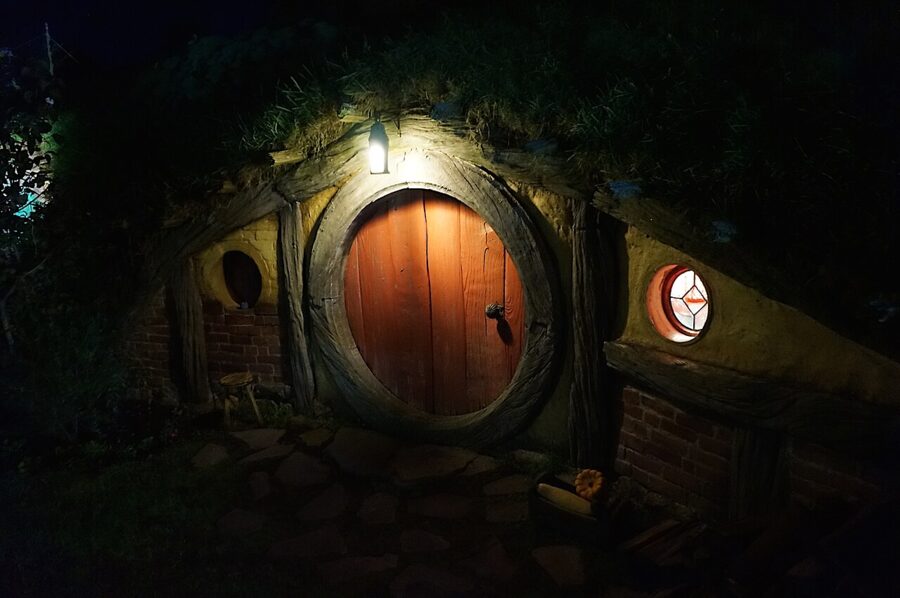
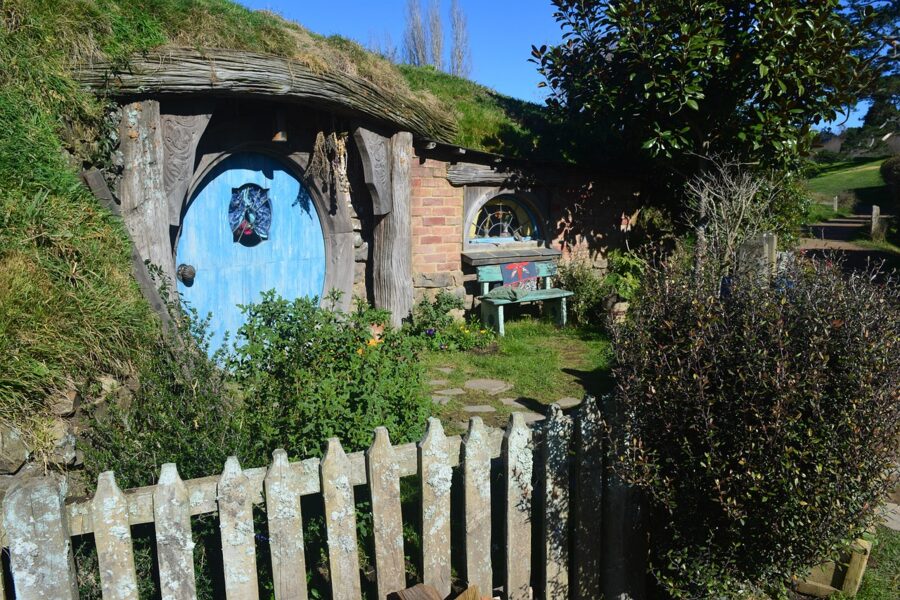
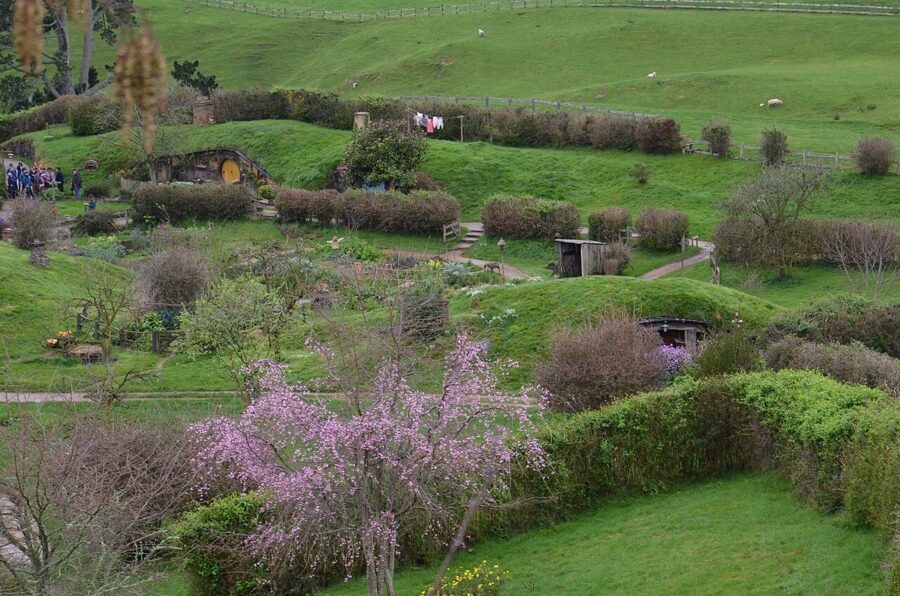
Work Bag End in two halves. Facing the door, a wide frame takes in the oak, the bench and the stepping stones, while a normal lens from a few steps downhill squares up the round door. Then turn around. The view from the gate runs south-southeast over the Party Field, the Party Tree and the pool to the Green Dragon, and with the sun in the northern sky it’s lit from behind you most of the day.
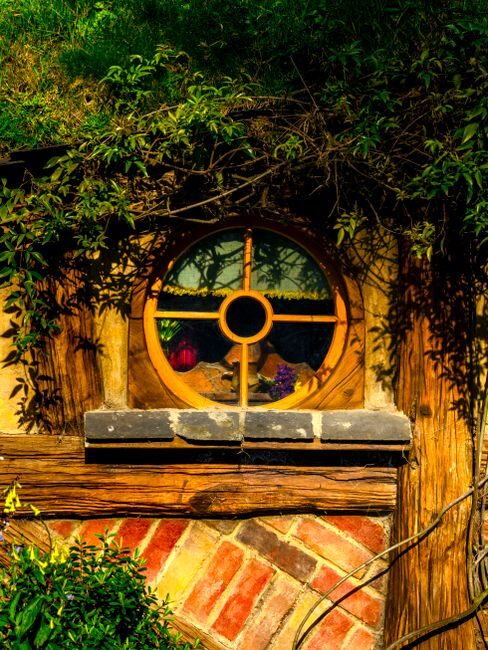
The hobbit holes along the paths come in different sizes, left over from the forced-perspective tricks used to make actors look small or large on screen. Stand next to a small door and you look like a giant; pick a big one and you’re hobbit-sized. It’s the cheapest trick on the set, and it works on a phone.
Across Bywater Pool
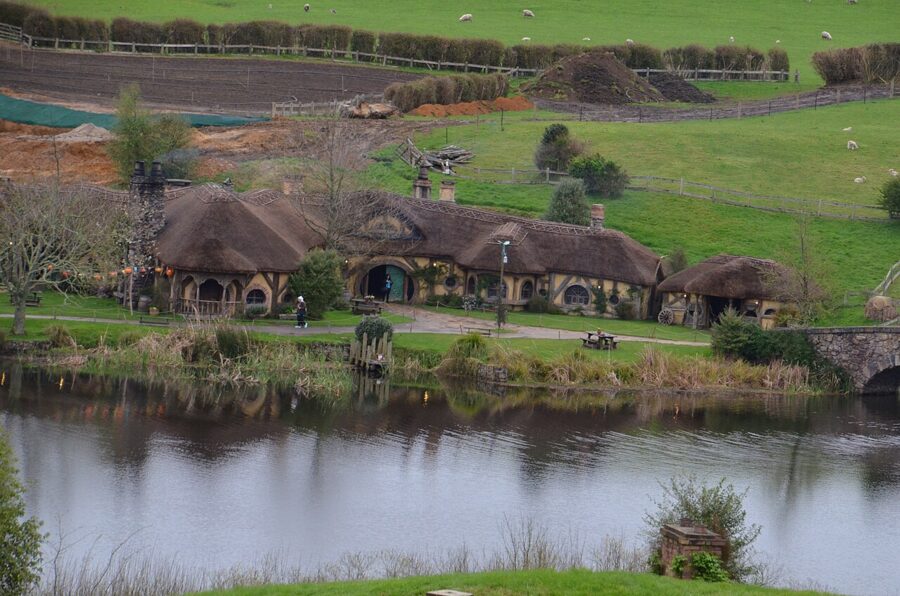
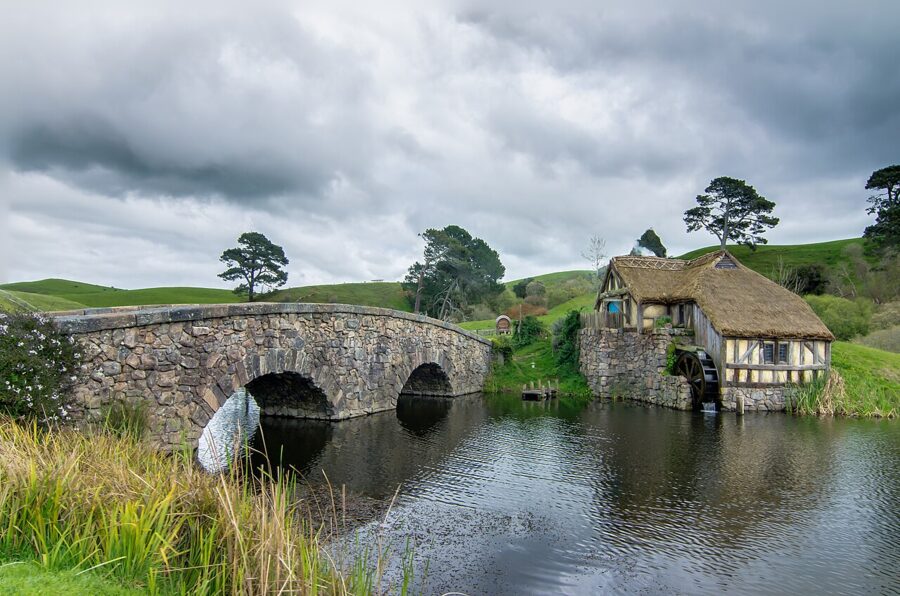
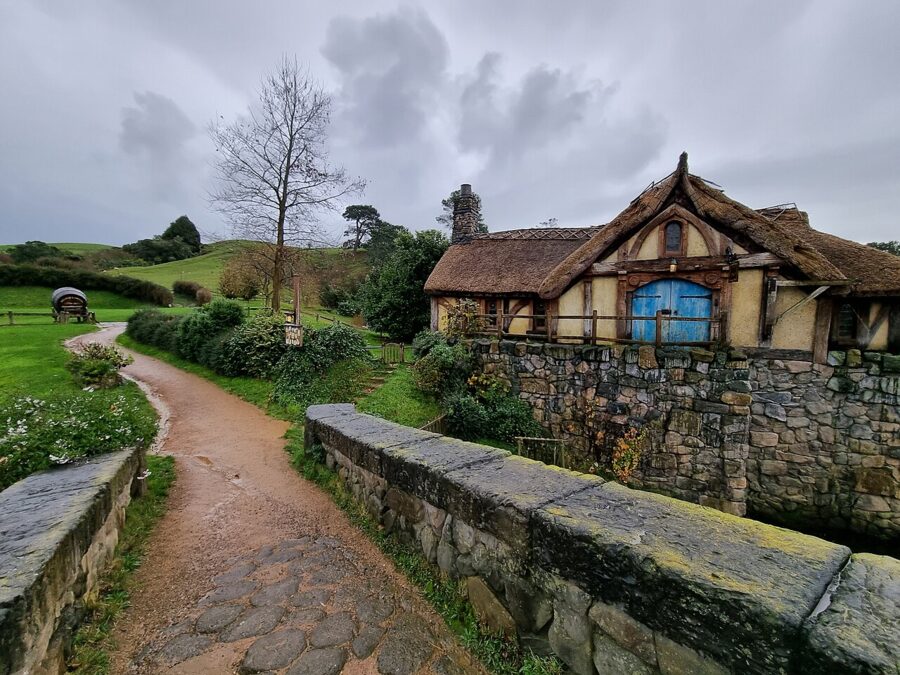
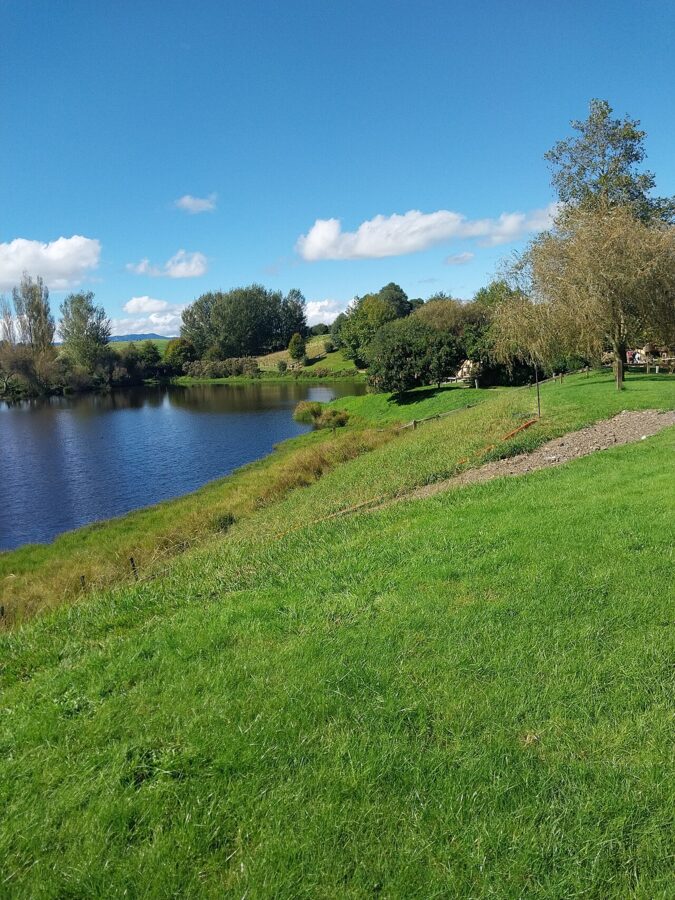
The Green Dragon, the Mill and the double-arch bridge stand along the far side of Bywater Pool from the Party Field. From the Party Field and the lakeside path you look south across the water at them, so the sun stays at your back through the middle of the day. On a still morning the pool holds all three in reflection. The bridge itself is best from low on the bank, with both arches and the mill wheel in one frame.
Inside Bagshot Row
Inside Bagshot Row the light is low and warm and the rooms are tight, so a wide lens, or the 0.5x camera on a phone, earns its place. Raise the ISO rather than reach for flash, which flattens the hand-painted carvings. Shoot the small things first, the pantry shelves and the hearth, before the room fills with people.
The seasons
Each season changes the set in its own way. Spring (September to November) brings blossom on the hillsides and lambs in the paddocks; summer (December to February) has the fullest gardens and the longest days, with earlier and later tours. Autumn (March to May) turns the trees gold and red around the water, and in winter (June to August) cold mornings bring frost and fog drifting over the hills. Snow is very rare.
Getting there from Auckland, Rotorua and Matamata
The Shire’s Rest is about 175 km south of Auckland, two to two and a half hours by car. Take SH1 down the Waikato Expressway past Hamilton and Cambridge, stay on SH1 toward Tīrau, then turn onto SH29 and Buckland Road. Allow extra time: New Zealand drives on the left, and on country roads like these you may meet sheep or cattle.
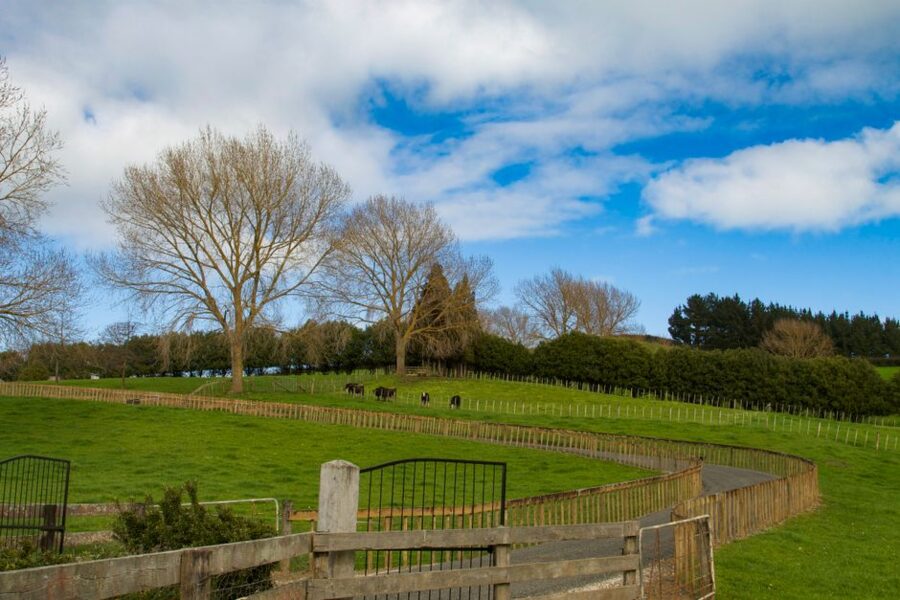
From Rotorua it’s about 70 km and roughly an hour: north on SH5, across on SH28 through Te Poi, then SH29 to Buckland Road. Hamilton is about 45 minutes away, and Matamata town is 15 to 20 minutes. A morning at the Champagne Pool at Wai-O-Tapu, south of Rotorua, and an afternoon tour here make one long, full day.
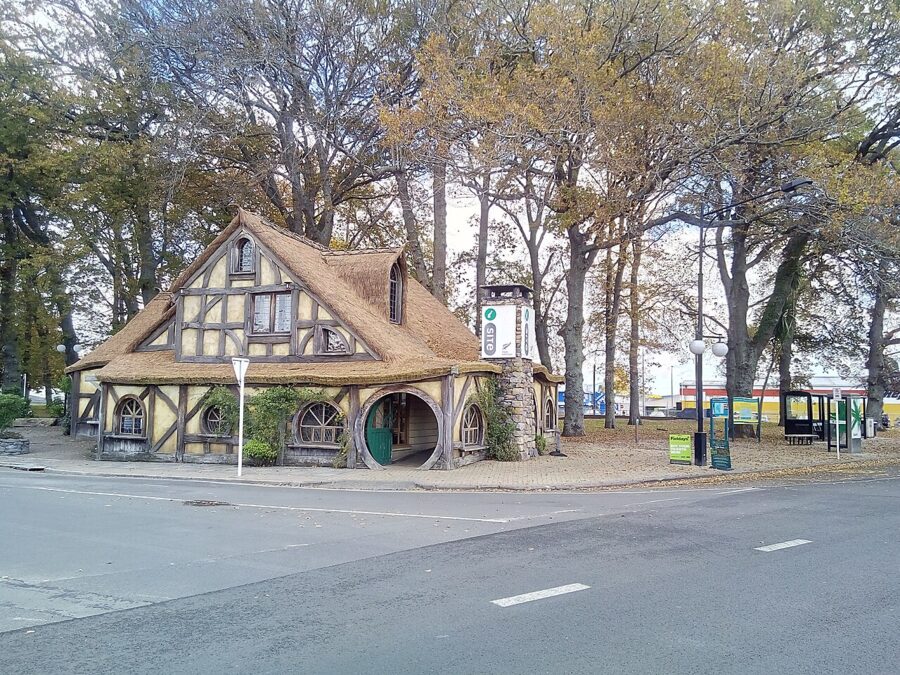
Without a car, book the Signature Tour from the Matamata Information Centre, which leaves once a day (except Christmas Day) from the i-SITE at 45 Broadway and includes 20 minutes at The Shire’s Rest on the way back. InterCity buses stop outside the same i-SITE: about 3 hours 15 minutes from Auckland, an hour from Hamilton and 50 minutes from Tauranga. Coach and small-group day tours run from Auckland and Rotorua too, and the operator’s transfers page lists the companies it works with.
Nearby
Matamata sits on the plains below the Kaimai Range, and the best of the area is either up in those hills or along the rivers that come out of them. The three stops below all fit around a tour.
Wairere Falls
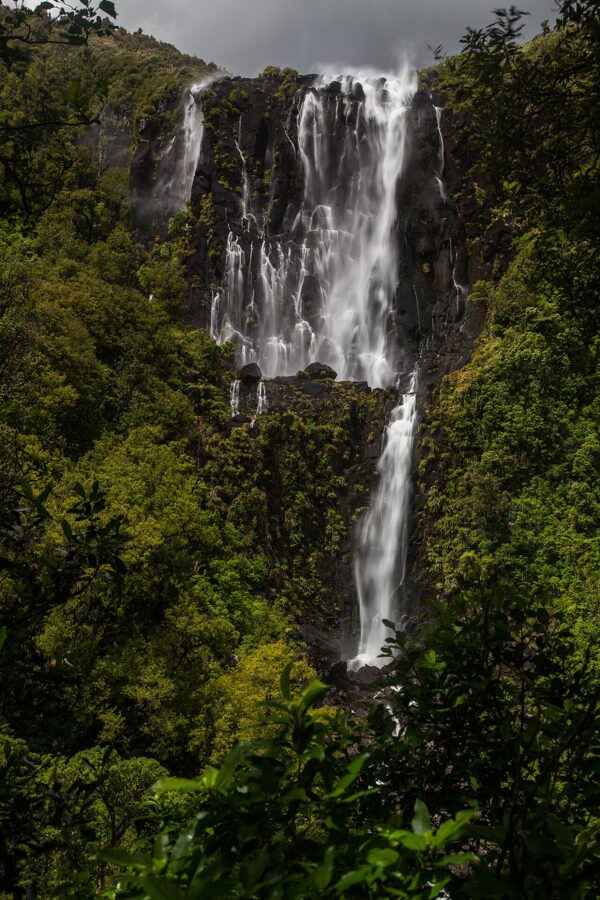
Wairere Falls drops 153 m down the western face of the Kaimai Range, about 40 minutes’ drive from The Shire’s Rest; the track starts from a car park on Goodwin Road, off Te Aroha-Okauia Road. The track reopened on 4 November 2026 after a 16-month closure for rockfall work, with a new top platform, bridge and stairs. Allow about 45 minutes to the lower lookout and three to four hours return to the top, steep and rough most of the way. Because the cliff faces west, the falls take the sun in the afternoon.
The Department of Conservation warns of rockfall, highest during and after heavy rain, and asks walkers to move through marked rockfall zones without stopping and to stay back from the edge at the top. Don’t walk it in heavy rain or under a severe weather warning, and check the track page for alerts before you go.
Blue Spring and Te Waihou Walkway
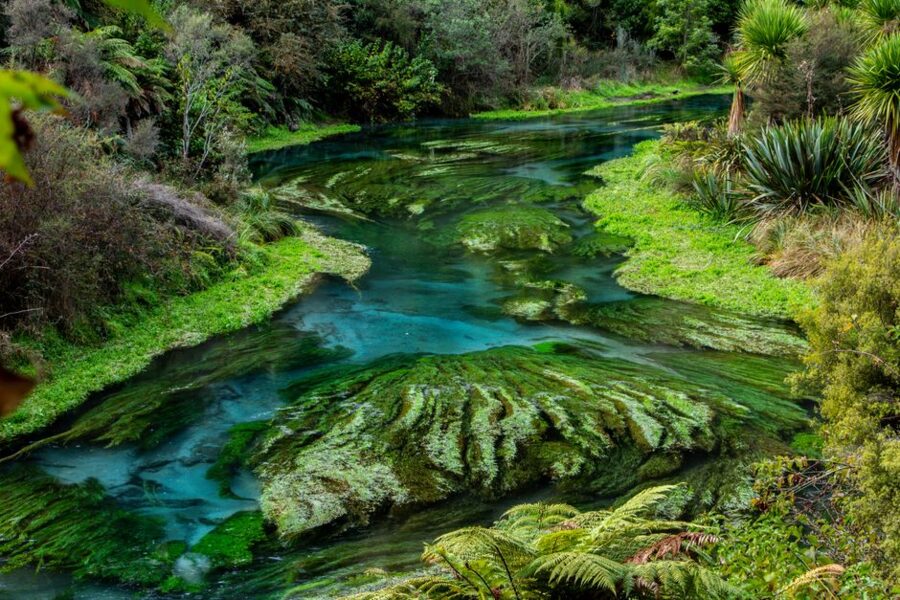
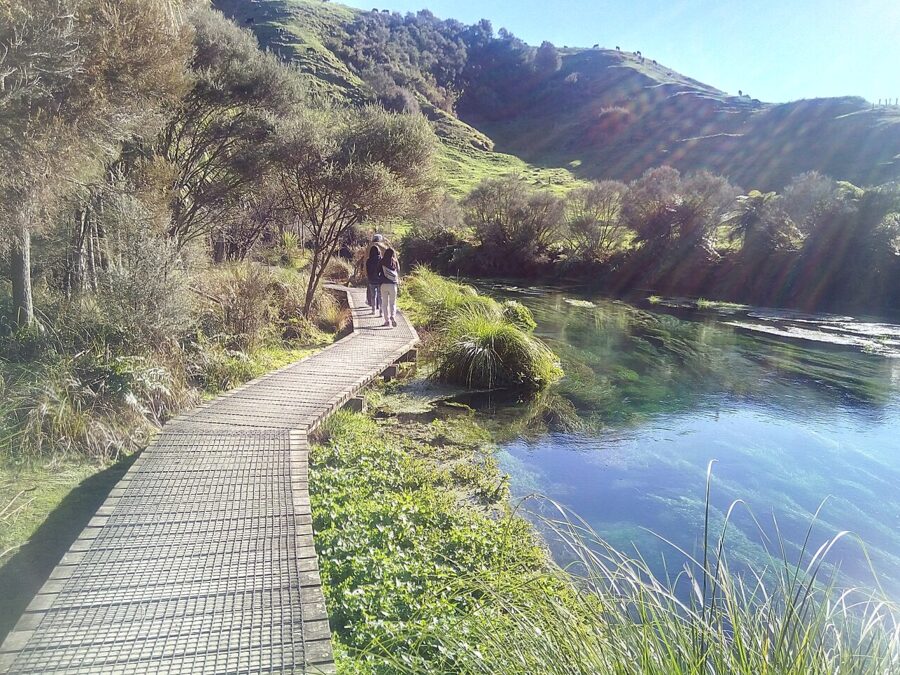
About 35 km south of The Shire’s Rest, near Putaruru, the Waihou River rises at the Blue Spring at a constant 11°C, and the water is famous for its clarity. Te Waihou Walkway follows the river between car parks at Whites Road and Leslie Road, and it fully reopened in June 2025 after a slip closed part of it. The South Waikato District Council asks you not to swim at the spring itself, and dogs and camping aren’t allowed.
Firth Tower
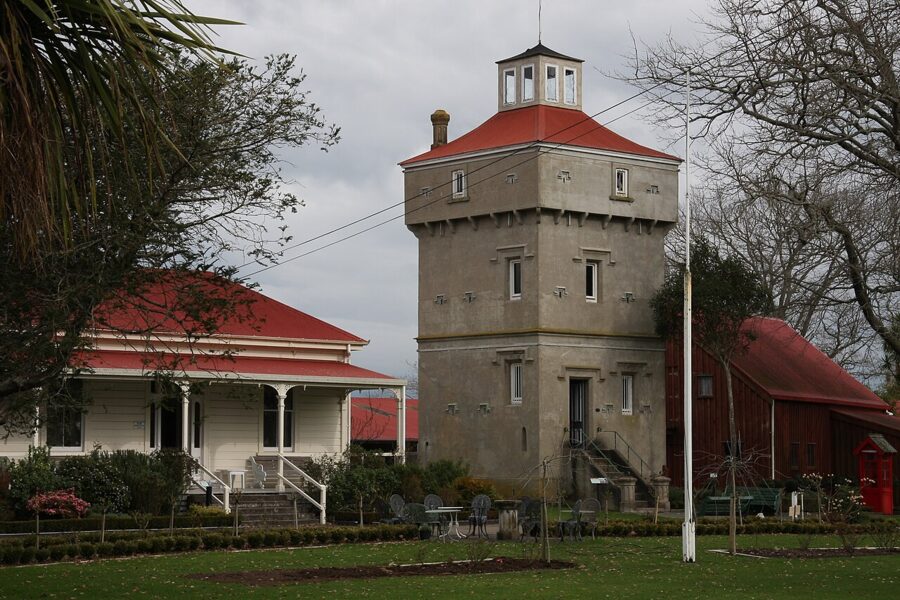
In Matamata itself, Firth Tower went up in 1881-82 on the estate of Auckland businessman Josiah Clifton Firth, and the reserve around it now holds about a dozen relocated local buildings. The museum opens 10am to 4pm on Mondays, Thursdays, Fridays and weekends, and closes on Tuesdays, Wednesdays and public holidays.
Book the first or the last departure, walk up to Bag End’s gate and turn around. The Party Tree, the pool and the Green Dragon will all be lit toward you, and that is the frame to have ready before the guide moves the group on.