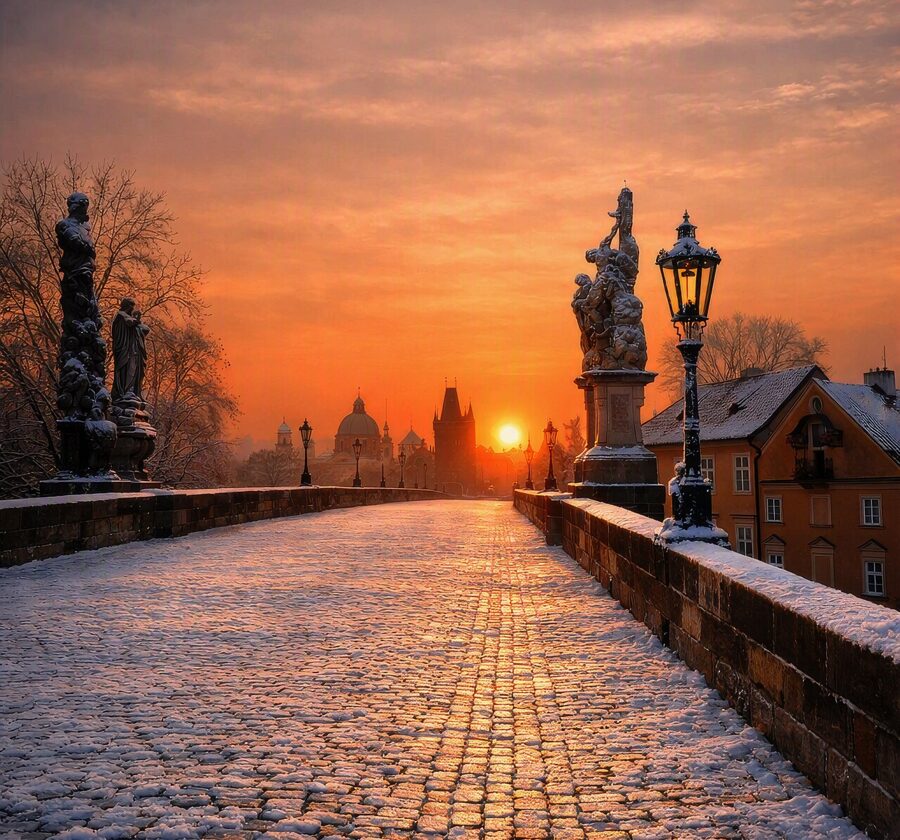
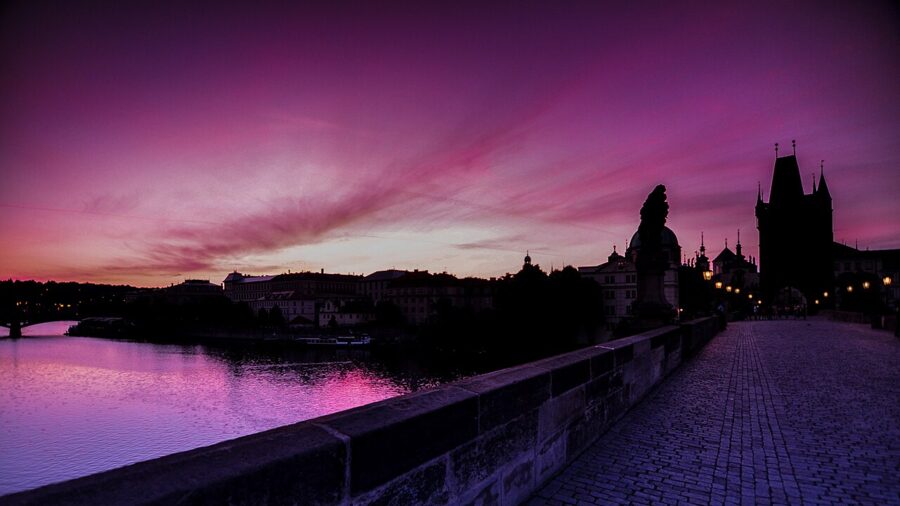
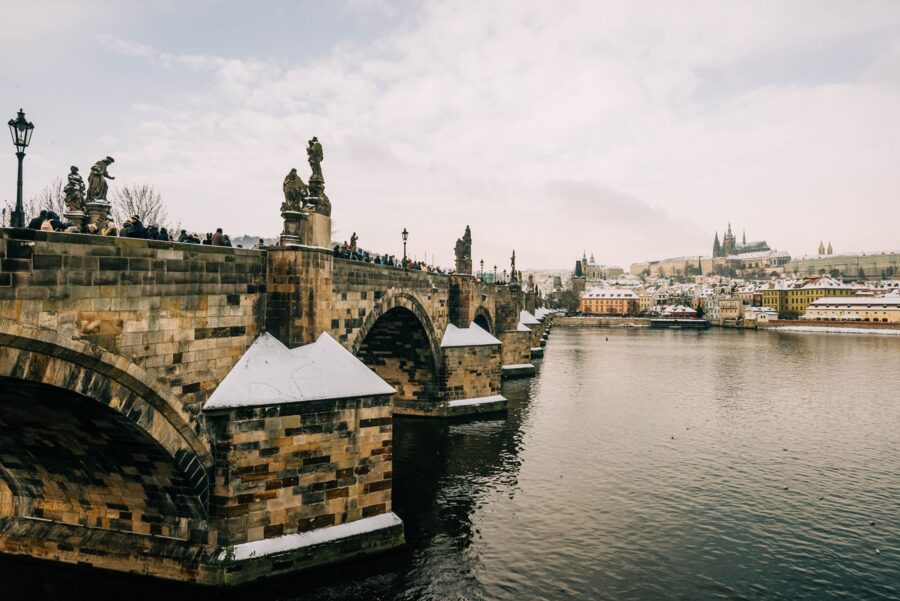
Stand at the Malá Strana end of Charles Bridge on a clear morning in late winter or in October, and the sun comes up almost straight down the bridge, behind the Old Town Bridge Tower. The statues turn to silhouettes, the paving shines, and for half an hour the most crowded half-kilometer in Prague belongs to a few dozen people with cameras.
Most of photographing Prague works like that. The city sits in a bend of the Vltava with hills on both banks, so nearly every classic picture is a view across the river, and the side you stand on decides the hour.
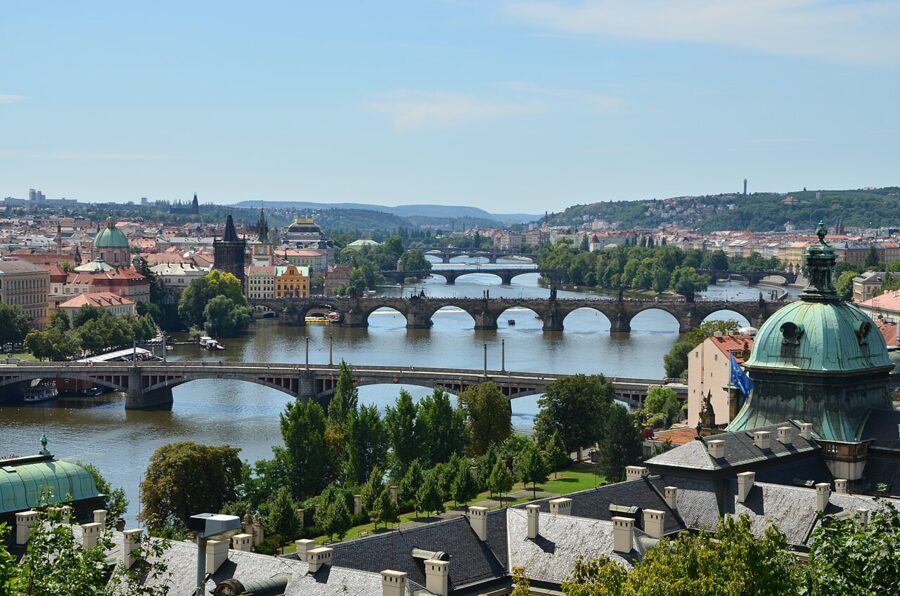
The castle faces east and catches the morning. The Old Town riverfront faces west and glows in the evening. The bridges line up when you look along the river from a height, from Letná in the north or Vyšehrad in the south.
Contents12 parts
- Which way the city faces
- Charles Bridge at dawn
- The riverbanks below the bridge
- Letná: the bridges in a row
- The Old Town Hall tower
- Petřín: the hill with the tower
- Strahov Monastery
- Vyšehrad, looking back up the river
- Riegrovy sady, for summer sunsets
- The castle district and Malá Strana
- Seasons, crowds and light by the hour
- Tickets, drones and permits
Which way the city faces
The river runs north through the middle of the city. Hradčany and the castle sit on a ridge on the west bank with Malá Strana (the Lesser Town) at their feet, and the Old Town and New Town spread over the flat east bank. Charles Bridge joins the two, running a little south of east from Malá Strana to the Old Town.
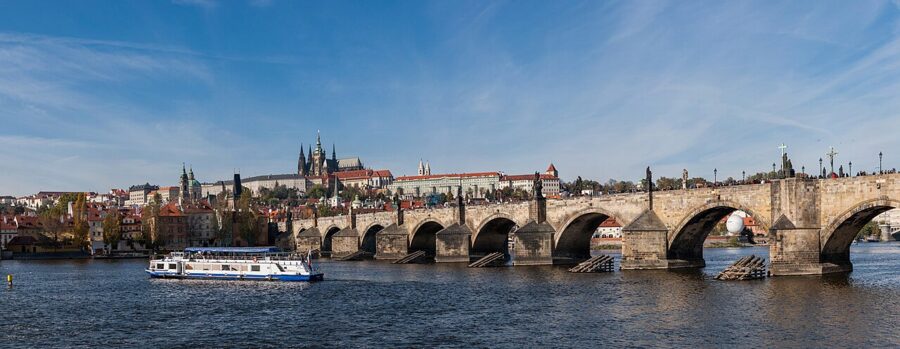
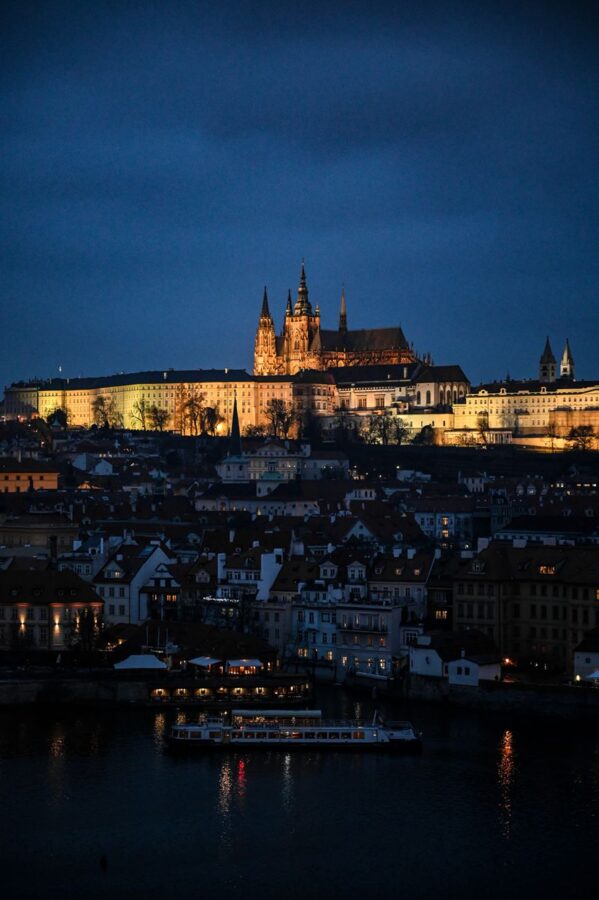
That gives you a simple rule. Anything you shoot toward the castle is front-lit in the morning and backlit in the evening, when the sun drops behind the ridge and the cathedral becomes a silhouette. Anything you shoot toward the Old Town, from the castle, Petřín or Strahov, works from mid-afternoon on, with the sun behind you. Letná and Vyšehrad, at the two ends of the river, get side light for much of the day.
Distances are short: Old Town Square to the castle is about a 25-minute walk, uphill at the end. What eats time is the climbing, so plan one hill per light window and do the towers at midday, when the light outside is flat anyway.
Charles Bridge at dawn
Construction began in 1357 under Charles IV and finished in 1402. The thirty statues of saints came between 1683 and 1928, and the ones on the parapet today are copies; six of the originals stand underground at Vyšehrad. The bridge is open on foot at every hour, with no ticket.
Which end, which month
From the Old Town end, by the bridge tower, you look west up the bridge to the castle and St. Vitus Cathedral, which take the first direct sun of the day. That is the postcard, and it works in any month with a clear sky to the east.
From the Malá Strana end you look east into the sunrise. Because the bridge runs a little south of east, the sun rises close to its line in late winter and again in autumn; in high summer it comes up far to the left, and in December far to the right. Check a sun calculator for your date before you pick an end, and if the sun is off the axis, go to the Old Town end.
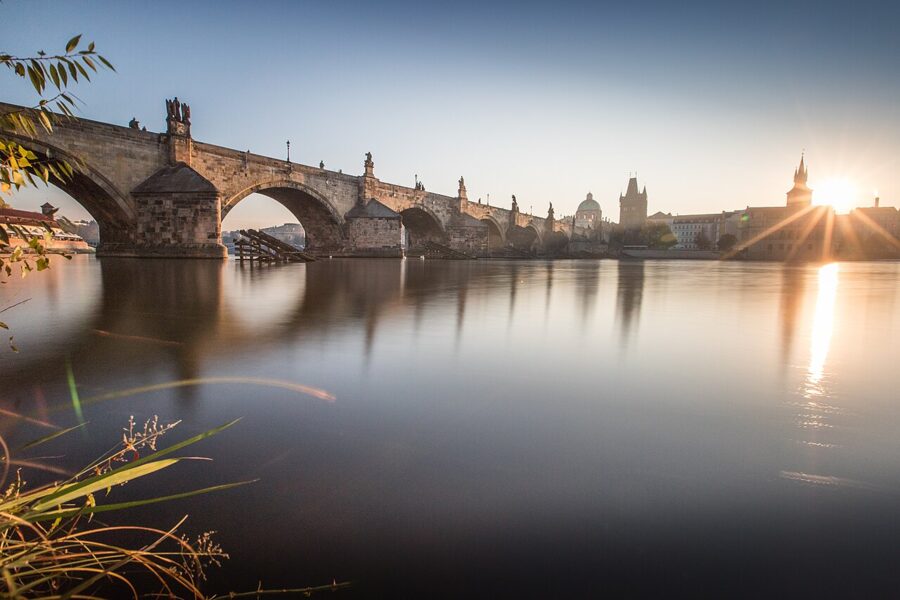
Dawn also moves a long way through the year. In June the sun is up before 5 a.m.; in December, not much before 8. The summer dawn is the quiet one. A winter sunrise lands when commuters and the first tour groups are already crossing, so you share it.
Crowds, and when they arrive
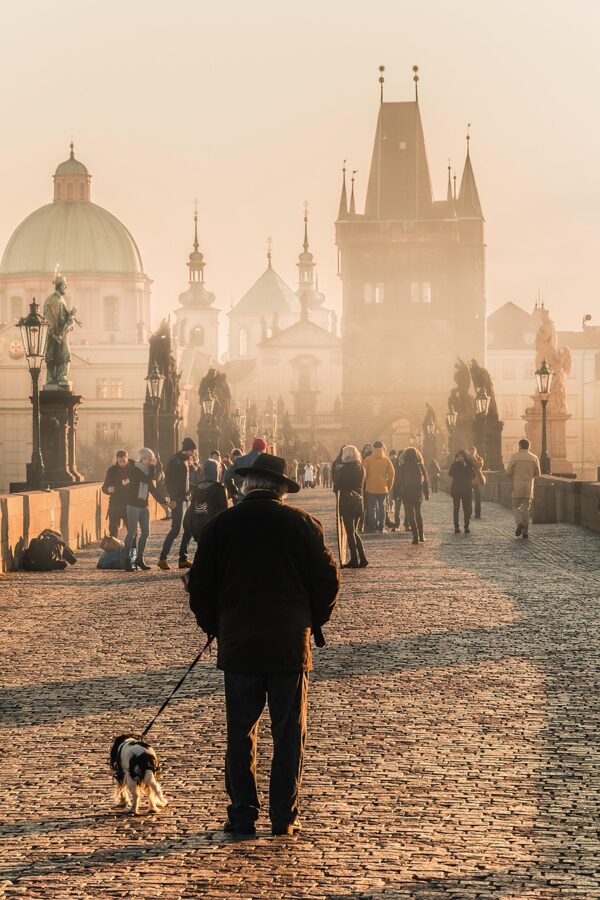
Before first light you will find a handful of photographers, a couple in wedding clothes, and runners. By 8 a.m. in summer the bridge fills, and from late morning to evening it is shoulder to shoulder, with painters and caricaturists at their stands along the parapet. Keep your camera bag zipped and in front of you in that crowd, and at the astronomical clock on the hour.
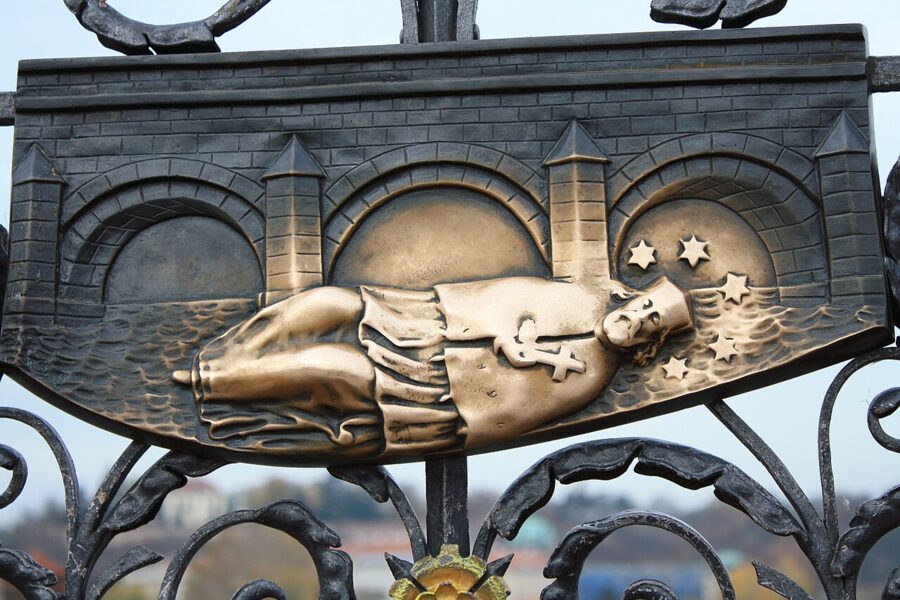
Halfway across on the north side stands St. John of Nepomuk, the oldest statue on the bridge. On its base, two small bronze reliefs have been rubbed bright gold by passing hands, which people touch for luck. In the blue hour the polished metal is the brightest thing on the bridge.
Tripods on the bridge
Tripods are a common sight on the bridge at dawn and a nuisance by mid-morning. The paving is narrow between the statues and slick when wet, and once people start walking through, a tripod leg becomes a trip hazard. Keep a small tripod tight against the parapet, do your long exposures before the sun is up, and pack it away when the walkers arrive.
Anything beyond a personal photograph is different. Before you book a paid shoot, or bring a crew, lights or stands onto the bridge, ask the Prague 1 district office (Úřad městské části Praha 1) what permission you need.
The two bridge towers
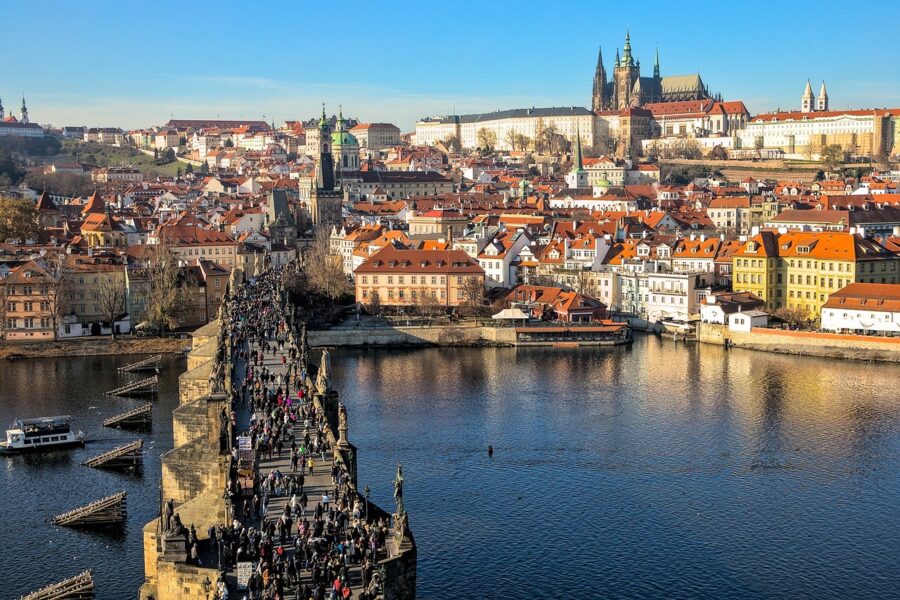
The Old Town Bridge Tower is 138 steps to a gallery looking straight up the bridge to the castle. That axis view, with the statues lined up below and the cathedral on the ridge, is the one you can’t get any other way. Morning light suits it, and Prague City Tourism recommends a morning visit anyway, because the tower gets crowded in the late afternoon.
Across the river, the taller of the two Lesser Town Bridge Towers has a gallery 26 meters up with the reverse view: the bridge running away to the Old Town, and the domes and roofs of Malá Strana close by. It is the afternoon tower.
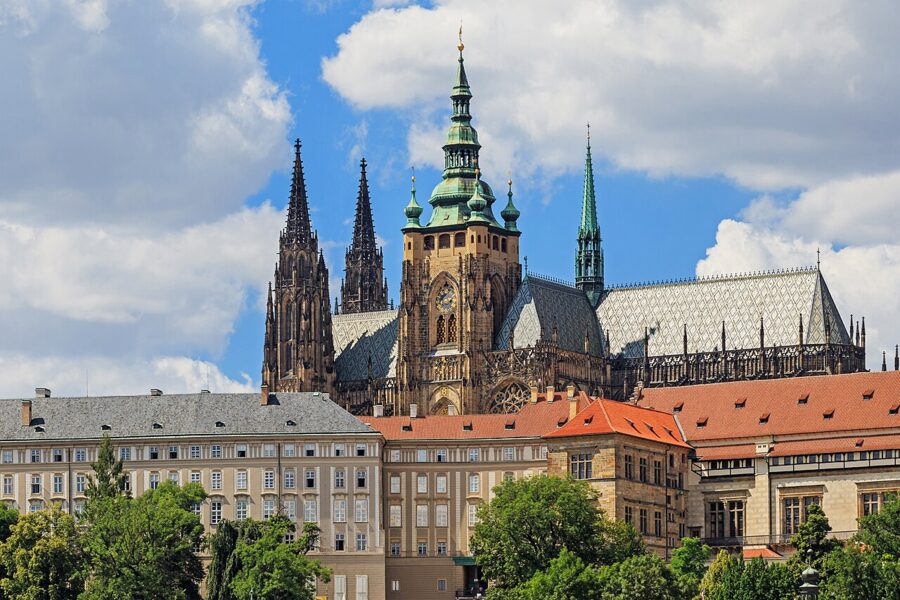
Both open at 10 a.m. most of the year and at 9 a.m. from June to September. Both give 50 percent off in the first hour after opening, which is also the quietest, and one combined ticket covers the pair.
The riverbanks below the bridge
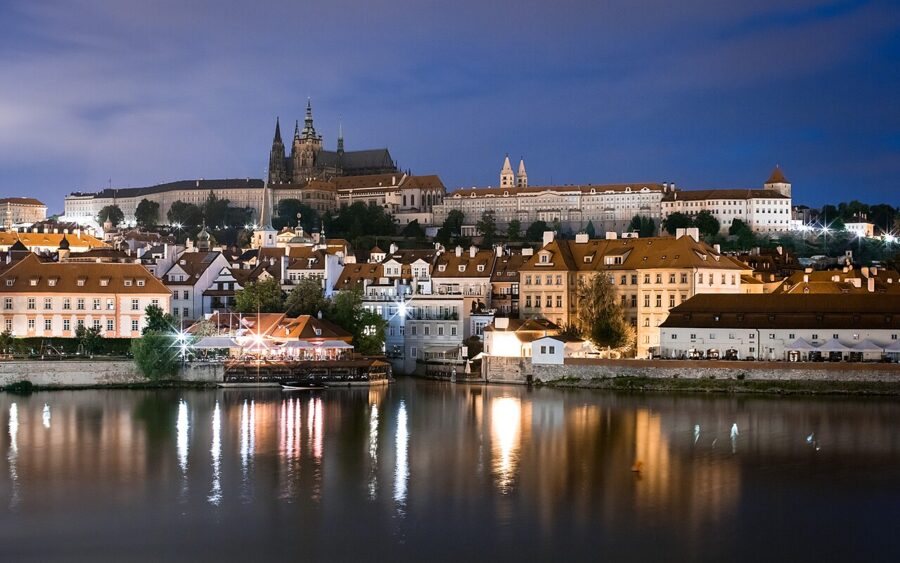
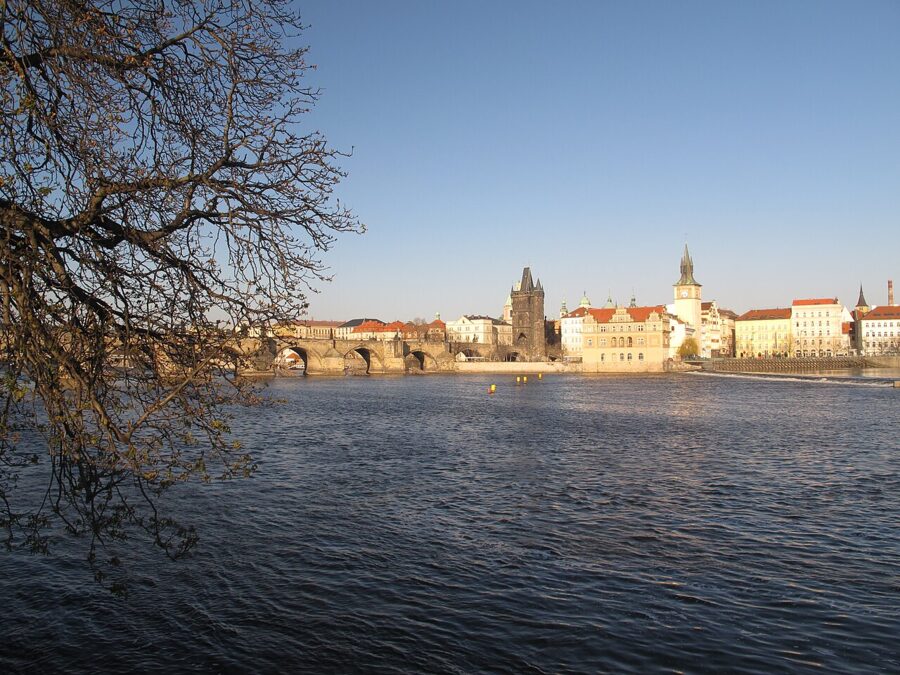
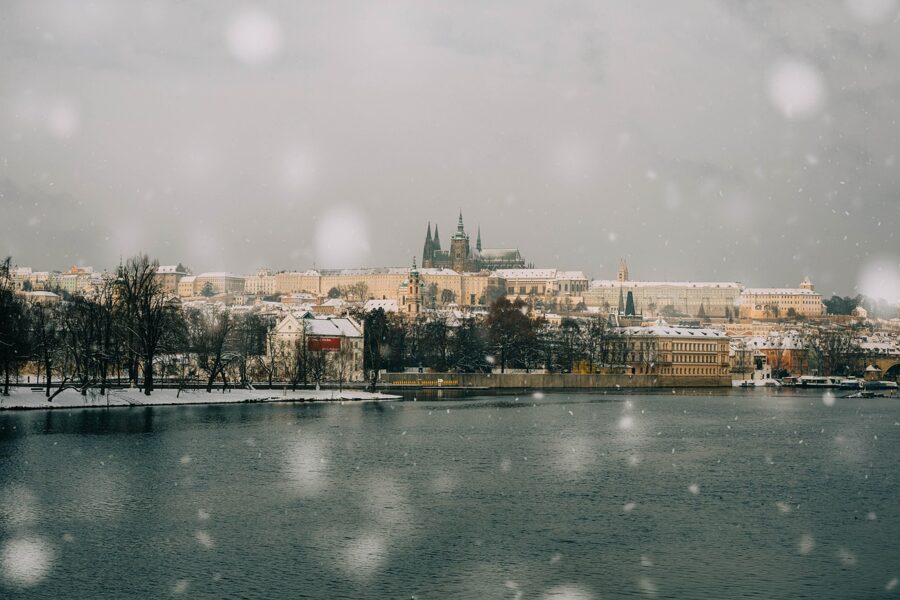
The view of the bridge itself, with the castle above it, comes from the water’s edge. On the Old Town side, walk to the end of Novotného lávka, the short pier beside the bridge tower, or south along Smetanovo nábřeží toward the National Theatre. Both face west, which makes them evening spots: the sun goes down behind the castle ridge, and the arches and the weir catch the last light.
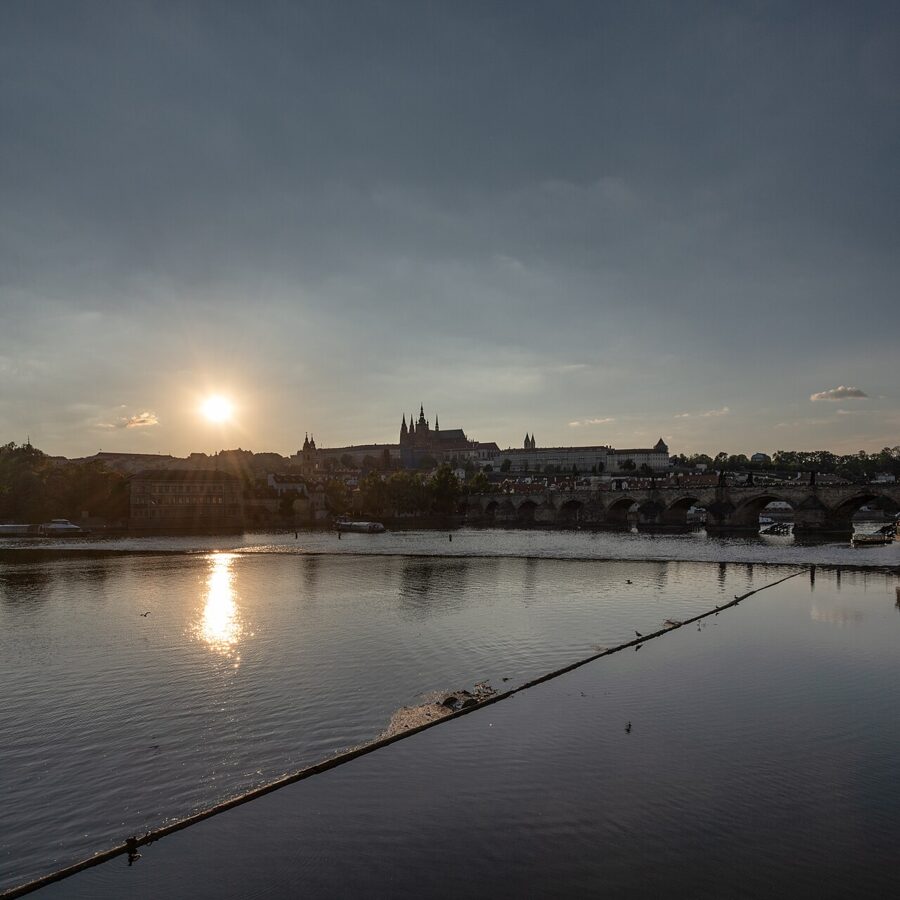
From the Legion Bridge (Most Legií), one bridge south, Charles Bridge sits in profile with the castle behind it, best at sunset and in the blue hour, when the lamps along the bridge come on. On the Malá Strana side, Kampa Island looks back at the Old Town towers and Novotného lávka as they catch the late sun.
Letná: the bridges in a row
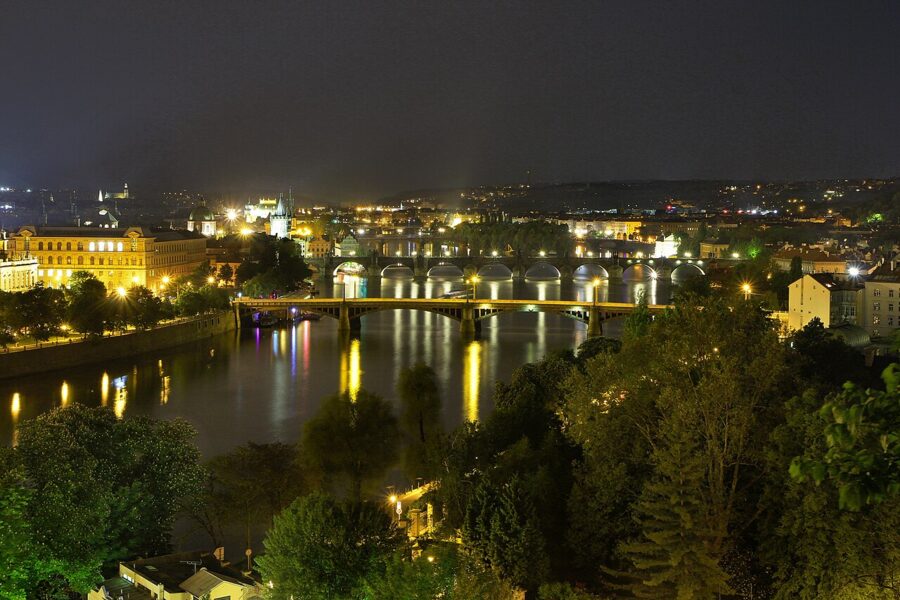
The picture everyone knows, the Vltava’s bridges stacked one behind the next, comes from the edge of Letná Park on the north bank. Stand on the terrace by the Hanavský Pavilion, the cast-iron pavilion on the slope above the river, and look south: Mánes Bridge in front, then Charles Bridge, the Legion Bridge and two more fading into the distance, with the Old Town on the left.
Letná looks south, so the sun crosses the frame during the day. Morning brings side light from the left and, on cool autumn mornings, mist on the water. Late afternoon puts warm light on the Old Town embankment across the river. After dark the bridges become lines of lamps.
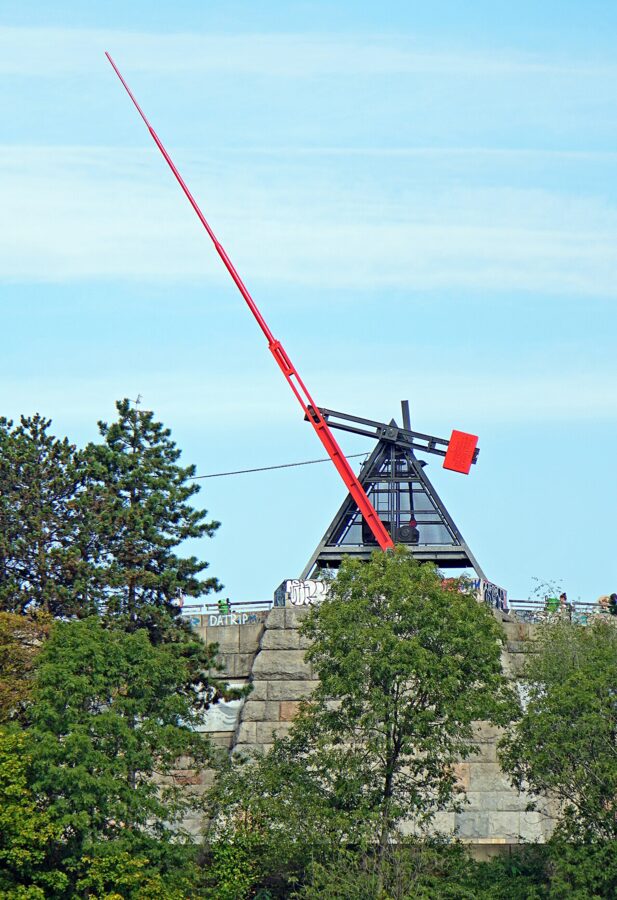
Walk east along the edge of the park to the Metronome, a 23-meter working metronome on the plinth where the Stalin monument used to be. The terrace in front of it has the same view along the river, a little further east. The steps up from the Čech Bridge are steep; the tram stop at Chotkovy sady brings you in on the level from the castle side.
The Old Town Hall tower
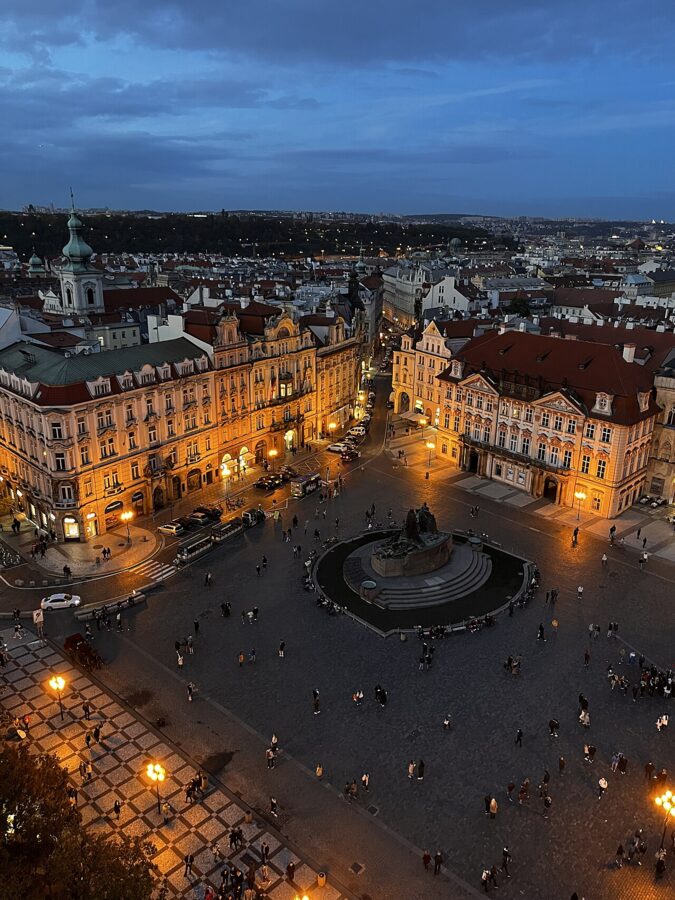
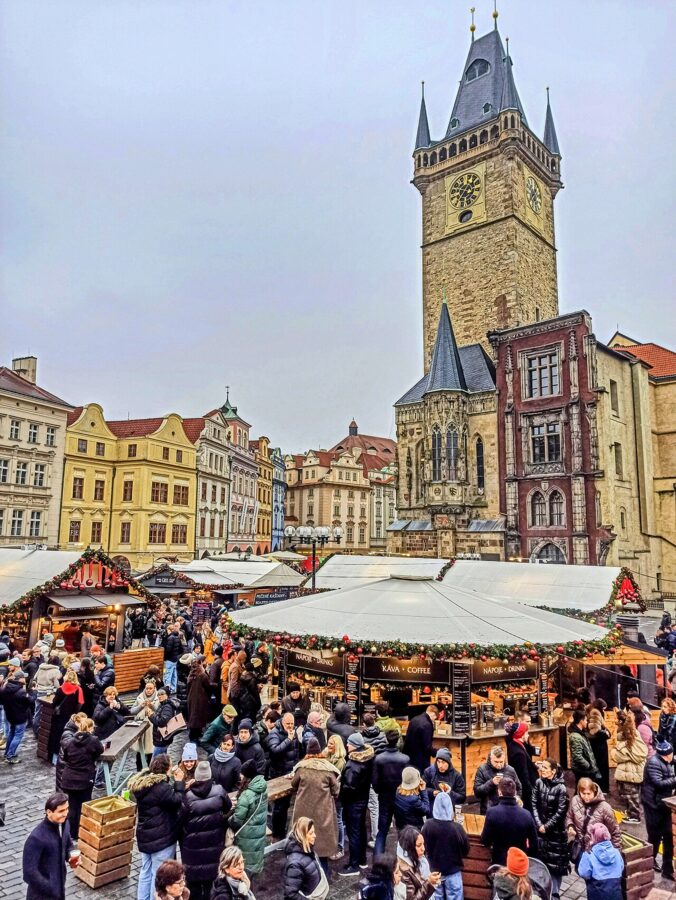
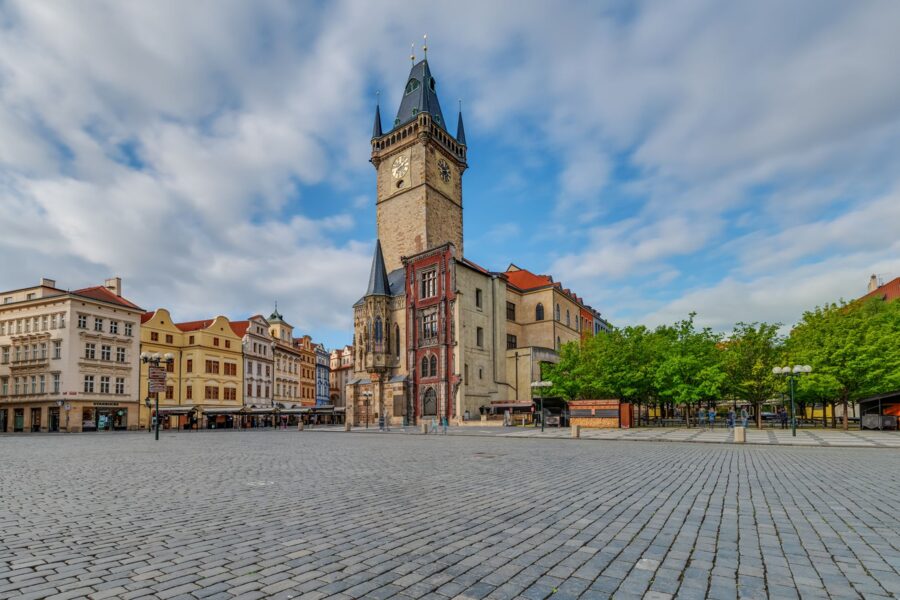
If you climb only one tower, make it this one. The gallery runs around all four sides: Old Town Square directly below, the twin spires of the Týn Church, the castle on its ridge to the west, and roofs in every direction. There is a lift for a supplement.
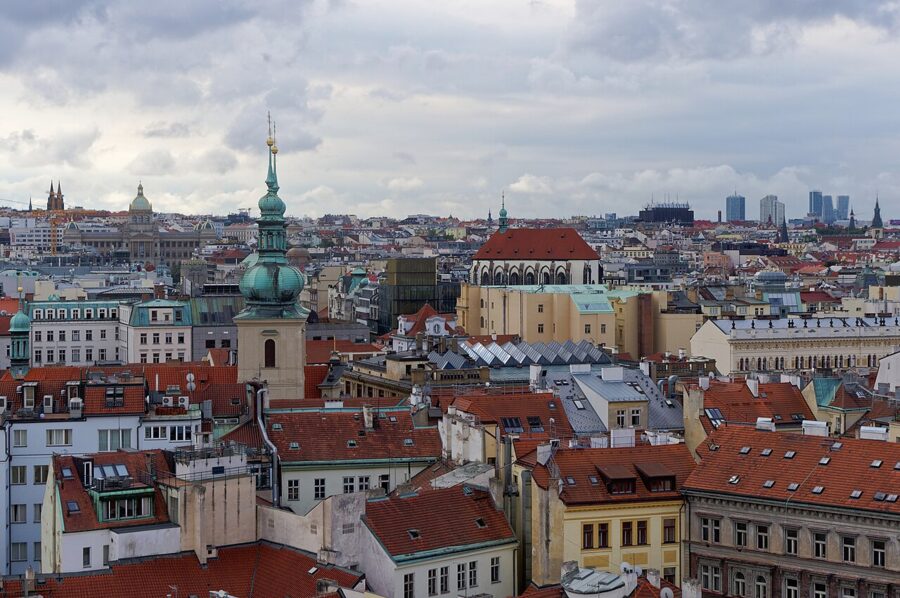
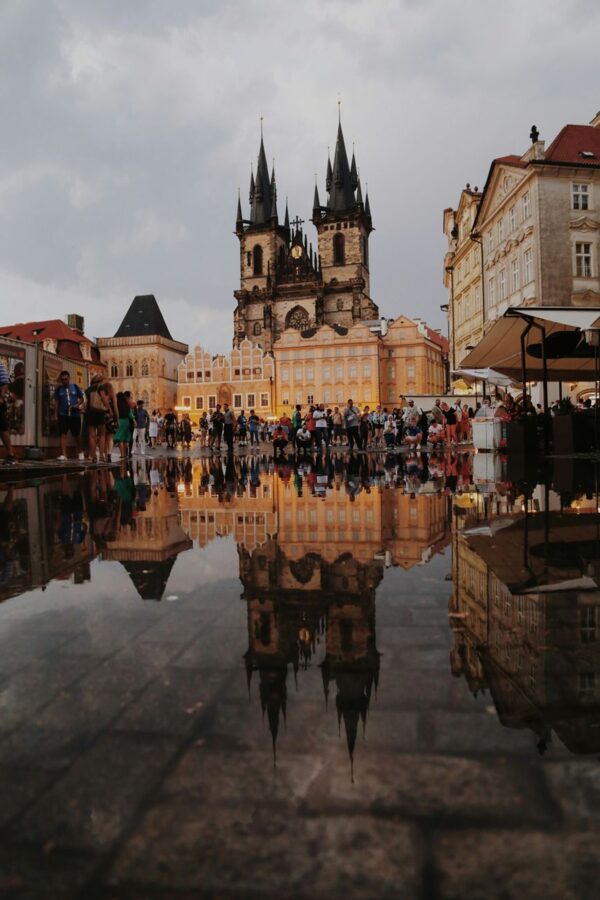
The Týn Church faces west across the square, so it is an afternoon and evening subject. The tower stays open until 8 p.m. from April to December and until 7 p.m. from January to March. For most of the colder half of the year, that puts the blue hour inside opening time.
From late November the square has the Christmas market and its tree; the city lists this year’s market on Old Town Square from 28 November 2026 to 6 January 2027. The square itself is free and never closes. Shoot it early, before the cafés put their tables out, or after rain, when the paving turns into a mirror. From the town hall side, the Jan Hus monument makes a foreground for the Týn Church.
Petřín: the hill with the tower
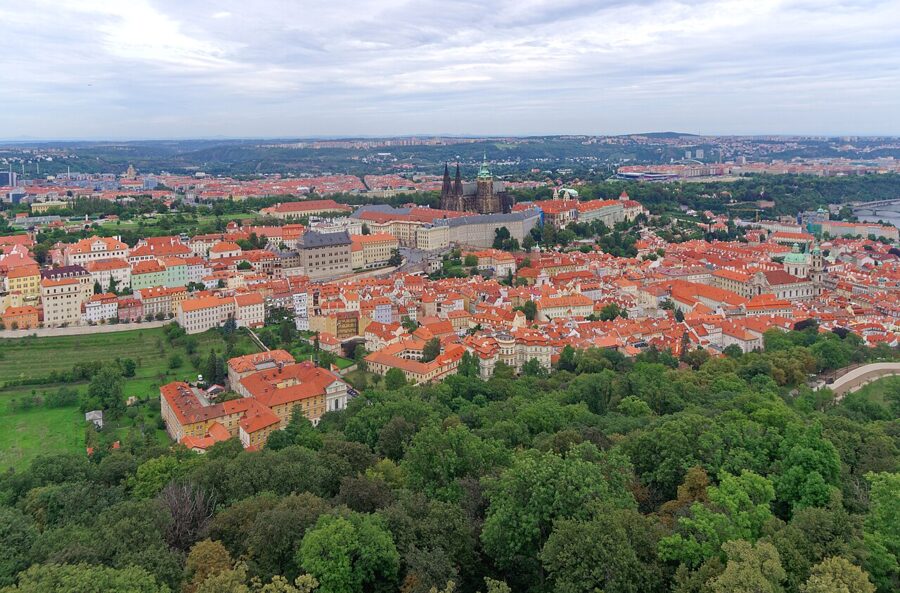
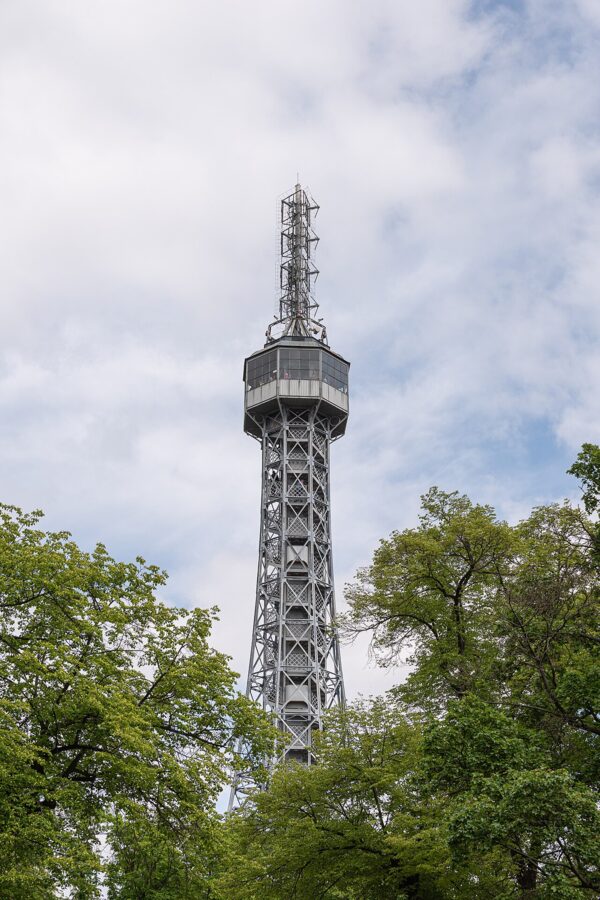
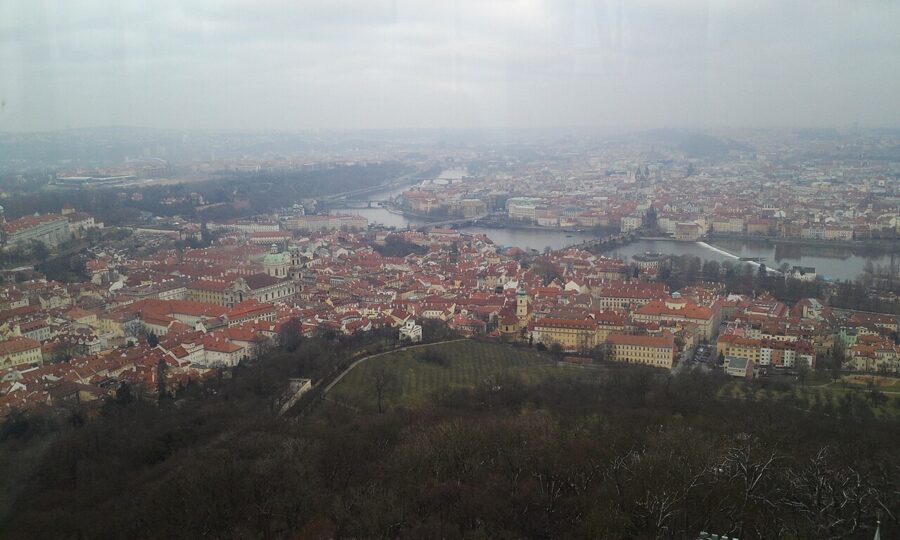
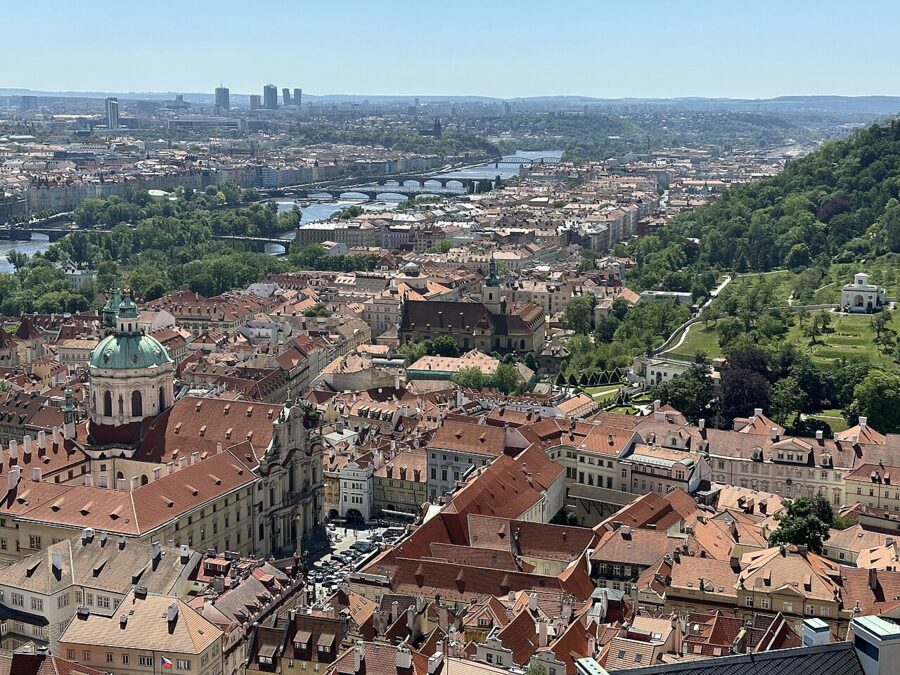
Petřín is the wooded hill south of the castle on the west bank. From the top you look east over the red roofs of Malá Strana to the river and the Old Town, with the castle on your left, but the trees block most of it at ground level. You see it properly from the Petřín Lookout Tower or from the open slopes partway down.
The tower
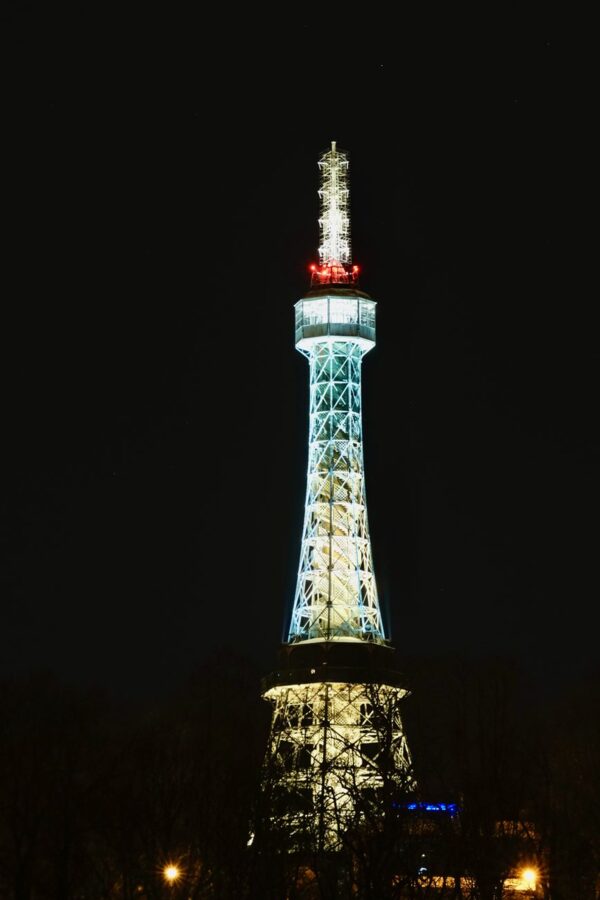
It is 299 steps to the top platform at 51 meters. The tower sways a little in the wind, so keep your shutter speeds up. It opens at 9 or 10 a.m. and closes at 6 or 7 p.m. depending on the month, which matters: in summer it shuts hours before the good evening light, but from November to February sunset comes before closing time.
The tower can also be booked for sunrise and sunset photography outside opening hours; ask Prague City Tourism, which runs it, if you want the platform at first light.
The funicular is running again
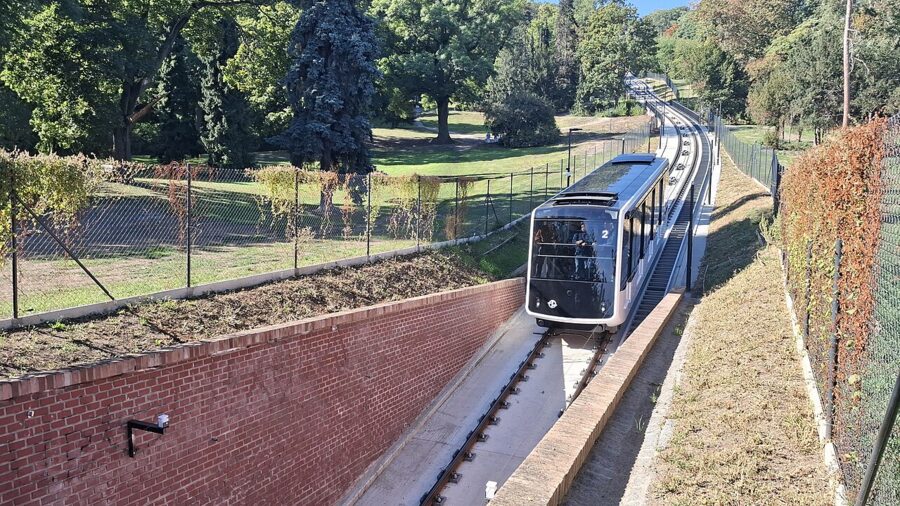
The Petřín funicular, closed since September 2024, reopened on 22 September 2026 with new cars whose windows run up into the roof. It climbs from Újezd (trams 9, 12, 15, 20 and 22) through Nebozízek to the top every ten minutes from 7 a.m. to 10:15 p.m.
A single paper ticket is CZK 100 (about $5), or CZK 90 (about $4) in the PID Lítačka app. The 24-hour and 72-hour Prague transport tickets are valid, and children under 15 and seniors over 65 ride free. One catch: cars stop at Nebozízek only on the way up, so to come down from there you ride to the top first.
Nebozízek is worth the stop. From the middle station, and along the paths south toward the Hunger Wall, the trees open onto views over the river and the Old Town, free and without a tower.
Strahov Monastery
At the top of the hill, north of Petřín, Strahov Monastery has the easiest high view in the city. From the lane below the monastery and the orchard terraces beside it, you look east across Malá Strana with the castle close on your left. The city is backlit in the morning, often through haze, and front-lit from mid-afternoon to sunset. It costs nothing, and the orchards run down to Petřín, so you can link the two on foot.
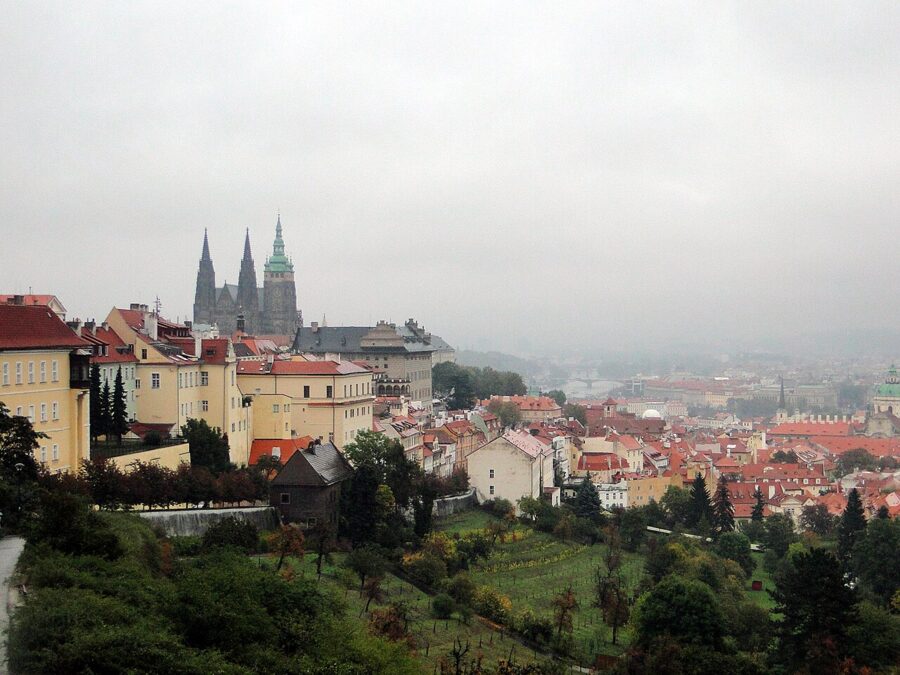
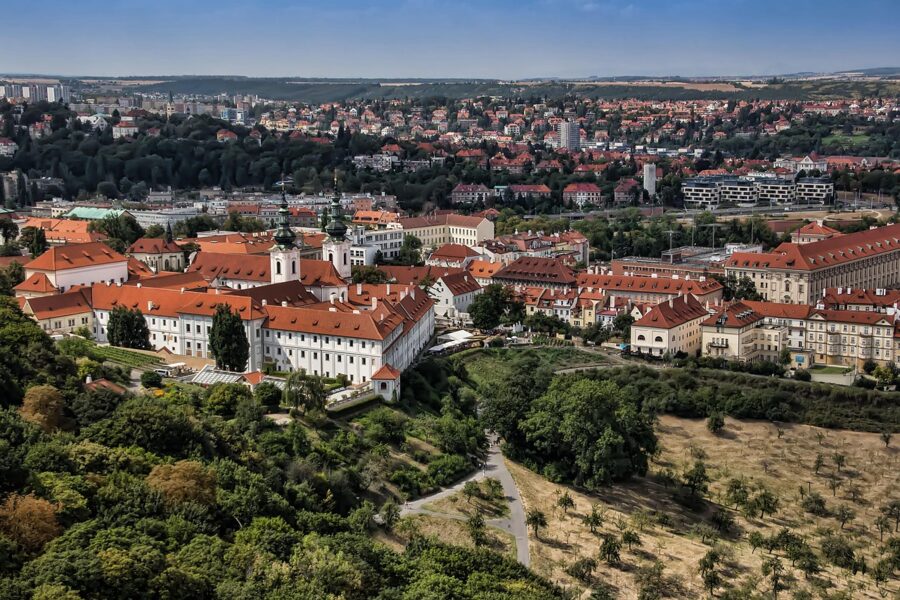
The monastery’s library, with its two painted halls, is open 9 a.m. to 5 p.m. (last entry 4:30). The regular visit no longer goes into the halls; the limited special tours see more. Check the monastery’s photography rules when you buy the ticket.
Vyšehrad, looking back up the river
Vyšehrad is the old fortress on a rock above the east bank, about three kilometers south of the castle. From its walls you see central Prague in reverse: the river running away from you to the north, the bridges, and the castle on the horizon. The grounds and ramparts are free all year.
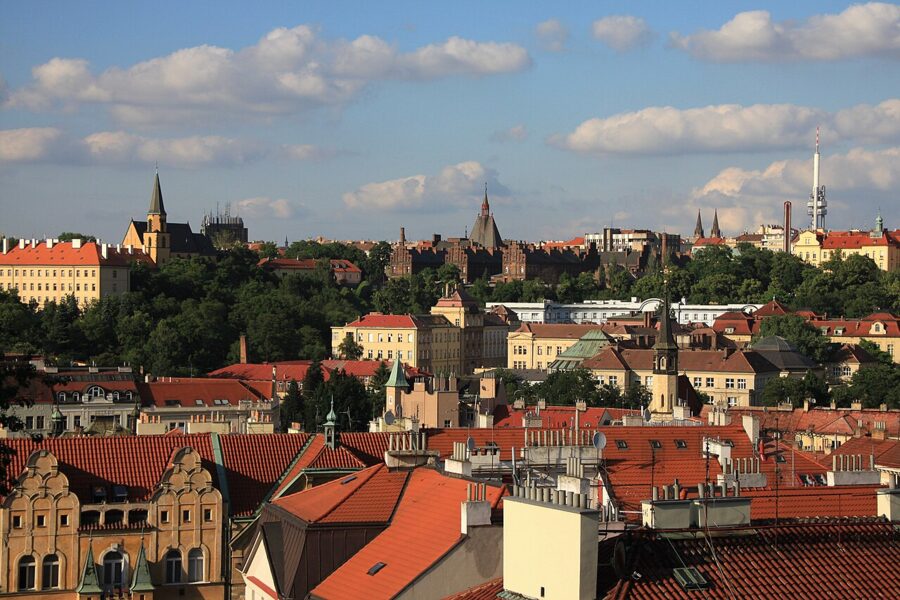
The western ramparts face north and northwest, so late afternoon gives the best light, with the sun to your left on the river and the New Town embankment. The sun sets to the left of the castle all year, closest to it in June. On a clear evening, stay into the blue hour, when the river turns pale and the castle lights come on far up the valley.
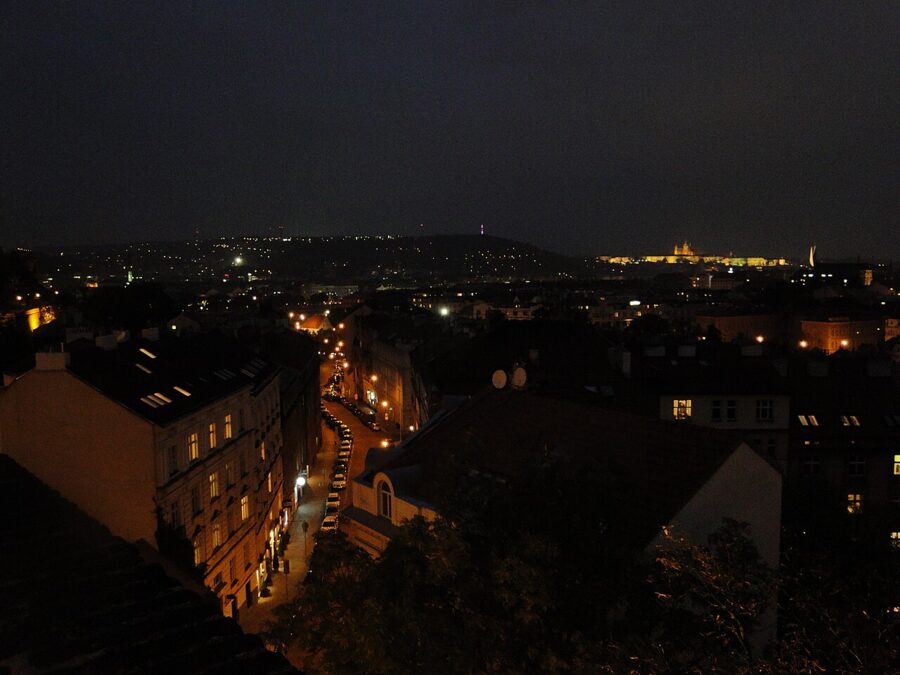
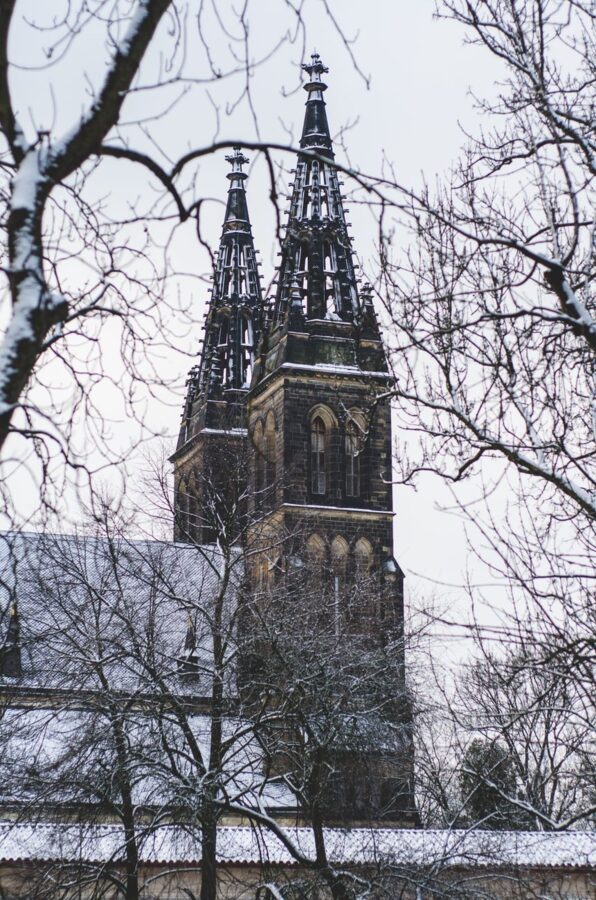
Inside the walls, the twin spires of the Basilica of St. Peter and St. Paul make a good subject. Under the ramparts, the Gorlice hall in the casemates holds six of the original Charles Bridge statues, seen on paid tours sold at the information center by the Leopold Gate (open 10 a.m. to noon and 1 to 6 p.m.). Take the tram to Výtoň and the stairs up Libušina street, or the metro to Vyšehrad and a short walk.
Riegrovy sady, for summer sunsets
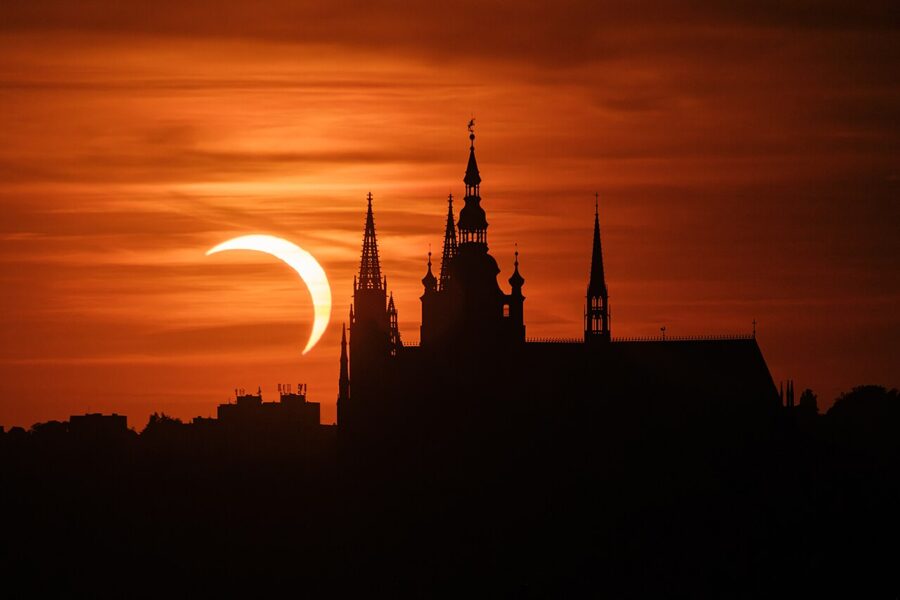
One viewpoint east of the center faces the other way. The upper lawns of Riegrovy sady, a park in Vinohrady behind the National Museum, look west across the New Town and the Old Town to the castle about three kilometers away. In early May and again in mid-August the sun goes down right behind the cathedral, and a telephoto turns it into a sharp silhouette; in June it sets a little to the right.
In autumn and winter the sun sets well to the left, behind trees and buildings, and the view loses its point. Take the metro to Náměstí Míru or tram 11 to Šumavská and walk up.
The castle district and Malá Strana
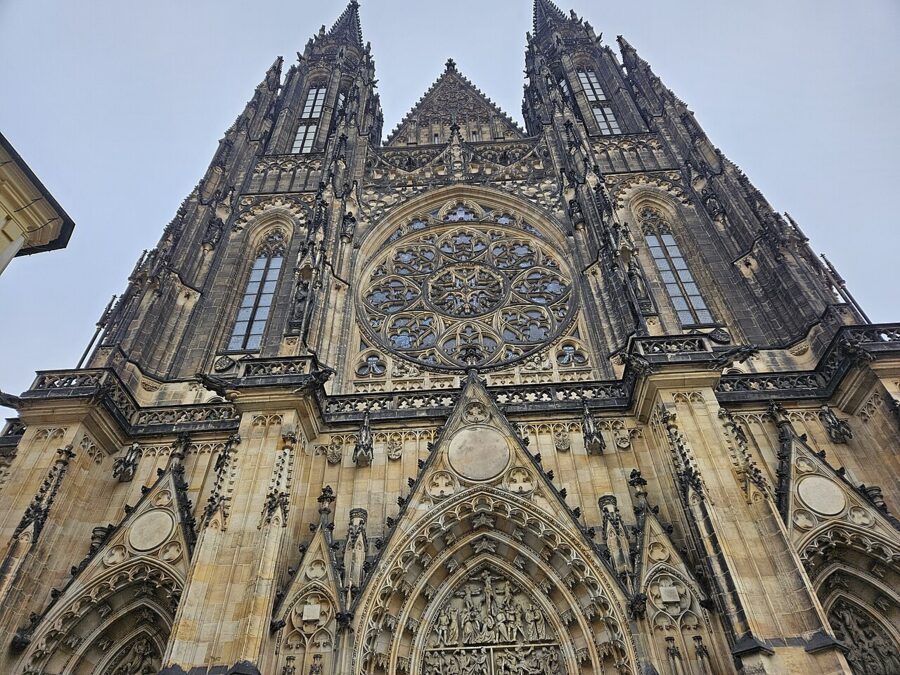
Prague Castle is less a building than a walled town of courtyards, churches and palaces along the ridge. The grounds open from 6 a.m. to 10 p.m. every day, free, and the historic buildings from 9 a.m. to 5 p.m. At 7 a.m. the courtyards are close to empty. The west front of St. Vitus Cathedral takes direct sun only from mid-afternoon, so come back then for the facade.
Bring as little as you can. Large luggage is not allowed into the castle area, and the security checks at the entrances can mean a queue in summer.
Hradčany Square and the ramp
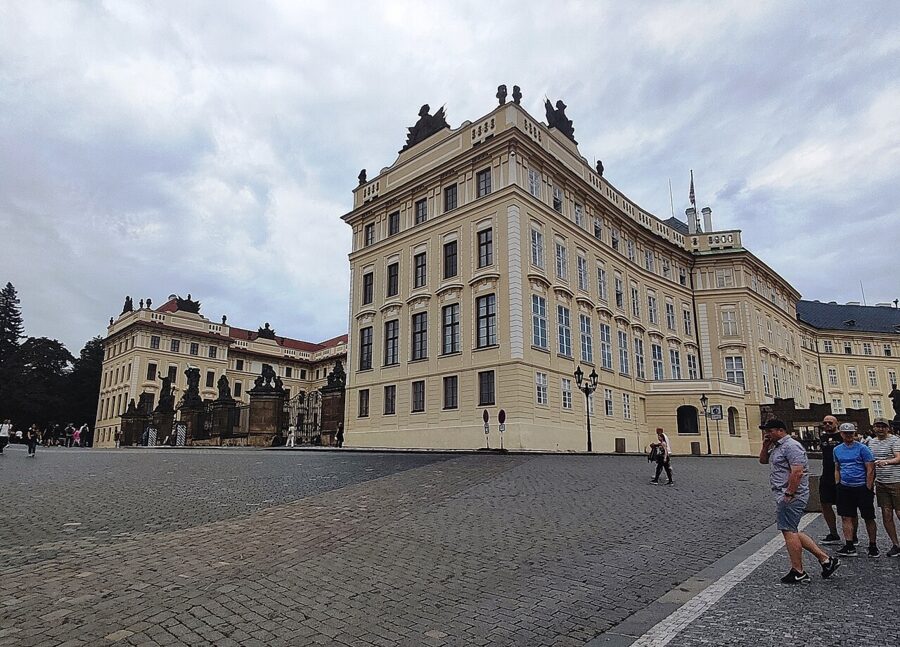
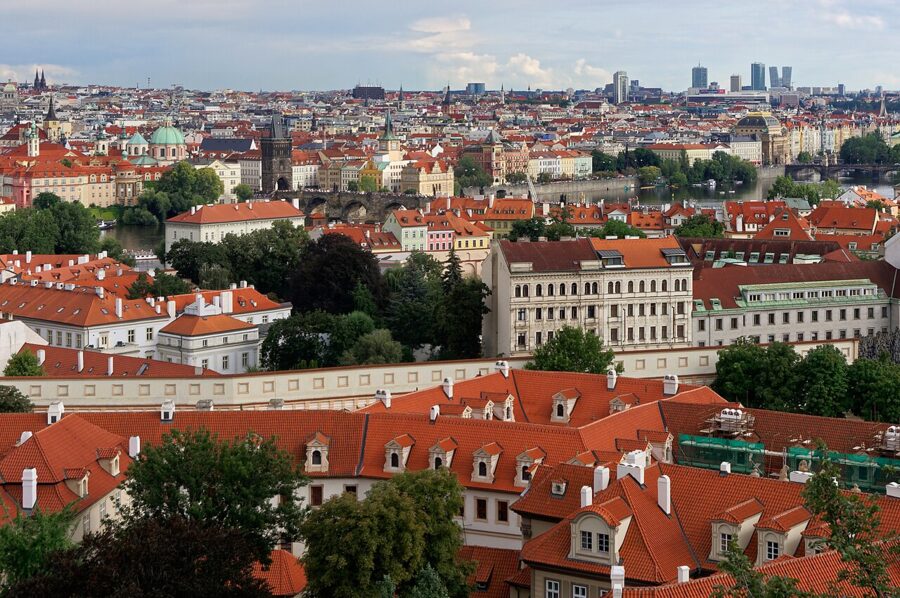
Hradčany Square, in front of the main gate, is free and open at all hours. From the wall at its eastern edge, beside the castle ramp, you look down over the roofs of Malá Strana, the dome of St. Nicholas Church, Petřín and the river, a view that glows in the late afternoon. At the other end of the castle, the Old Castle Stairs (Staré zámecké schody) drop from the east gate toward Malostranská metro, with a similar view toward the Old Town.
The Great South Tower of St. Vitus
The cathedral’s main tower has a gallery high above the courtyards, the closest you can get to the cathedral’s own pinnacles, with Malá Strana, the river and Petřín laid out to the south. It is open 10 a.m. to 6 p.m. in summer and to 5 p.m. November through March, with last entry half an hour before closing, for CZK 200 (about $9). The stair is narrow and two-way, so go early.
Photographing inside the castle
Inside the historic buildings, the castle administration allows photography only with a purchased photo licence, and even then without flash, tripod or lights. There is no photography at all in the Story of Prague Castle exhibition, the St. Vitus Treasury, the Powder Tower and the Prague Castle Picture Gallery, and selfie sticks are banned indoors. Commercial shoots need the administration’s agreement, by application. Outside, in the courtyards and lanes, photograph freely.
Malá Strana: the lanes below
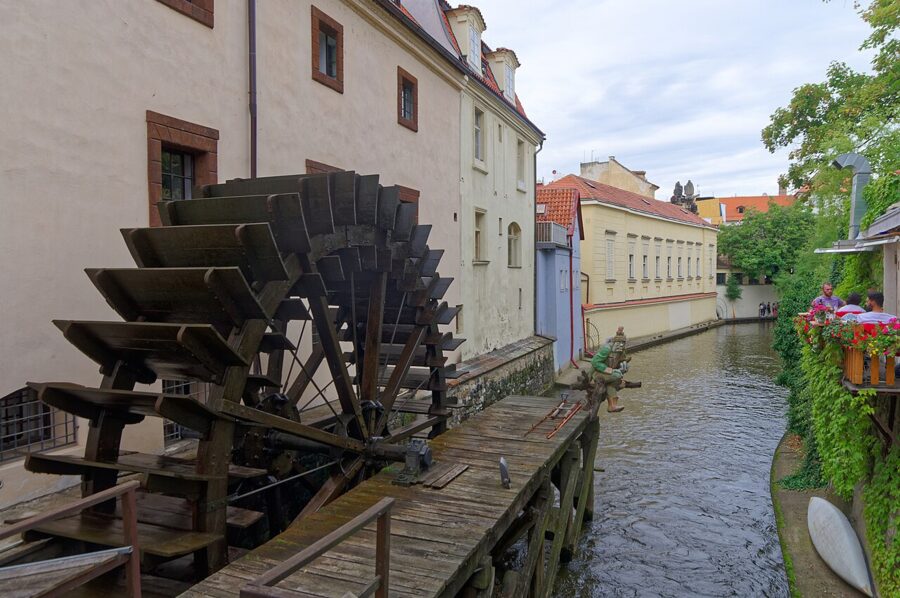
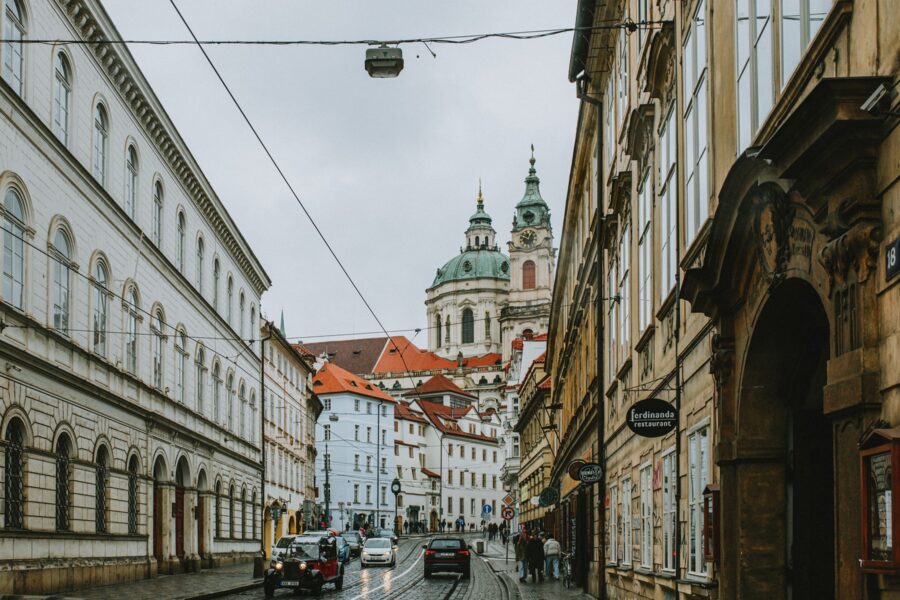
Malá Strana is best on foot and early, before the walking tours. Nerudova, the steep street from the castle down to Malostranské náměstí, has old house signs over the doorways and the dome of St. Nicholas at the bottom. Kampa Island and the Čertovka mill channel, with its water wheel, sit just south of the Lesser Town end of the bridge. The Lennon Wall is close by, painted over again and again since the 1980s, never the same for long.
Seasons, crowds and light by the hour
Summer gives long evenings and the quiet 5 a.m. sunrise, with the heaviest crowds from mid-morning to dark. Spring brings blossom on the Petřín slopes and in the castle gardens, which reopen in March after closing from November to February. Autumn is the season for river mist, when cold mornings follow warm days. Winter has the thinnest crowds, the earliest blue hour, the Christmas markets and, some years, snow on the statues.
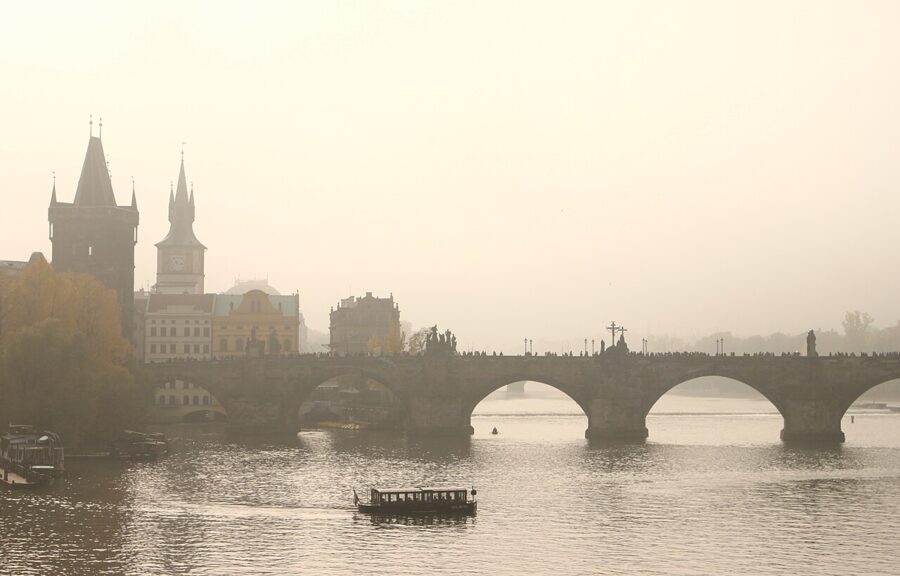
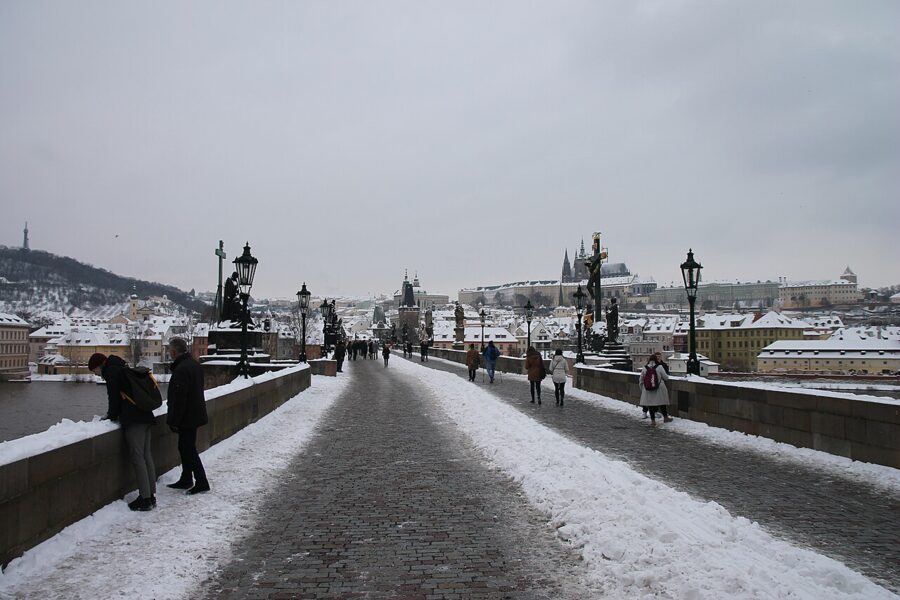
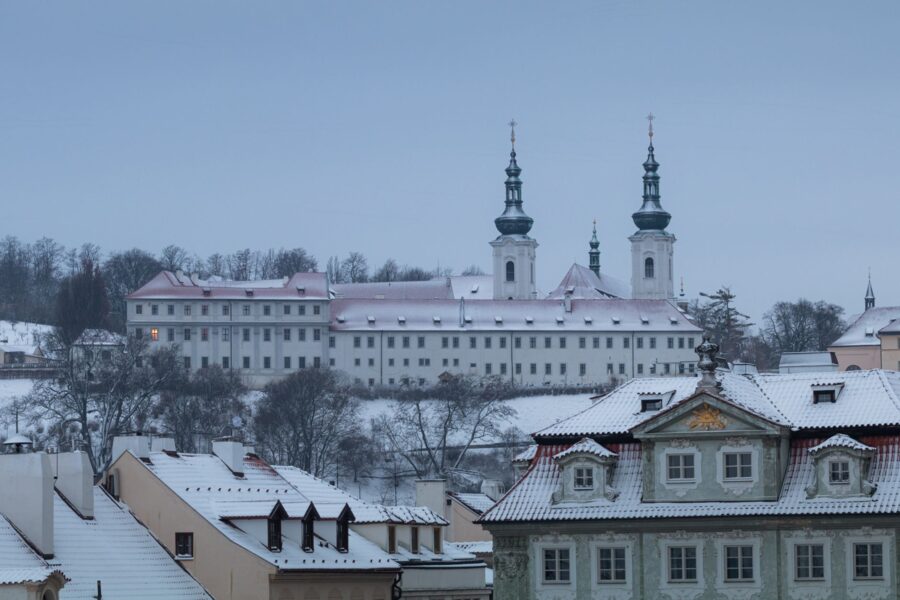
Fog forms most often on still mornings in autumn and early winter and usually burns off by late morning. A heavy fog hides the castle completely; a light one turns it into a pale outline above the bridge. Snow doesn’t last long in the city, so if it falls overnight, go out at first light.
A rough plan for a clear day, with directions that hold year-round (shift the hours with a sun calculator):
| Time | Where | Why |
|---|---|---|
| Before sunrise | Charles Bridge, Old Town end | Castle takes the first light; bridge nearly empty |
| 7–9 a.m. | Castle courtyards, Nerudova, Kampa | Empty before the buildings open and the tours arrive |
| Morning | Old Town Bridge Tower, Letná | Axis view to the castle; side light on the bridges |
| Midday | Old Town Hall tower, Great South Tower | Flat light outside, so use it for the climbs |
| Afternoon | Strahov, Petřín, Hradčany Square, west front of St. Vitus | Sun behind you, Old Town and cathedral front-lit |
| Sunset | Vyšehrad walls, Novotného lávka, Riegrovy sady (summer) | Castle backlit or in silhouette, river catching color |
| Blue hour | Legion Bridge, Letná, Old Town Hall tower (winter) | Street lamps on, sky still blue |
Tickets, drones and permits
Prices are adult fares as of November 2026. The city-run towers (the Old Town Hall, the two bridge towers and Petřín) give 50 percent off in the first hour after opening every day except 25 December and 1 January. Prague City Tourism has announced a new price list from 1 March 2027, so check again for spring trips, and buy from its own ticket offices or website: tickets from other sellers may not be accepted.
| Viewpoint | Adult price | Hours |
|---|---|---|
| Old Town Hall tower | CZK 350 (about $16); lift CZK 100 (about $5) extra | 9 a.m.–8 p.m. Apr–Dec; 10 a.m.–7 p.m. Jan–Mar |
| Old Town Bridge Tower | CZK 250 (about $11) | 10 a.m.–6 p.m. Jan–Mar and Oct–Nov; 10 a.m.–7 p.m. Apr–May; 9 a.m.–8:30 p.m. Jun–Sep; 10 a.m.–7:30 p.m. Dec |
| Lesser Town Bridge Tower | CZK 200 (about $9) | As the Old Town Bridge Tower |
| Both bridge towers | CZK 340 (about $15) | |
| Petřín Lookout Tower | CZK 250 (about $11); lift CZK 150 (about $7) extra | 10 a.m.–6 p.m. Nov–Mar; 9 a.m.–7 p.m. Apr–Sep; 9 a.m.–6 p.m. Oct |
| Petřín funicular | CZK 100 (about $5); CZK 90 in the PID Lítačka app | 7 a.m.–10:15 p.m. daily |
| Great South Tower, St. Vitus | CZK 200 (about $9) | 10 a.m.–6 p.m. Apr–Oct; 10 a.m.–5 p.m. Nov–Mar |
| Prague Castle main circuit | CZK 450 (about $20) | Buildings 9 a.m.–5 p.m.; grounds 6 a.m.–10 p.m., free |
| Charles Bridge, Letná, Vyšehrad grounds, Strahov viewpoint, Riegrovy sady | Free | Open at all hours |
Hours change over Christmas, shorter on 24 and 31 December and starting late on 25 December and 1 January; each tower’s page with Prague City Tourism lists the exact times.
Drones
Leave the drone in the bag in central Prague. The Czech Civil Aviation Authority says a flight in Prague will most likely run into the LKR9 restricted area, which covers most of the city, and the LKP1 prohibited area around Prague Castle, Charles Bridge and the Vltava, and that operating in restricted or prohibited zones is generally prohibited. The castle’s own rules ban drones outright. Anywhere else in the country, check the official DroneMap (dronemap.gov.cz) for the zones and their conditions before you fly.
Permits
Inside the castle buildings you need the photo licence; for paid work, the castle administration decides shoots in the castle, and the Prague 1 district office is the place to ask about streets and public spaces in the historic center, Charles Bridge included.
Set the alarm for the bridge once, and pick your end by the sun calculator the night before. Then spend the afternoon on a hill on the opposite side of the river from wherever the light is falling.