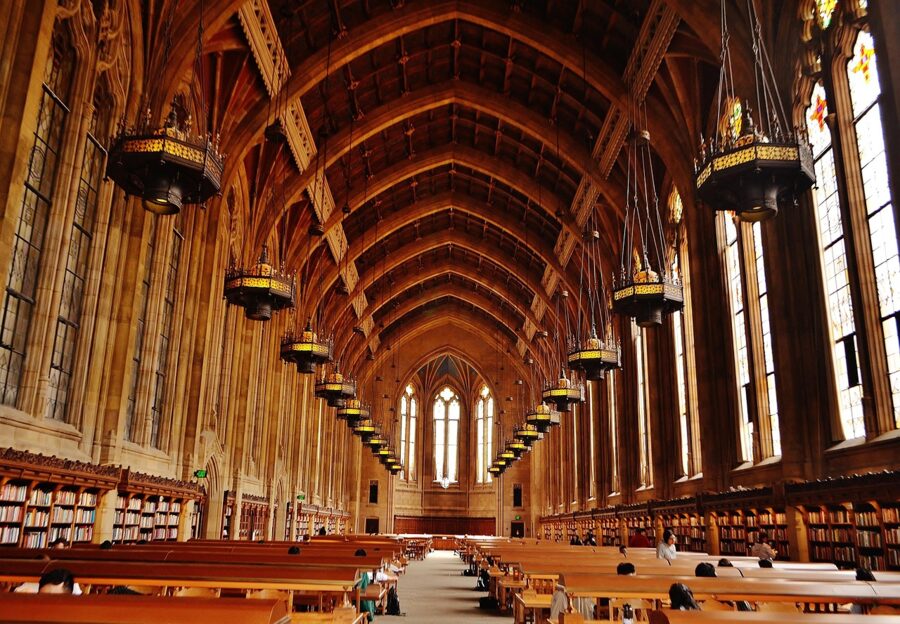
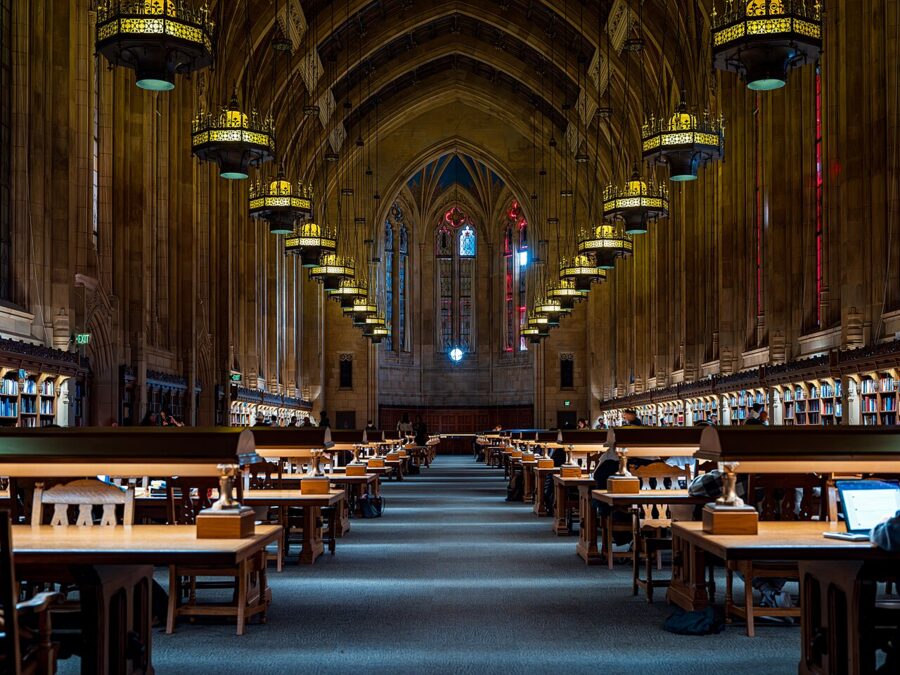
The Suzzallo Reading Room is 250 feet (76 m) long and 65 feet (20 m) high, and nobody in it says a word. Its tall windows face west onto Red Square, so on a clear afternoon the light comes in low across the oak tables, and on a gray day the whole hall goes soft and even. Either way you photograph it handheld and without a sound, among students who are there to work.
The room sits on the third floor of Suzzallo Library, the oldest part of the University of Washington’s main library on the Seattle campus. Entry is free, and the University of Washington Libraries states plainly that the building is open to the general public as well as students and staff. What you give in return is quiet, and the people at the tables mean it.
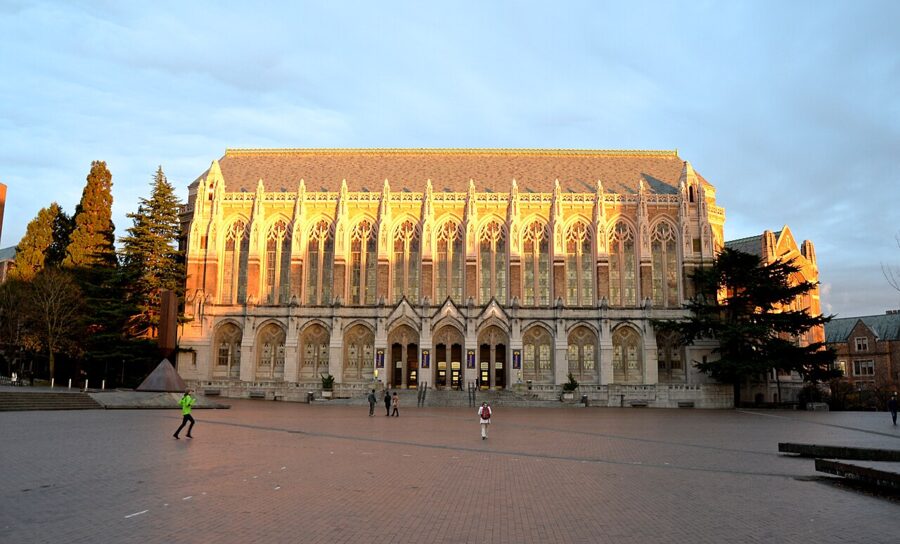
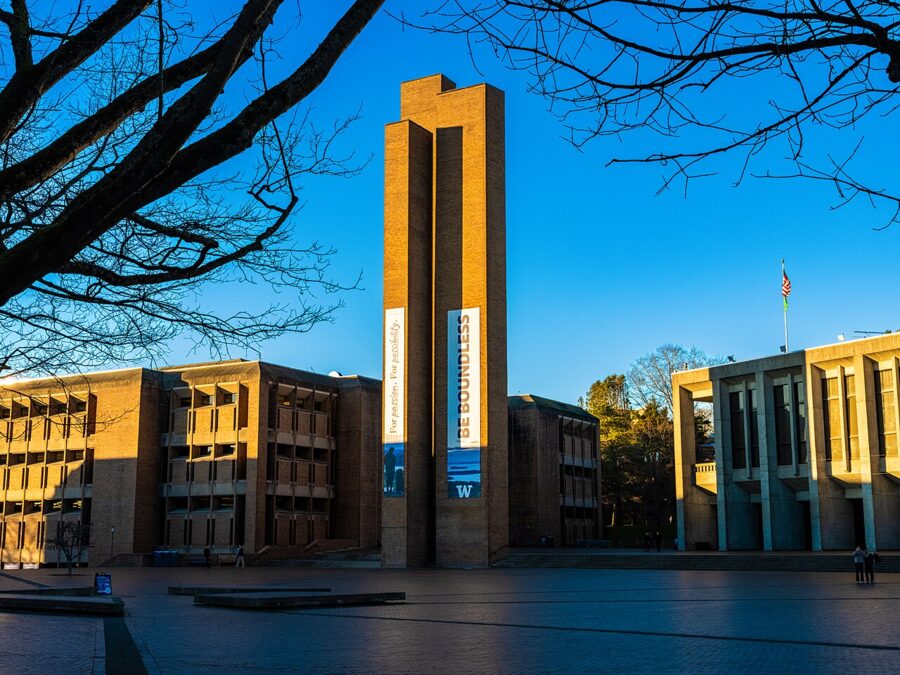
Outside, the building fronts Red Square, a wide brick plaza. In late March the 29 cherry trees on the Quad, a few minutes’ walk northeast, usually bloom, and light rail stops nearby, so the room, the facade and the blossoms fit into one morning without a car.
Contents6 parts
The building and the reading room
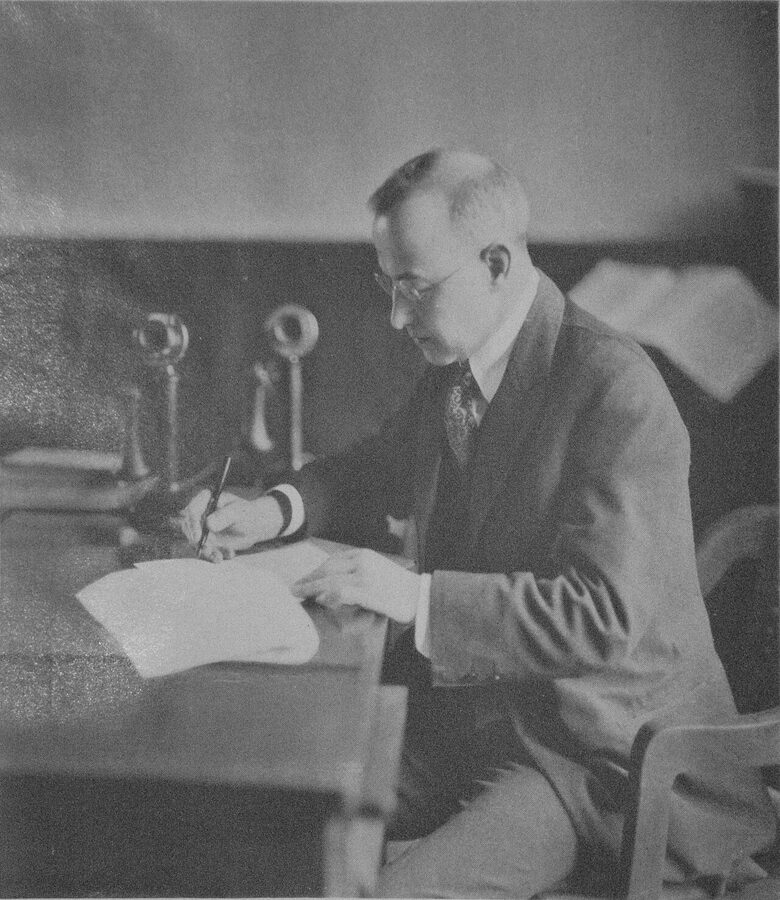
Henry Suzzallo became the university’s president in 1915 and pushed for a library he called “the soul of the university.” The Seattle architects Carl Gould and Charles Bebb designed it in the Collegiate Gothic style, ground was broken in 1923, and the first wing, with the reading room, opened in 1926. Suzzallo was dismissed after political rivalries and controversies, and the building took his name only after his death in 1933.
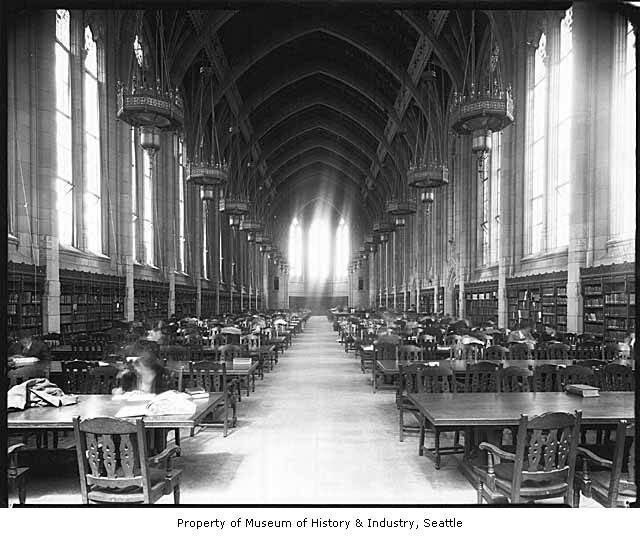
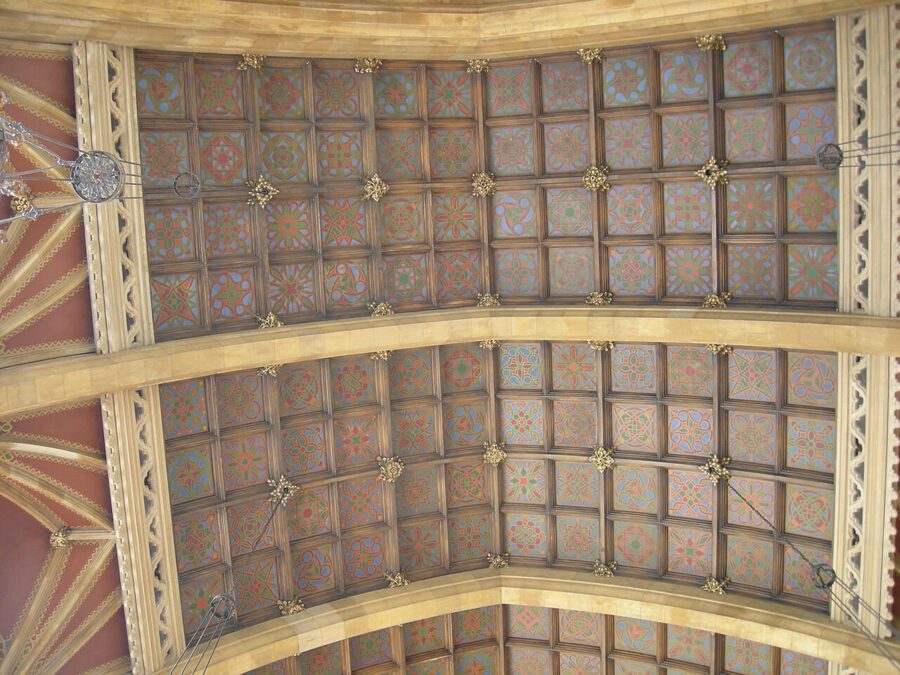
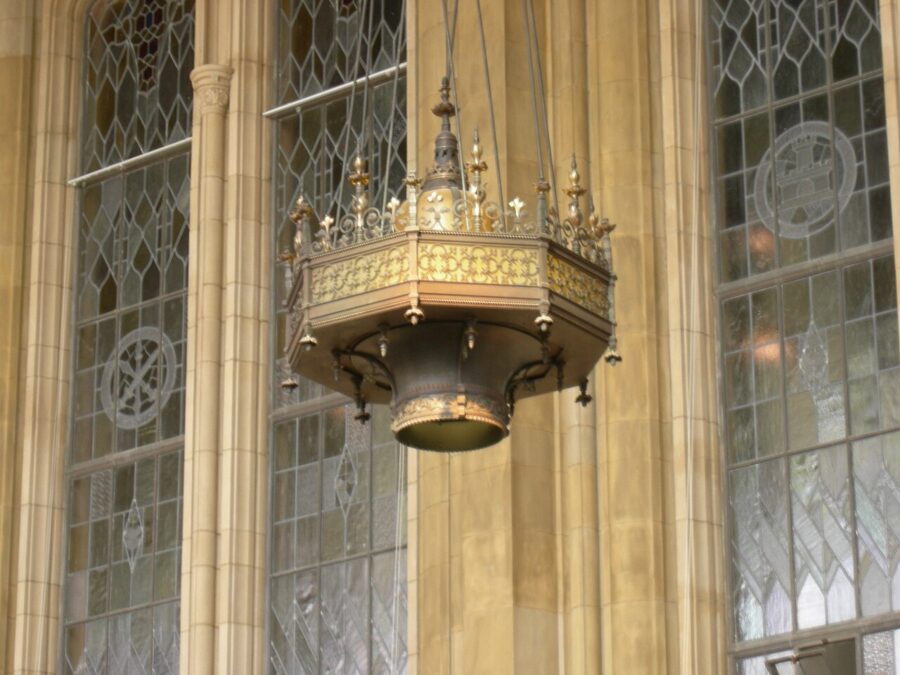
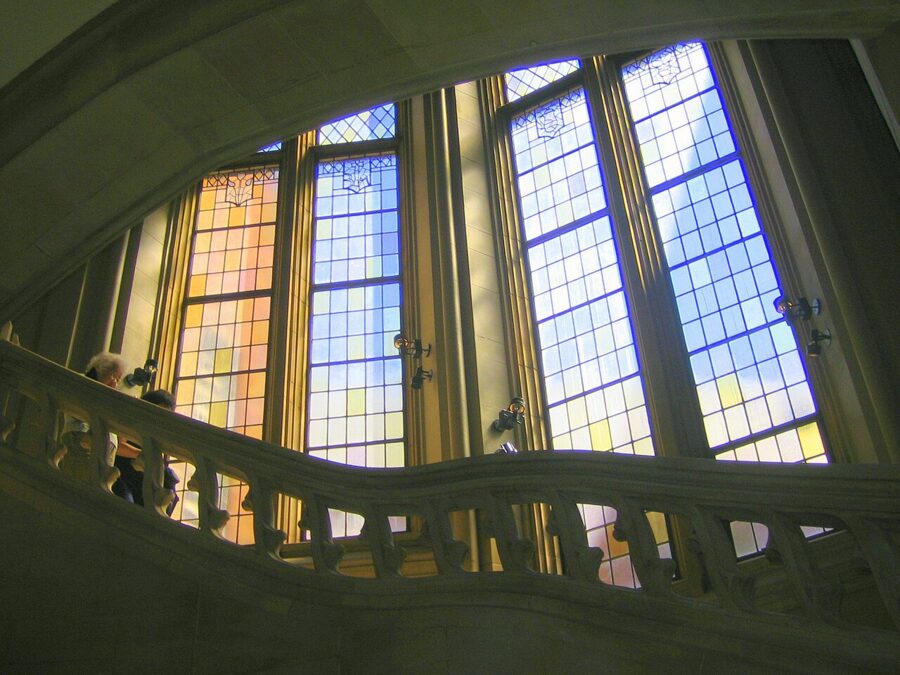
The reading room is 52 feet (16 m) wide, and the journal The Pacific Builder and Engineer called it “the most beautiful on the continent” in 1927. The long walls carry leaded and stained glass windows 35 feet (11 m) tall. Set into the glass are medallions copying 28 Renaissance papermakers’ watermarks, taken from Charles-Moïse Briquet’s catalogue Les Filigranes.
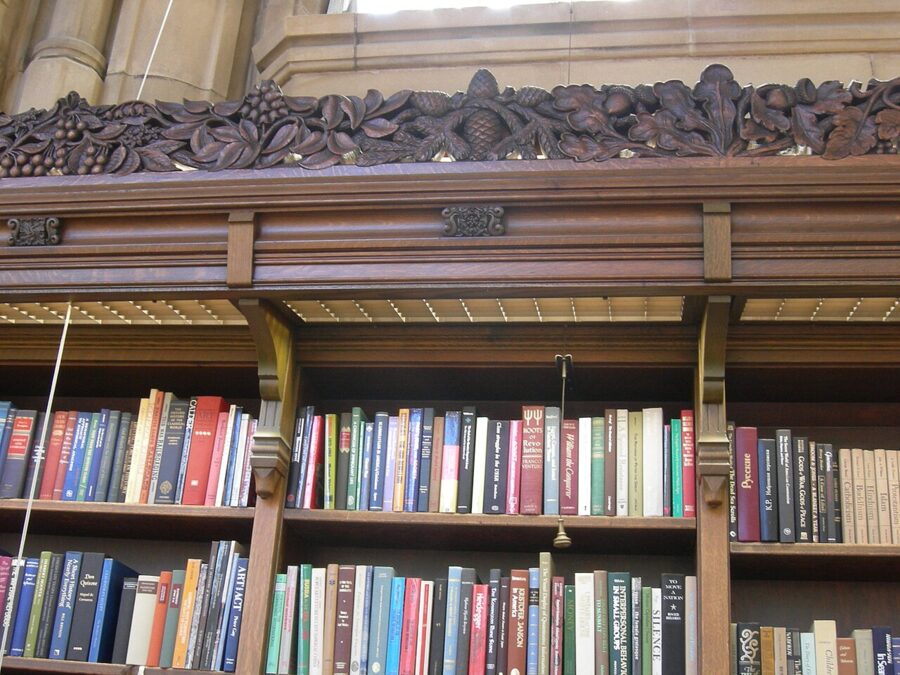
Look at the tops of the oak bookcases. They carry hand-carved friezes of 16 plants native to Washington, among them salal, Douglas fir and rhododendron, the state flower. At each end of the room a hand-painted globe hangs in the apse, lettered with the names of explorers: eight at the south end, including Leif Ericson and Marco Polo, and ten at the north, including Ponce de León and Jacques Cartier.
The steel you see in the vault is newer. Between 2000 and 2002 the university spent $47 million on a seismic renovation, and the reinforcing beams it left inside the ceiling are known as the batwing. The 2001 Nisqually earthquake hit in the middle of that work: the masonry cracked but the new bracing held, and four terra-cotta pinnacles fell from the roof.
Why people call it the Harry Potter room
Long tables, a high vault, rows of lamps and Gothic windows put people in mind of the Great Hall at Hogwarts, and students and tourists alike use the nickname. There is no actual connection, and the story that Rowling drew on this room has no evidence behind it. The likeness is shared ancestry: Collegiate Gothic copies the old colleges of Oxford and Cambridge, and so did the hall on screen.
Visiting: hours, quiet and the rules
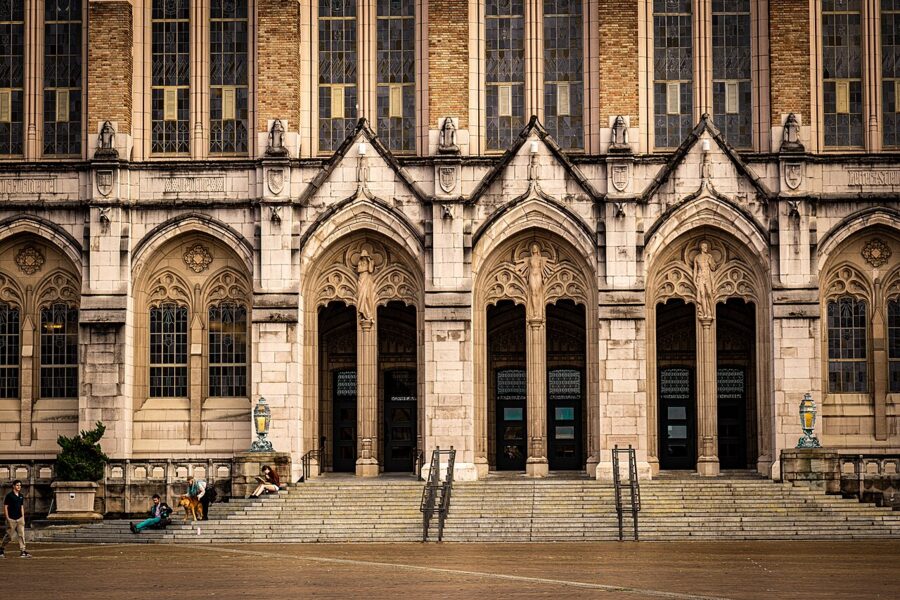
Go in through the main doors on Red Square, past the Starbucks by the entrance. The Grand Staircase climbs from the first floor to the third on travertine steps worn by a century of students, and the reading room opens off the top. The Red Square entrance has a ramp, and there are elevators.
Hours follow the academic calendar and change every quarter, so check the Suzzallo and Allen Libraries page on the UW Libraries site the week you go.
In late November 2026 the posted hours were 8 a.m. to 8 p.m. on Monday and Tuesday and 1 to 8 p.m. on Sunday, with Saturdays closed. Holidays close the building entirely.
The photography rules are short. Candid pictures are fine as long as they don’t disturb anyone, and the library asks you to keep faces hard to identify. Flash, tripods, reflectors, special lighting and drones are not allowed.
The reading room is also off limits for staged or commercial photography and filming, and the policy names engagement, wedding, quinceañera and graduation shoots. Commercial work elsewhere in the libraries needs approval through the university’s filming request form.
The 2025-2026 restoration and the centennial
From July 2025 the oldest wings were wrapped in scaffolding for a $21.5 million seismic and facade project. Crews pinned the masonry, braced the parapets and finials, secured the 18 statues on the front, replaced the roofing and removed window panels for repair.
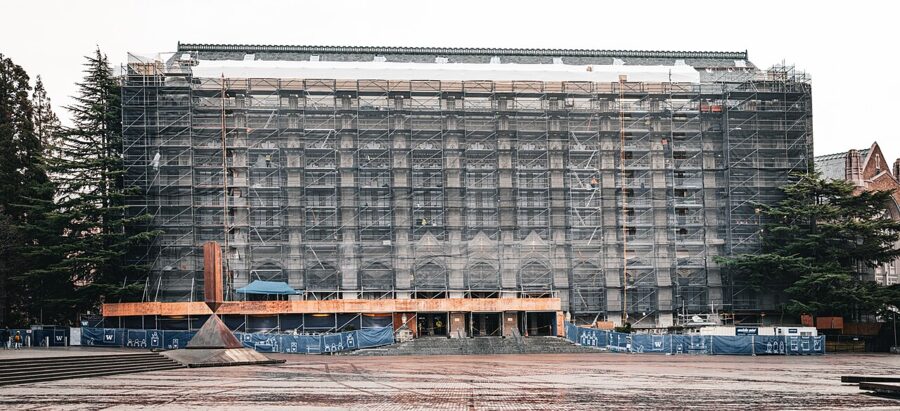
The front scaffolding was off by early September 2026, and in October crews were reinstalling window panels from a rolling scaffold inside the reading room. UW Facilities gives December 2026 for completion and posts monthly updates on its project page.
The building turns 100 during the 2026-2027 academic year. For the centennial the library runs drop-in tours of its architecture and art on the second Wednesday of each month from noon to 1 p.m.; meet inside the main entrance, outside the Starbucks.
Two things to see on the way
Just outside the reading room, in its own case, is the Bhutan Book, a photographic volume 7 feet by 5 feet (2.1 by 1.5 m) that weighs 133 pounds (60 kg); staff turn its pages about once a month. Downstairs, 40 ravens and crows hang from the lobby ceiling of the 1990 Allen Library wing, an installation called “Raven Brings Light to This House of Stories.”
Photographing the reading room
The picture everyone wants runs down the length of the room. Walk to either end, step into the middle of the center aisle and keep the camera level, so the lamps converge on the far window instead of leaning in. A wide lens or a phone’s ultra-wide takes in the tables and the vault together.
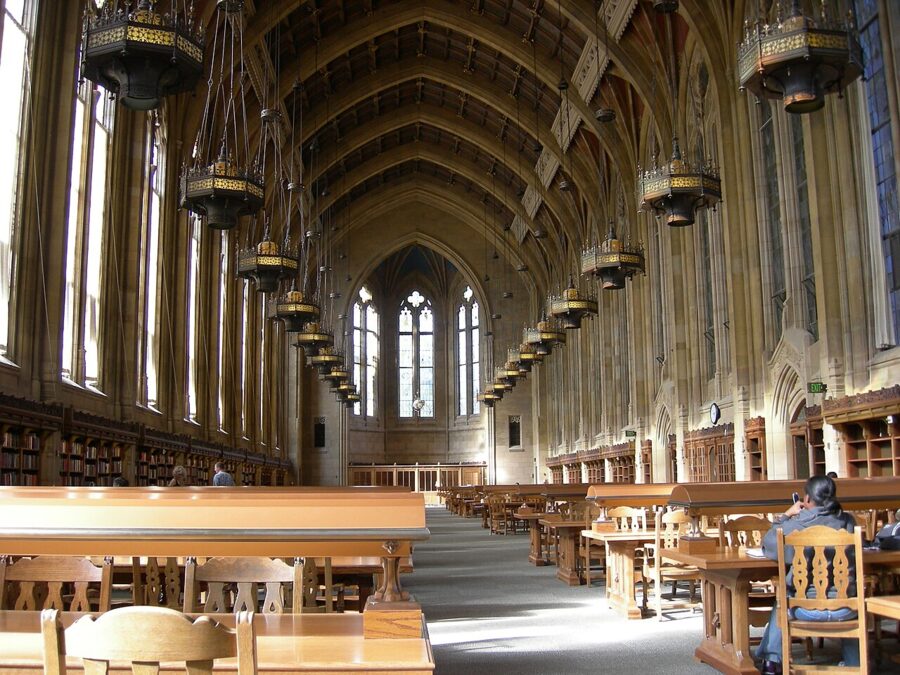
Turn the camera vertical and the room becomes a tall nave, holding the tables, the lamps and the whole curve of the vault. It’s the version that works best on a phone screen.
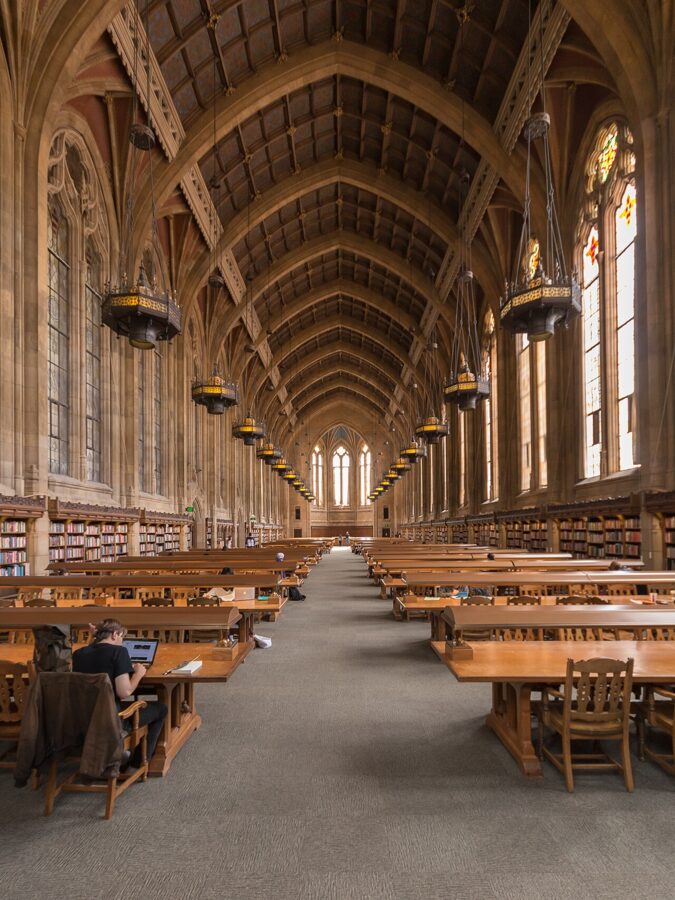
The windows face west, so on a sunny afternoon the contrast between bright glass and dark wood gets hard to hold; bracket, or let the windows blow out. Overcast days, which Seattle supplies most of the year, give even light that suits the long view.
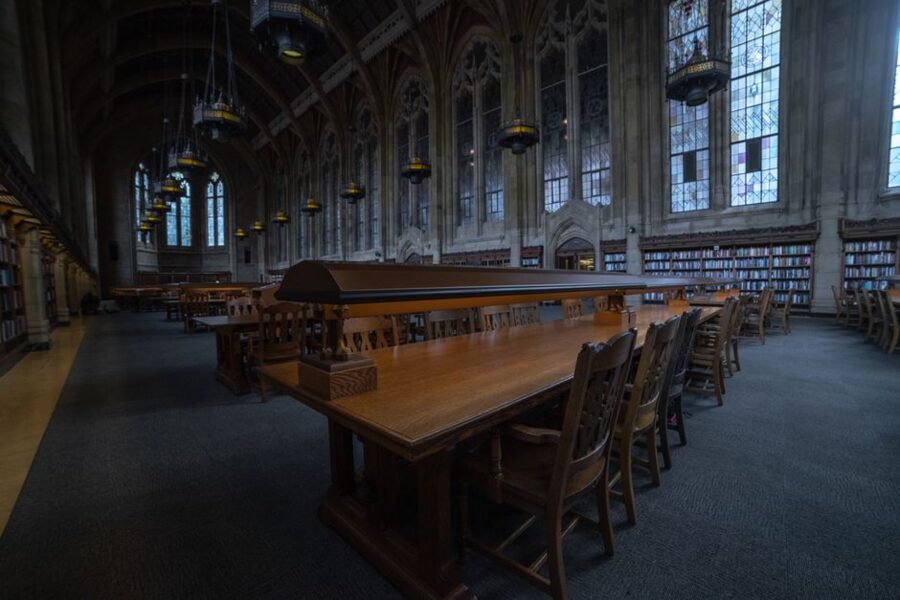
Without a tripod you’ll work at a higher ISO, so brace against a pillar. Shoot raw if you can, because the lamps and the daylight don’t match. Turn off the focus beep, use a silent shutter, and keep the bag zipped: in a room this quiet a zipper carries.
The tables fill during the term, worst around midterms and finals. My pick is a weekday at the 8 a.m. opening, or a Sunday afternoon outside exam weeks. Shoot from the aisle, never over anyone’s work.
Red Square and the west front
Red Square, paved in red brick, is where you photograph the building itself. The facade faces west across it, so the stone takes direct light from mid-afternoon and turns gold in the last hour before sunset; check a sun calculator for the date. In the morning the front is in shade against a bright sky.
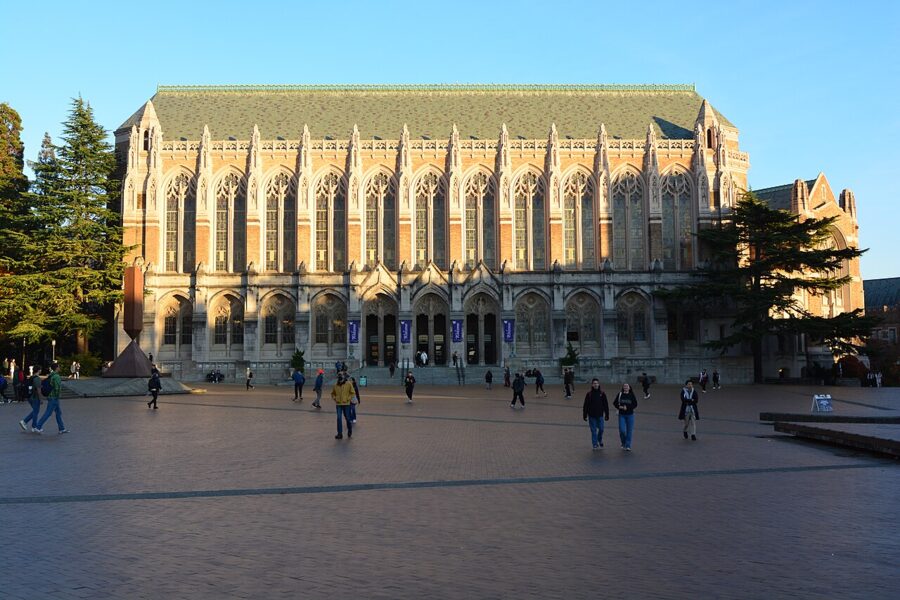
Above the buttresses stand 18 terra-cotta figures chosen by the faculty in 1923 and made by the Tacoma sculptor Allan Clark: Moses, Plato, Homer, Dante, Shakespeare, Galileo, Newton, Franklin, Darwin, Beethoven and eight more. A row of shields carries the arms of 14 universities. A telephoto from the middle of the square picks out single statues against the sky.
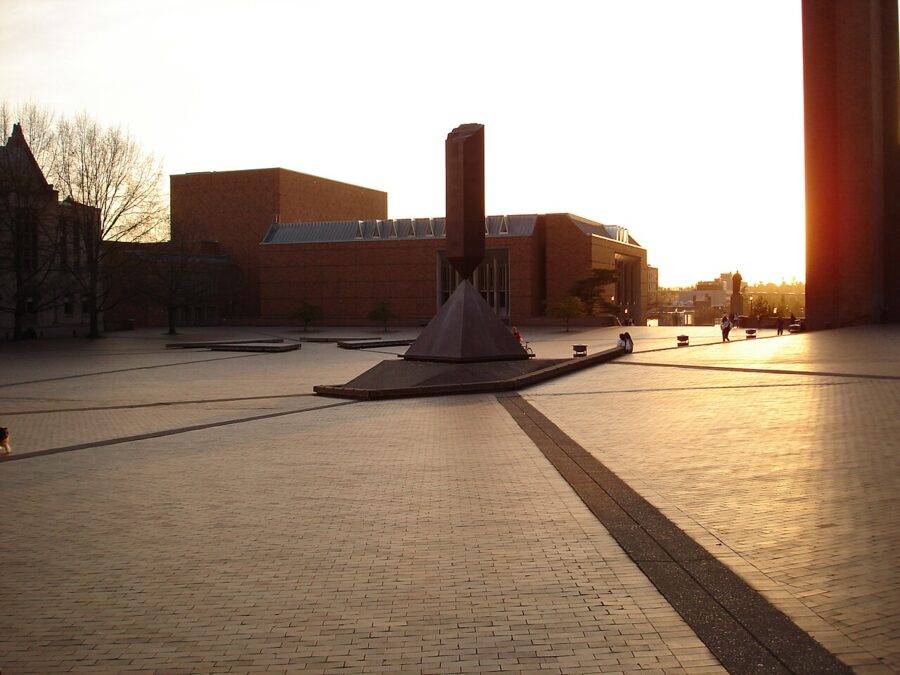
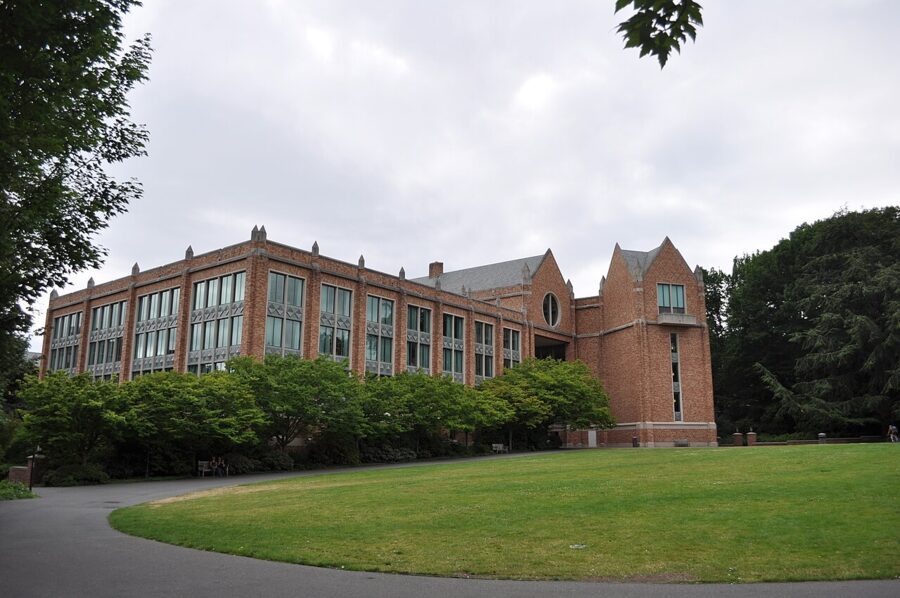
Turn around and the rest of the square is later concrete and brick, with the Odegaard Undergraduate Library and Kane Hall on its edges, and the same golden-hour light falls on them.
Cherry blossoms on the Quad
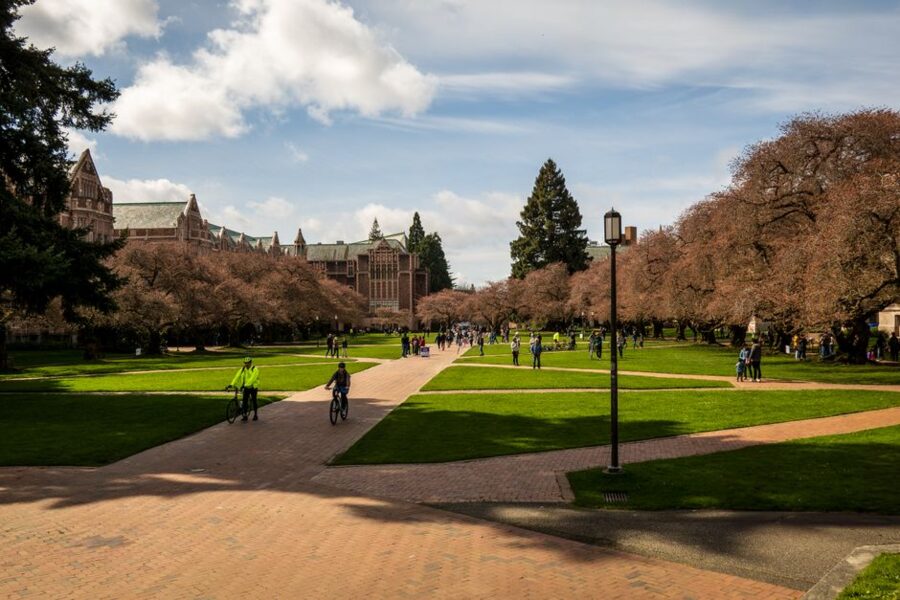
The Quad is the lawn ringed by Gothic brick halls just northeast of Red Square, and its 29 Yoshino cherry trees draw crowds every spring. They were planted at the Washington Park Arboretum in 1936 and moved here in 1962, and their branches now meet over the paths.
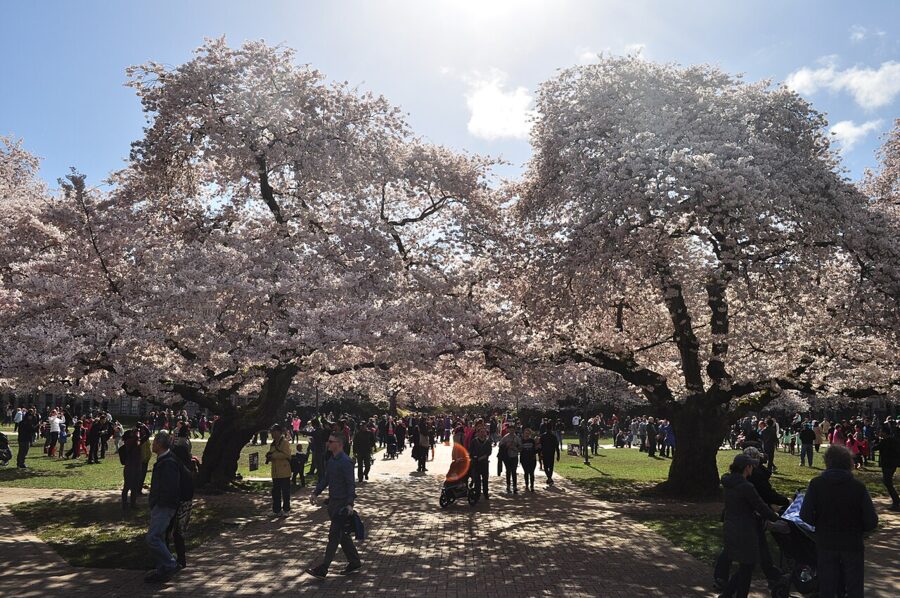
The university counts peak bloom as the point when about 70 percent of the blossoms are open. That date has fallen between March 12 and April 3, averaging March 23, and in 2026 it landed right on March 23. The week either side still looks good, and the university’s cherry blossom site posts bloom updates and live camera feeds.
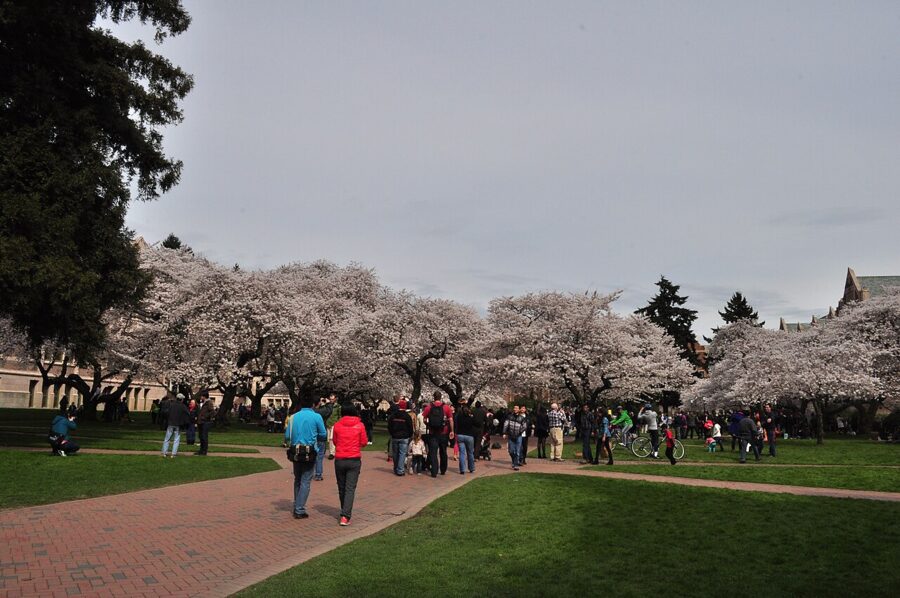
Peak weekends are shoulder to shoulder; in 2026 the university closed Stevens Way and Memorial Way to traffic on two of them. For an empty frame, come early on a weekday before classes, when the light is soft.
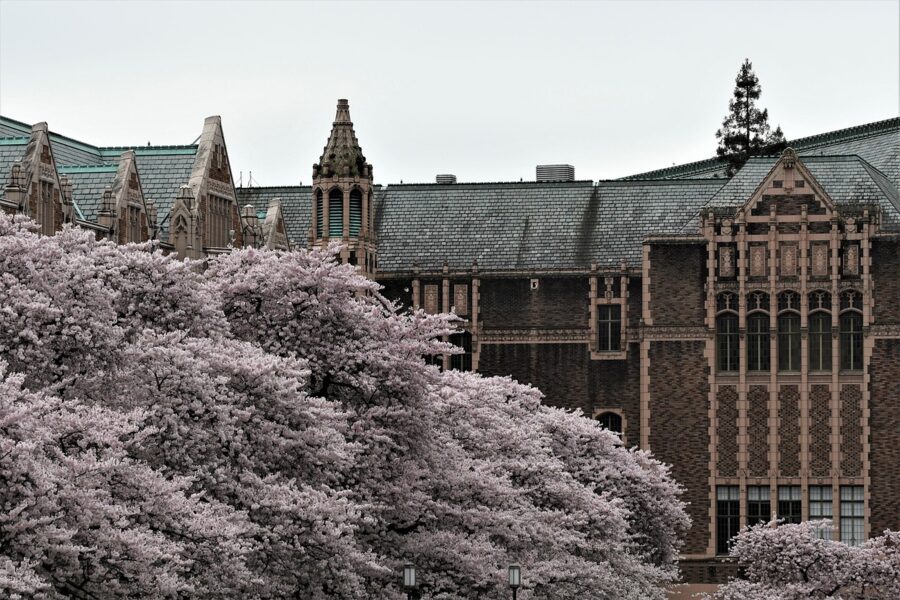
Drones are banned over the Quad while the trees are in flower, and you may not climb, shake or break the trees. Campus building restrooms are closed to the public on weekends, so portable toilets go up near the Quad during the bloom. In autumn 2026 the library itself was closed on Saturdays, so check its hours before planning a weekend visit to both.
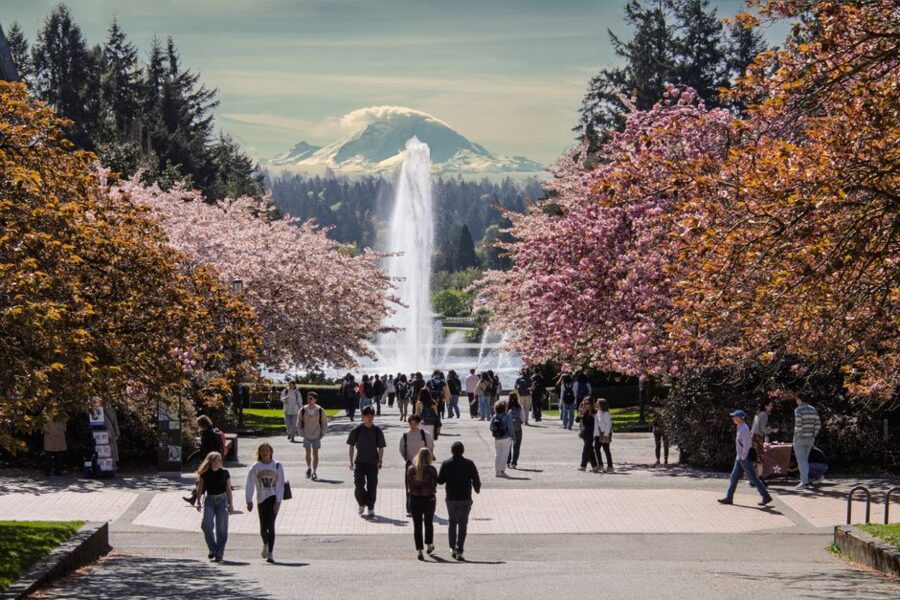
Rainier Vista and Drumheller Fountain
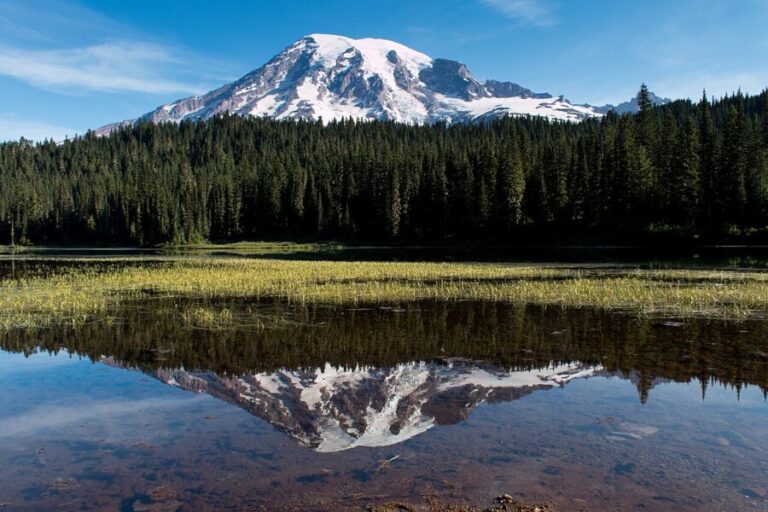
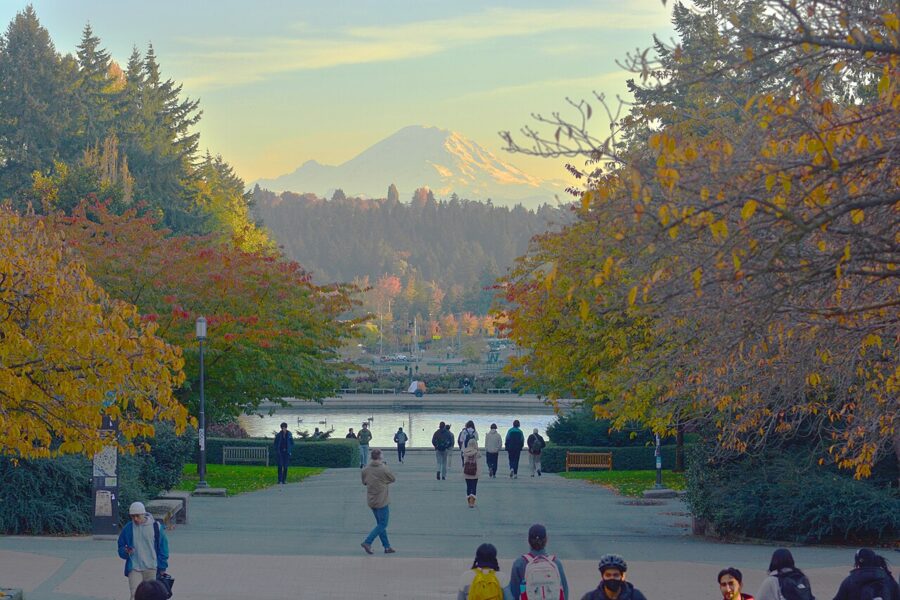
Walk southeast from Red Square and the campus opens onto Rainier Vista, a long axis laid out for the 1909 Alaska-Yukon-Pacific Exposition to aim straight at Mount Rainier. Drumheller Fountain sits partway down, and on a clear day the volcano rises above the trees at the end of the view.
Getting there by light rail
Two Link light rail stations serve the campus, and since the 2 Line opened across Lake Washington in March 2026, both the 1 Line and the 2 Line stop at each. As of November 2026 the adult fare is a flat $3 a ride, riders 18 and under travel free, and riders 65 and over or with a disability pay $1 with a Regional Reduced Fare Permit. Tap an ORCA card or a contactless bank card on the reader before you board, or buy a ticket from the station machine.
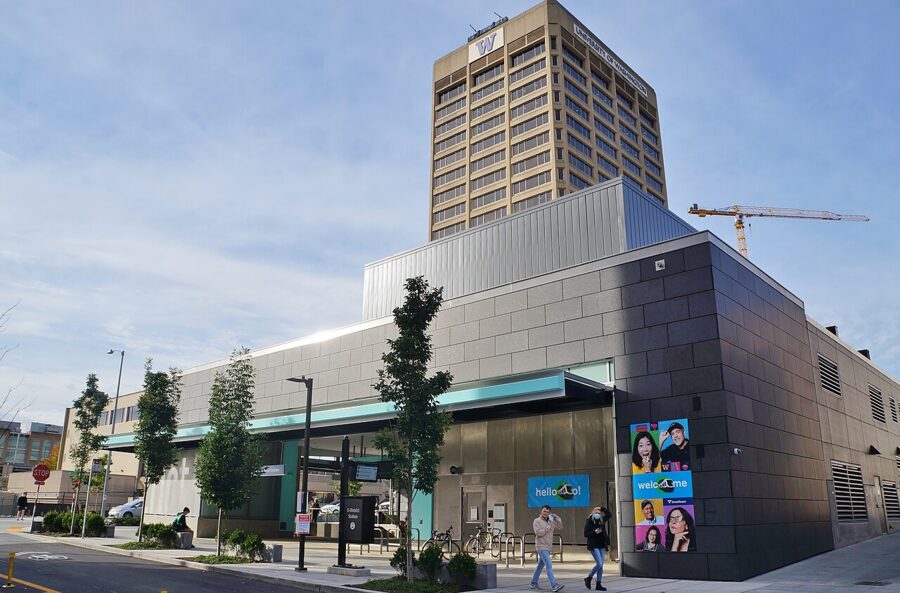
U District station, on Brooklyn Avenue NE between NE 43rd and NE 45th streets, is the one the university recommends for the Quad. Leave by the south entrance, walk east along NE 43rd Street to 15th Avenue NE and cross into campus; Red Square is about ten minutes from the station.
University of Washington station sits beside Husky Stadium on Montlake Boulevard. From there you cross the bridge over Montlake, walk up Rainier Vista past Drumheller Fountain and climb to Red Square: about fifteen minutes, uphill all the way. Go this way when Rainier is out, so the mountain is behind you on the climb and in front of you on the walk back.
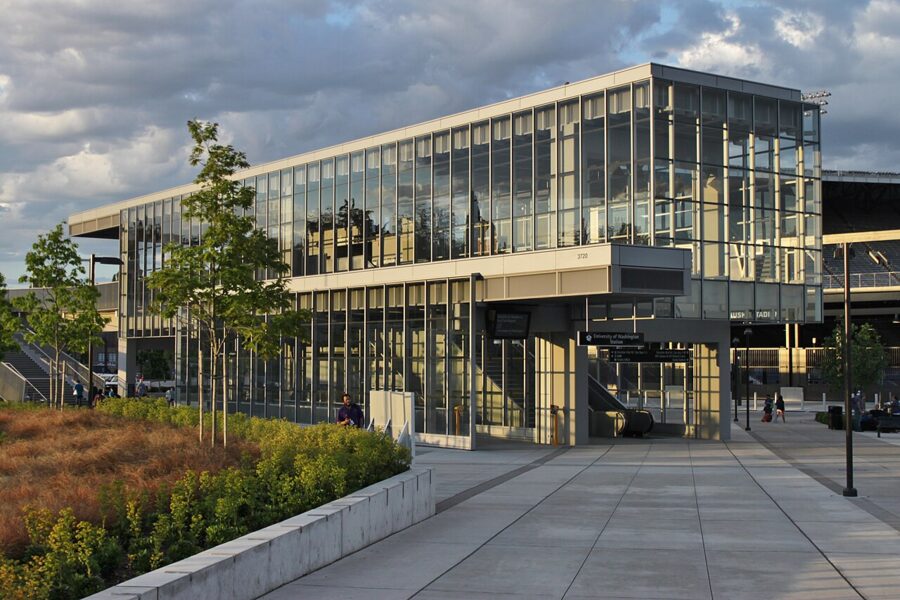
If you drive, the Central Plaza Garage sits under Red Square. On bloom-season weekends public parking there is limited to levels C02 to C04, and the campus is cashless: pay with the PayByPhone app or at a pay station, at rates posted by lot.
The reading room is one stop on a Seattle photo day, not the whole of it. The Fremont Troll is about two miles west, and Kerry Park on Queen Anne Hill is the place for the skyline at blue hour. For the library itself, take the 8 a.m. door on a gray weekday, climb the Grand Staircase, and stand on the center line at the end of the room before the tables fill.